


























































How to Choose the Right Smartphone in 2026: The Complete Buying Guide
Buying a phone in 2026 is less about finding a phone that works and more about matching one to how you actually live. This guide walks through budget, ecosystem, processor, camera, battery, display and software support — and the current models that make sense for each kind of buyer.

How to Choose the Right Smartphone in 2026: The Complete Buying Guide
Walk into a phone shop in late 2026 and the choice looks endless: flagships with 200MP cameras, mid-range phones with batteries that last two days, foldables that open into tablets, and budget phones that do most of what a flagship did two years ago. The good news is that there are very few genuinely bad phones left. The bad decisions now come from buying the wrong phone for the way you actually live — paying flagship money for a camera you never use, or saving money on a phone whose battery dies before dinner.
This guide is not a ranking. It is a way to work out what matters to you, in order, and then match a phone to it. The models named here are current late-2026 phones, and the advice applies whether you are shopping in Dhaka, Delhi, London or New York.
Step 1: Set your budget before you look at a single phone
Decide the number first, before any shop assistant or advertisement decides it for you. The market in 2026 breaks down into three broad bands, and each one buys a different kind of phone.
Budget phones cover calls, messaging, social apps, video and casual photography, usually with a large battery and a display that is good enough. Mid-range phones are where most buyers should look: you get a fast chip, a 120Hz AMOLED display, a genuinely good main camera with optical image stabilisation, and 5G — the everyday experience of a flagship at roughly half the price. Flagships buy the best cameras, the fastest charging, premium materials and the longest software support.
One honest rule: if your current phone is an iPhone 15 or a Galaxy S24 and its battery health is still above 80%, you can probably skip this generation altogether. The jump in everyday performance is real but small for basic tasks, and the money is better spent when your battery or storage actually starts to struggle.
Step 2: Pick your ecosystem first — it is the hardest thing to change later
Before comparing specs, decide between iOS and Android, because switching later costs more than the phone itself: repurchased apps, lost continuity features, and the learning curve of a new system.
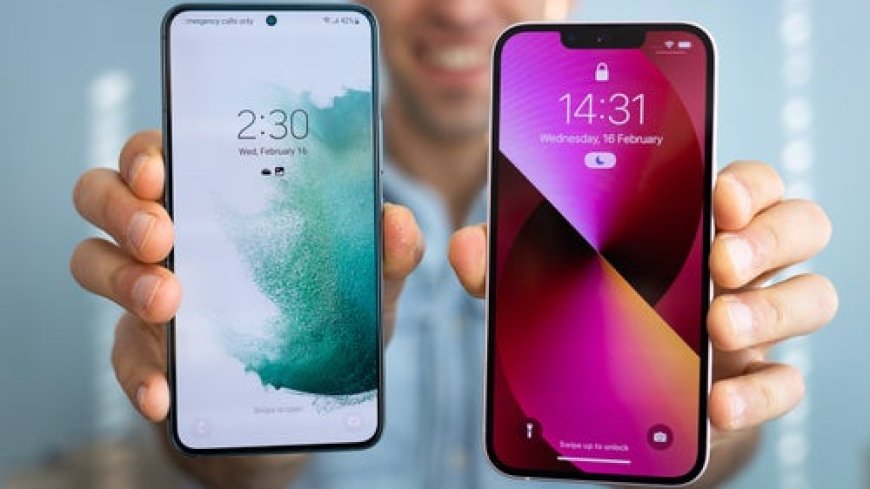
iOS suits people who already own a Mac, iPad, Apple Watch or AirPods, and who value long software support and the strongest video recording on a phone. Android suits people who want choice — different brands, different prices, different shapes — and who live in Google services. Within Android, the experience still differs by brand: Google's Pixel phones offer the cleanest software and the best computational photography, Samsung offers the broadest feature set and the S Pen on its Ultra models, and OnePlus, Xiaomi and Realme push hardest on battery life and charging speed.
If you are already deep in one ecosystem, switching needs a real reason — a specific feature, a much better price, or a phone your current brand simply does not make.
Step 3: The processor — buy enough, not the fastest
Flagship chips in 2026 include Qualcomm's Snapdragon 8 Gen 5 and Snapdragon 8 Elite Gen 5, Apple's A19 and A20 Pro, and Google's Tensor G5. All of them are far faster than most people need. What actually matters is that the chip is current enough to stay smooth for three or four years, and efficient enough not to drain the battery.
For most buyers, a mid-range chip from the last two years handles social apps, streaming, navigation and most games without complaint. Spend the flagship-chip premium only if you play demanding games, edit video on the phone, or keep phones for five years or more. And remember that on-device AI is now part of the chip story: local AI features such as live translation and photo editing run on the neural processing unit, so a modern chip matters more than raw clock speed.
Step 4: RAM and storage — the two specs people under-buy most
RAM is the spec that decides whether a phone still feels fast in three years. In 2026, 8GB is the bare minimum, because on-device AI models use memory constantly; 12GB is the sensible target for a phone you plan to keep, and 16GB suits heavy multitaskers and gamers. Our full explainer on how much RAM you need in 2026 breaks this down by use case.
Storage is simpler: 128GB is the minimum worth buying now, and 256GB is the right choice for most people, especially if you shoot a lot of video. Check whether the phone takes a microSD card — most flagships do not — and if it does not, buy the larger storage tier rather than regretting it in a year. If your current phone is already full, read our guides on freeing up storage on Android and freeing up storage on iPhone before you decide how much you really need.
Step 5: The display — brightness and smoothness beat resolution
Almost every phone worth buying in 2026 has a 120Hz display, and anything below that feels sluggish above the budget tier. AMOLED panels give deeper blacks and better contrast than LCD, and the best flagships now use LTPO panels that drop to 1Hz on a static page and ramp up to 120Hz or higher for scrolling and gaming, saving battery in the process.
Peak brightness matters more than resolution. Flagships now reach around 4,000 nits at peak, which is what keeps a screen readable in direct sunlight. A 4K phone screen, by contrast, is mostly a battery drain — your eyes cannot tell the difference at normal viewing distance. Hold the phone in your hand if you can: size is personal, and a 6.9-inch phone is a very different daily companion from a 6.3-inch one.
Step 6: The camera — megapixels are the least important number
A 200MP camera sounds impressive, and several 2026 flagships have one, but the sensor behind the number matters far more. A larger sensor captures more light, which is what makes night photos and portraits look good. Optical image stabilisation prevents blurry shots in low light, and a dedicated telephoto lens — optical zoom, not digital — is what makes portraits and distant subjects look right.
Software matters as much as hardware. Google's Pixel phones consistently produce the best point-and-shoot photos through computational photography, Samsung's Ultra models offer the most versatile zoom range, and Apple's iPhones remain the benchmark for video. Before you buy, look at sample photos taken in low light, not in a brightly lit shop. Our guide on taking better photos with your phone covers what to practise once the phone is yours.
Step 7: Battery and charging — buy the endurance you actually need
Ask yourself three honest questions. Do you top up at lunch most days? Then a one-day phone is fine. Do you regularly end the day below 20%? You need a bigger battery, faster charging, or both. Do you travel or commute without reliable access to a charger? Two-day endurance should be your baseline.
A 5,000 mAh battery plus an efficient processor gives most people a full day and change. But 2026 has pushed the ceiling much higher: the OnePlus 15R carries a 7,400 mAh cell and the Realme GT 8 Pro packs 7,000 mAh — both phones we have reviewed on Innopark IT. Charging speed varies just as widely: some phones refill in under half an hour, while iPhones still charge comparatively slowly. Check both numbers, not just one. And if your current phone's battery is the problem rather than the phone itself, our battery life tips may buy you another year.
Step 8: Software support — a purchase decision, not a footnote
In 2026, how long a phone gets updates is part of what you are paying for. Google promises seven years of operating system, security and Pixel Drop updates for the Pixel 11 line, Samsung makes a similar seven-year promise for the Galaxy S26 family, and Apple typically supports iPhones for six to seven years. Some budget phones still stop at two or three years of updates, which is a real cost: an unsupported phone is a less secure phone.
Check the update promise before you buy, and weigh it against the price. A mid-range phone with seven years of support is often a better long-term buy than a flagship with three.
Step 9: The details that cause regret — 5G, eSIM, water resistance and the box
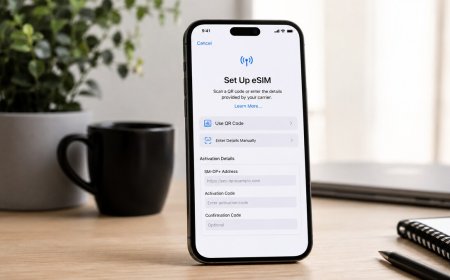
Make sure the phone supports the 5G bands your carrier actually uses — our 5G explainer covers what the different bands mean in practice. Check the SIM situation too: some 2026 iPhones are sold eSIM-only, with no physical SIM slot, so confirm your carrier supports eSIM before you buy — our eSIM guide explains how activation and transfers work.
Look for IP68 water and dust resistance if you use your phone outdoors or near water, and check what is actually in the box: several brands no longer include a charger, and a fast-charging phone needs a matching charger to reach its advertised speeds. Finally, buy from an authorised seller with a proper warranty, and keep the receipt — grey-market phones can be cheaper, but warranty claims become your problem.
Shortlist: current phones worth starting from
If you want a starting point rather than a blank search, these are the current models that make sense for different buyers — each one reviewed on Innopark IT:
Best all-round Android: the Samsung Galaxy S26 Ultra — the most complete Android package, with the widest zoom range and the S Pen.
Best iPhone: the iPhone 18 Pro Max — Apple's most complete phone, with the A20 Pro chip and its longest battery life.
Best for photography: the Google Pixel 11 Pro — computational photography and seven years of updates.
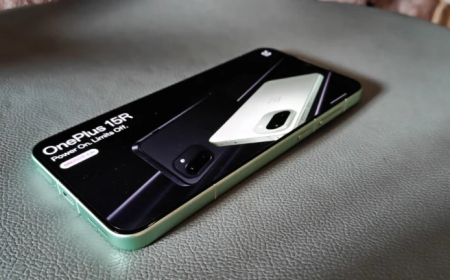
Best battery life: the OnePlus 15R, with a 7,400 mAh battery and a 165Hz display.
Best value flagship: the Realme GT 8 Pro — a 200MP periscope camera and a 7,000 mAh battery at a lower price than the big-name flagships.
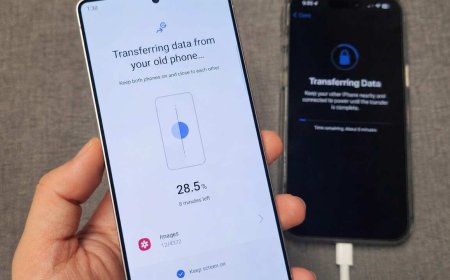
Once you have the phone, our guide on transferring data to a new phone walks through moving everything from the old one.
The one-minute checklist
Before you pay, run through this list. Budget set, and not exceeded because of a shiny extra. Ecosystem matches the devices you already own. At least 12GB of RAM and 256GB of storage, or a clear reason for less. A 120Hz AMOLED display you have actually held in your hand. A camera with optical stabilisation and, if you take portraits, a real telephoto lens. A battery that covers your longest day, and charging fast enough for your routine. Seven years of updates, or as close as your budget allows. And a warranty from a seller you can find again.
Get those right and the brand on the back matters far less than the spec sheet suggests. The right smartphone in 2026 is not the most expensive one — it is the one that fits your days.
Sources
Gadgital — The Ultimate 2026 Smartphone Buying Guide
Bright Coding — How to Choose the Right Smartphone for Your Needs
Mobile.com.bd — Complete Guide to Buying a Smartphone in Bangladesh 2026
RoxMag — Best Smartphones in 2026
iGeekPhone — Best Flagship Phones of 2026
Siya Mchunu — Best Smartphones of 2026: Flagships, Value Picks and What Actually Matters
What's Your Reaction?
 Like
0
 Dislike
0
 Love
0
 Funny
0
 Angry
0
 Sad
0
 Wow
0