




























































US Approved 879,000 Nvidia and AMD AI Chips for China — Including Firms the Pentagon Calls Military Companies
The US Commerce Department approved exports of 879,000 advanced Nvidia and AMD AI chips to Chinese companies between December 2025 and May 2026, newly released licensing records show — including 272,000 chips for Alibaba, Tencent, Baidu and BYD, all firms the Pentagon lists as Chinese military companies. The House Foreign Affairs Committee released the data on 19 November 2026.

US Approved 879,000 Nvidia and AMD AI Chips for China — Including Firms the Pentagon Calls Military Companies
The United States approved the export of nearly 900,000 advanced artificial intelligence chips made by Nvidia and AMD to Chinese companies over six months, according to licensing records released by the House Foreign Affairs Committee on Thursday, 19 November 2026. The approvals covered firms the Pentagon itself lists as Chinese military companies — a disclosure that has put the Trump administration's handling of chip export controls under fresh scrutiny.
The records, released by committee chairman Brian Mast under his authority in the Export Control Reform Act, cover applications made to the Commerce Department's Bureau of Industry and Security (BIS) between December 2025 and May 2026. They show a striking gap between what the chipmakers asked for and what Washington allowed — and, critics say, a gap between the stated purpose of the export controls and how they were applied.
What the records show
Nvidia and AMD submitted 50 licence applications covering 3,444,160 advanced AI chips for China. BIS approved 21 of those applications, authorising the export, re-export or transfer of 879,868 chips — roughly a quarter of the total requested.
The approved chips were Nvidia's H200 accelerators and AMD's roughly equivalent MI325X, both designed for the kind of large-scale AI training and inference work that sits at the centre of the US-China technology rivalry.
Not every request got through. BIS refused some of the largest deals, including Nvidia's application to sell 610,000 chips to Alibaba and another 508,000 to ByteDance, the owner of TikTok. But the agency approved many others — including substantial allocations to the very companies at the heart of the national security debate.
The companies named
Four of the approved recipients stand out because all of them appear on the Pentagon's List of Chinese Military Companies — the Department of War's designation for entities it considers "military-civil fusion contributors to the Chinese defence industrial base." Between them, they were approved for 272,000 chips:
- Tencent — 150,000 chips, the largest single allocation among the four
- Alibaba — 75,000 chips
- Baidu — 43,000 chips
- BYD — 4,000 chips
That means more than 30 percent of the approved chips were destined for companies Washington itself has designated as military-linked. "The fact that over 30 percent of the AI chips sent to China were shipped to companies that the Department of War has designated as Chinese military companies is astonishing, and calls into question whether Commerce conducted any serious national security review before approving these licenses," said Chris McGuire, a former US official and expert on the US-China technology battle.
The Megaspeed connection
The records also contain a direct link to one of the most sensitive threads in the Nvidia story. According to the documents, Nvidia applied on 6 April 2026 for permission to export 40,800 H200 chips to New Century Letal Data Service, a subsidiary of Shanghai-based Century Litong with ties to Megaspeed — the company fronted by Alice Huang, the suspected Chinese intelligence asset whose relationship with former Nvidia chief executive Jensen Huang was a key factor in his resignation.
The committee said Nvidia's applications also listed companies suspected of acting as fronts for smuggling or sanctions evasion as the entities that would set up the data centres. The New York Times has reported that companies linked to Alice Huang and her family have deep ties to China's defence and military industries.
Nvidia has said the applications did not result in actual sales, and that the company has now stopped shipments of licensed H200 chips. That distinction matters: an export licence is permission to ship, not proof that chips crossed the border. The Register reported that many of the approved orders never resulted in shipments, in part because Beijing itself must approve imports and chose not to do so while its own chipmakers develop improved products.
One detail in the documents drew particular attention from the committee. Every Nvidia and AMD application stated that the proposed transfer posed a "low" risk of diversion — the practice of claiming chips for one purpose while intending to ship them to China or rent them to Chinese companies in ways that breach export restrictions. Mast's point, in effect, is that the companies' own risk assessments were strikingly optimistic, and that BIS accepted them.
Why it matters now
Advanced chips are essential for designing nuclear weapons, stealthy submarines and advanced aircraft — the core reason the US restricts their export to China in the first place, so the People's Liberation Army cannot use them to develop advanced weapons. Approving hundreds of thousands of them for companies on the Pentagon's own military-companies list sits uneasily with that purpose, and the disclosure has intensified questions about whether the licensing process was given serious national security scrutiny.
The timing adds to the pressure. Earlier this week, Washington adopted a new policy outlawing remote access to advanced AI chips, in an attempt to close the diversion routes that have let Chinese firms use US hardware without it physically crossing the border. Tencent said on Wednesday that the ban will reduce the advanced computing capacity available to it and slow its efforts to train AI models. Alibaba struck a similar note on Thursday, with chief executive Eddie Wu saying the policy "will definitely have some impact on the long-term construction of Alibaba Cloud's data centers both domestically and globally," and that its long-term target of 20 gigawatts of capacity may be lowered, cutting its capital spending plans.
Both companies, however, said they do not see the new rules as a lasting problem, because they expect Chinese chipmakers to be producing advanced AI hardware at scale in 2027 or 2028. Wu predicted Alibaba "will go through a phase of the largest investment in AI infrastructure" once domestic chipmakers catch up — a reminder that the window in which American chips are indispensable in China may be closing.
For now, the administration is holding its line. Treasury Secretary Scott Bessent ruled out further restrictions on Nvidia chip sales to China on Friday, a day after the committee's disclosure, arguing the current framework is sufficient. That leaves the licensing data — and the questions it raises about how 879,000 chips were cleared for companies on the Pentagon's list — as the central document in a debate that is unlikely to fade.
Related coverage on Innopark IT: DOJ probes whether Alice Huang helped smuggle Super Micro AI servers to China, Jensen Huang misled Nvidia leaders over Alice Huang affair, Reuters reports and Bessent blames Commerce for Megaspeed entity-list delay.
Sources
- The Register — "US let Nvidia and AMD sell bucketloads of chips to military-linked Chinese companies" (20 November 2026)
- Financial Times, via Arab News — "US approved sale of Nvidia, AMD chips to Chinese companies, FT reports"
- Al Jazeera — "US signed off on sales of nearly 900,000 AI chips to China in six months" (19 November 2026)
- Reuters, via Dunya News — "US signed off on sales of nearly 900,000 AI chips to China in six months, House committee says"
- Chosun Biz — "Nvidia sought AI chip exports to firms linked to Chinese military" (21 November 2026)
- US House Foreign Affairs Committee — release of BIS export licence data (19 November 2026)
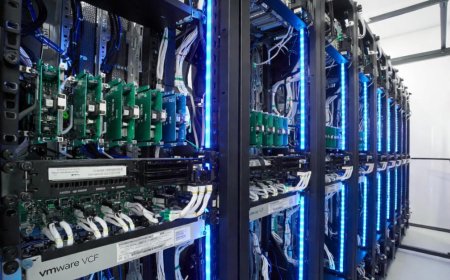
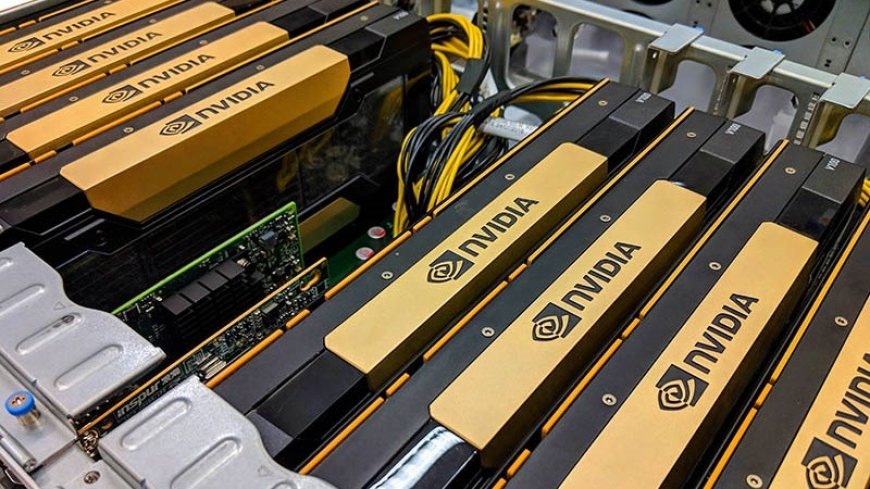
Photo: Nvidia GPU accelerators installed in a server chassis — representative of the class of hardware covered by the export licences.
What's Your Reaction?
 Like
0
 Dislike
0
 Love
0
 Funny
0
 Angry
0
 Sad
0
 Wow
0