




























































iPhone Duo Review: Apple's First Foldable Is Brilliant, Heavy and Very Expensive
Apple's first foldable phone, the iPhone Duo, pairs a 7.6-inch nano-texture inner display and the A20 Pro chip with a $1,999 starting price. Gizmodo's full review gives it 4 out of 5 — a superb first foldable held back by its weight, the loss of Face ID and the missing telephoto camera.

iPhone Duo Review: Apple's First Foldable Is Brilliant, Heavy and Very Expensive
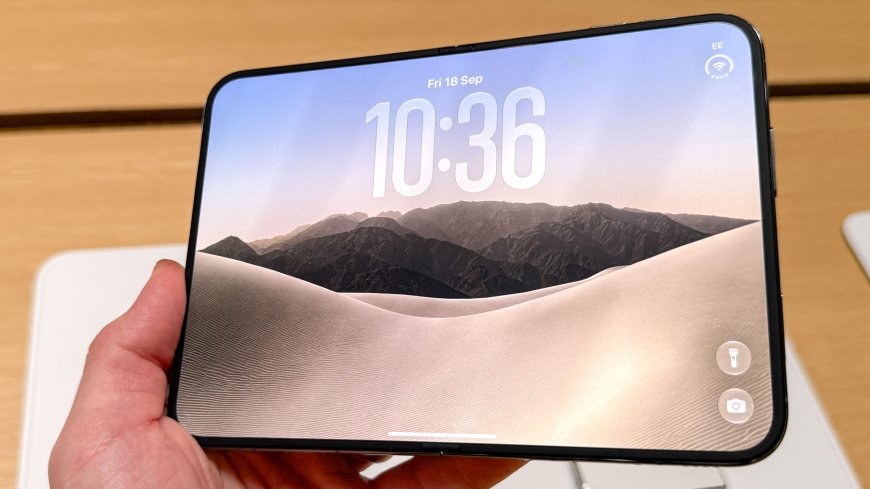
Apple waited seven years after Samsung opened the folding phone era. The iPhone Duo, announced on September 9, 2026 and on sale from October 23, is the company's answer — a phone that folds shut into something the size of a passport and opens into a 7.6-inch tablet. It starts at $1,999, making it the most expensive iPhone Apple has ever sold, and it is also the heaviest. After a week of testing, Gizmodo's Raymond Wong awarded it 4 out of 5 and an Editor's Choice badge, calling it "worth the wait, but very expensive." That verdict, more or less, is where the wider review consensus lands: the hardware is superb, the software is a work in progress, and the price will decide everything.
Other reviewers broadly agree on the shape of the story. Engadget scored it 8.8 out of 10, CNET 8.7 with an Editor's Choice award, and Tom's Guide, PCMag and TechRadar each gave it 4.5 out of 5. The Verge and WIRED were cooler, both landing on 7 out of 10, largely because third-party apps have not yet caught up with the new form factor. PetaPixel's PixelMeter, which aggregates 31 reviewers, sits at 79 out of 100. The split is not about the device itself. It is about whether you judge the phone Apple shipped, or the ecosystem around it.
Design: small when closed, a tablet when open
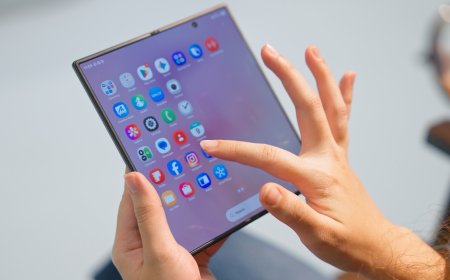
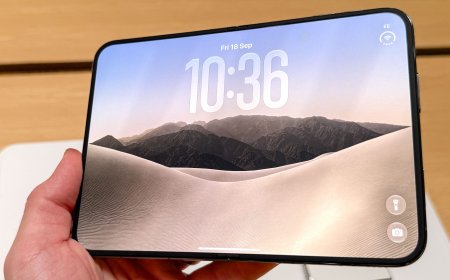
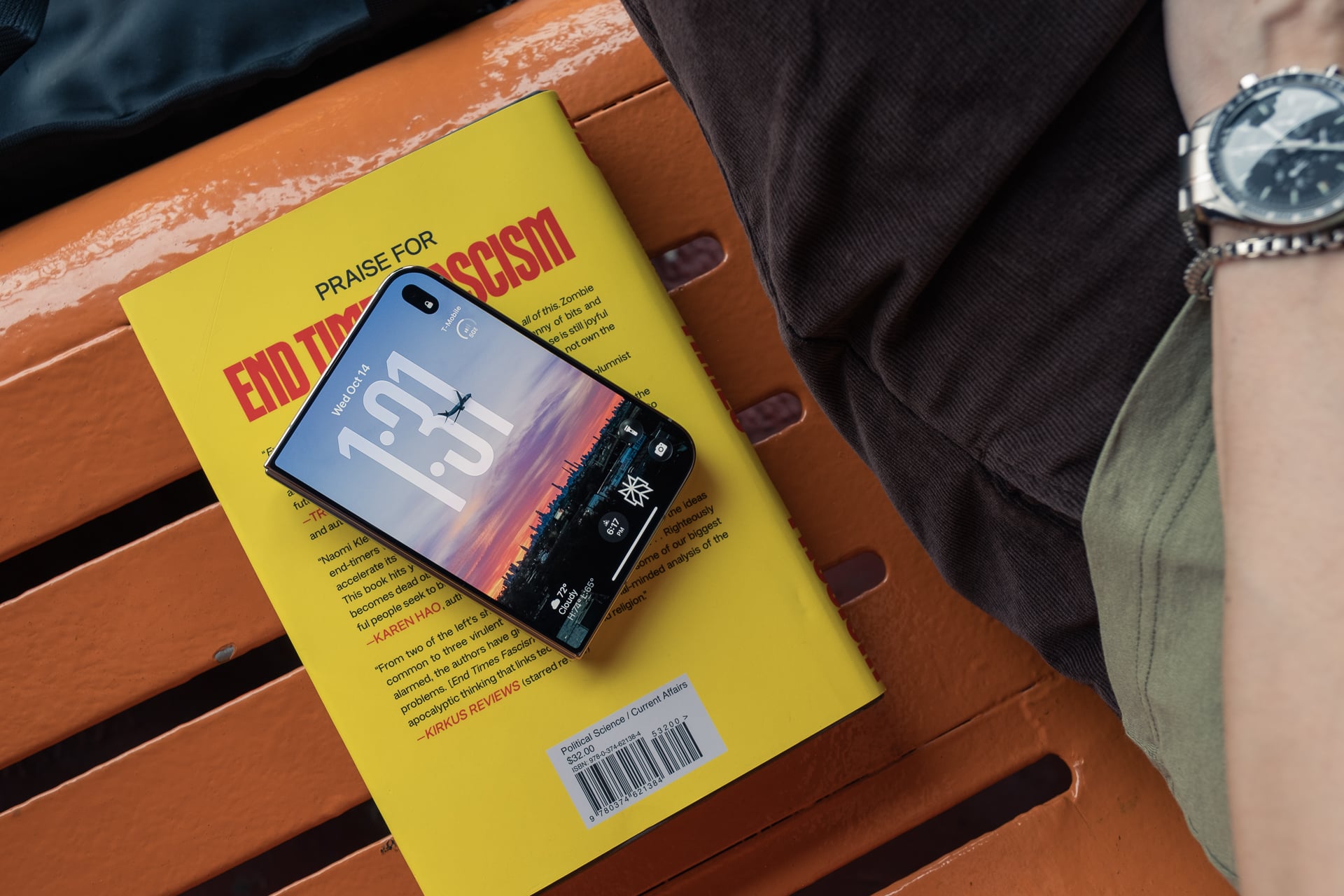
Closed, the Duo is a compact slab with a 5.4-inch outer display, roughly the footprint of a passport and a little under half an inch shorter. It is the one-handed phone in the pair. Open it, and the 7.6-inch inner screen is 50 percent larger than the iPhone 18 Pro Max's display and 80 percent larger than the iPhone 18 Pro's. Unfolded it measures 117.8 x 164.6 x 5.2 mm; folded, 117.8 x 84.1 x 11.3 mm.
At 254 grams it is the heaviest iPhone ever made, heavier than the iPhone 18 Pro Max at 249 grams and far heavier than Samsung's Galaxy Z Fold 8 at 201 grams. The Grade 5 titanium frame is a big part of the reason, along with the multi-angle hinge, the vapor chamber and the multi-layer inner screen. Gizmodo's reviewer found the weight noticeable at first — pockets sagged, a belt became necessary — but the density reads as luxury rather than bulk, helped by the polished titanium and the Star White and Night Sky finishes. The phone is also IP68 rated for dust and water, which remains rare for a foldable.
The inner display is the star
The inner screen is what the Duo is really about. It is a 7.6-inch panel with a nano-texture matte finish, 1878-by-2670 resolution at 430 pixels per inch, up to 3,000 nits of peak brightness and a 120Hz ProMotion refresh rate. The matte finish makes the crease down the middle far less visible than on rival foldables — visible at certain angles, and still faintly felt under a finger, but easy to ignore with the screen on. It also kills reflections, so the display stays readable in direct sunlight, at the cost of slightly less vibrant colours and shallower blacks than the glossy outer panel.
The outer 5.4-inch display is 1398-by-2034 at 460 pixels per inch, also with 120Hz ProMotion and the same 3,000-nit peak. The hinge is the other hardware triumph: a variable-torque design with more than 100 components that holds the phone at almost any angle, opens flat to a full 180 degrees, and closes with a satisfying magnetic clap. There is no hinge cap arching over the fold, as on Android rivals — the bezel sits flush, which gives the open device a cleaner look.
The one everyday annoyance is cleaning. Fingerprints and smudges cling to the nano-texture surface, and a T-shirt wipe often does not shift them. A microfiber cloth and screen cleaner are effectively part of the purchase.
Performance: the fastest foldable by a distance
Inside, the Duo runs the same A20 Pro chip as the iPhone 18 Pro models, with a 6-core CPU, 7-core GPU and dual 16-core Neural Engine, paired with 12GB of RAM. On Geekbench 7, Gizmodo recorded 4,002 single-core and 10,728 multi-core, with a GPU score of 60,608 — essentially identical to the iPhone 18 Pro. The Galaxy Z Fold 8, running Qualcomm's Snapdragon 8 Elite Gen 5 for Galaxy, managed 3,112 single-core and 10,438 multi-core, but only 17,331 on the GPU test. In other words, the Duo is about 22 percent faster on single-core work and roughly three and a half times faster on graphics than its closest Android rival.
A vapour chamber — smaller than the one in the iPhone 18 Pro, but present — keeps the chip cool under sustained load. Apple says it delivers up to 35 percent higher sustained performance than the iPhone 17 Pro. In daily use, the reviewer found no material slowdown, no lag switching between the two displays, and no stutter with two apps open side by side. It also carries Apple's own C2 5G modem and N1 wireless chip, which held a usable connection in poor-reception spots in New York where Qualcomm-modem rivals could not.
Battery life: a genuine surprise
Foldables have a poor record on battery life, and first-generation ones worse still. The Duo breaks that pattern. Its dual-cell 4,883mAh battery delivered between 5.5 and 7.5 hours of screen-on time in Gizmodo's week of testing, and the phone only dropped below 5 percent once, on a heavy camera-testing day. Apple rates it at 44 hours of video playback on the outer display and 31 hours on the inner display. Engadget's video rundown test ran for 28 hours and 48 minutes. For most people, the Duo will last a full day with charge to spare, which is more than could be said for most first-generation Android foldables.
iOS 27 on two screens: clever, but apps are catching up
The biggest open question before launch was software, and iOS 27 turns out to be the Duo's most thoughtful achievement — and its biggest caveat. This is not iPadOS squeezed onto a folding phone. Apple redesigned iOS for the Duo's 1.4:1 displays: a circular status bar, a vertical Dynamic Island, and a home screen that keeps the standard 4-by-6 grid and shifts the dock to the extra width on the right.
Multitasking is deliberately simple. Split View runs two apps side by side in landscape, in a fixed 50:50 split, with no resizable windows and no third app. Pairing apps is easy — tap the bar between them and they launch together next time — and swiping the gesture bars swaps between recent app pairs, a trick borrowed from the old Microsoft Surface Duo. Portrait mode only pairs a video on top with an app below, and only through a picture-in-picture routine that Gizmodo's reviewer found confusing. There is no Stage Manager, which is probably a blessing.
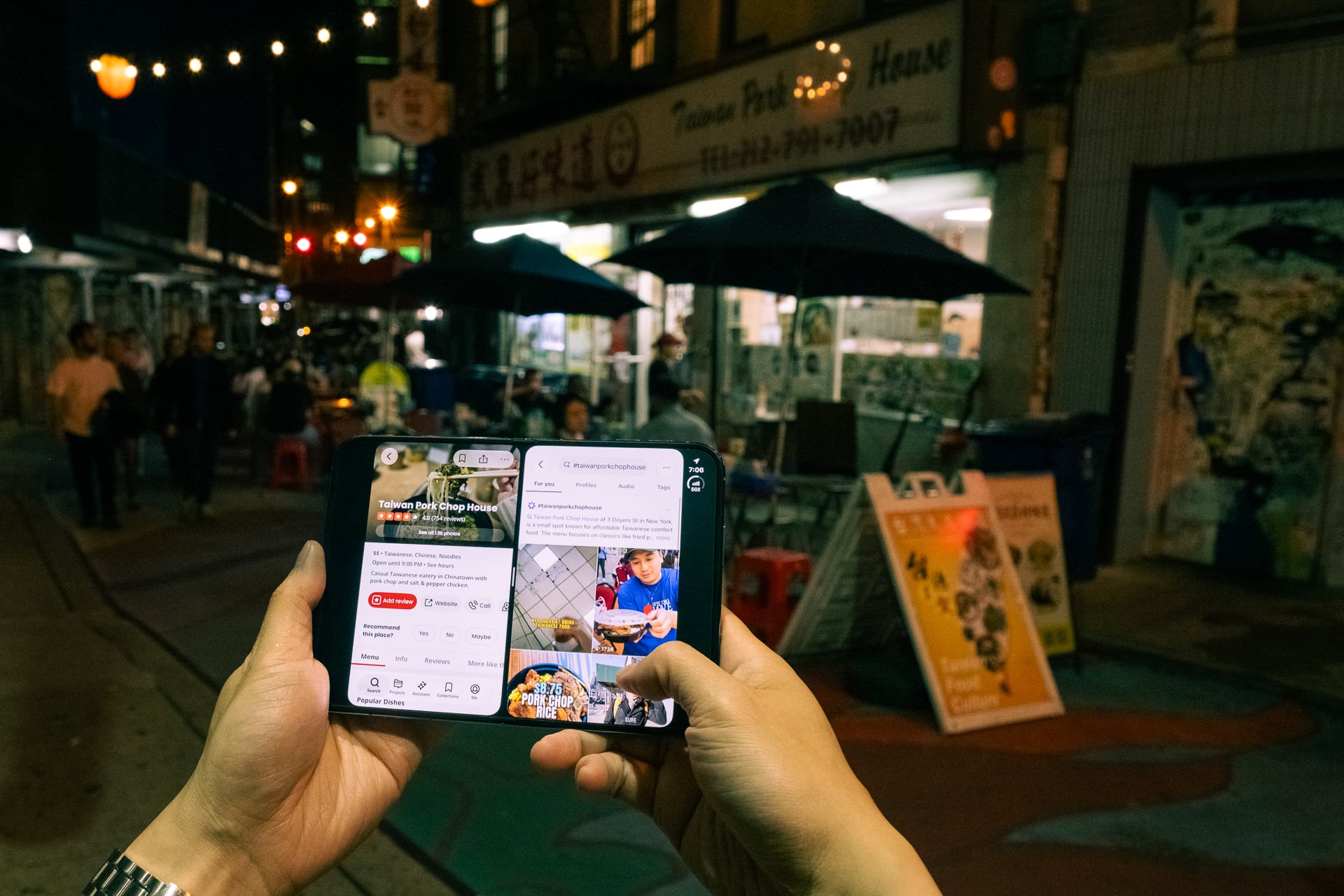
Apple's own apps are mostly optimised, with sidebars and two-pane layouts that feel like iPad apps. Third-party apps are the problem. Some have already been updated; many have not, and some may never be. Unoptimised apps run enlarged on the inner screen, with oversized buttons, or stay iPhone-sized in the middle of it. X, for example, had not been fully optimised at review time. Gizmodo, The Verge and WIRED all flagged the same issue: the hardware is ready, the app ecosystem is not. WIRED's advice — wait a few months for apps to catch up — is the most repeated recommendation in the first wave of reviews.
The folding form factor enables poses no slab phone can match: laptop mode, tent mode and a book-like fold. Tent mode doubles as a StandBy clock that works without a charger. Apple Pencil USB-C is supported for drawing and photo editing on the big screen, though there is nowhere to attach the pencil to the phone itself.
Cameras: good, but not Pro-grade
The Duo carries two rear cameras — a 48-megapixel main at f/1.6 and a 48-megapixel ultrawide at f/2.2 — plus a 12-megapixel Center Stage front camera and a 4-megapixel under-display camera on the inner screen. There is no telephoto lens, which feels absurd on a $2,000 phone and is the camera system's biggest weakness. The main sensor crops in for a 2x "optical-quality" zoom, and software stretches to a crunchy 10x.
Image quality sits just above the iPhone 17 and iPhone Air, but below the iPhone 18 Pro: strong in daylight, with wide dynamic range and neutral colours, weaker at night, with more lens flare and softer macro shots. Video is excellent, with better stabilisation than flagship Android phones. The under-display inner camera is the weakest link — low-resolution, washed out and soft, useful for video calls and little else, though it at least vanishes under the pixels when not in use, unlike the Z Fold 8's permanent hole-punch.
The folding form factor adds camera tricks of its own. Smart Take snaps photos automatically when the phone is propped up and detects posed, smiling people, though Gizmodo found the results mixed. Duo Preview shows subjects themselves on the outer screen before the shot, and Kids Cue plays Snoopy animations on the outer display to hold a child's attention. Photographic Styles 3 and the customisable Camera app controls carry over from the iPhone 18 Pro.

The trade-offs: Touch ID, no Action button, and a $999 screen
Two omissions will sting regular iPhone users. There is no Face ID — unlocking is by a Touch ID sensor in the side button, which works well but demands a deliberate finger press every time, including for Apple Pay, and means removing gloves in winter. There is also no customisable Action button, only the Camera Control, which works solely with camera apps. The Duo is, in that sense, a step back from the iPhone 18 Pro in daily convenience.
Repairability is a mixed picture too. iFixit gave the Duo a provisional 5 out of 10, the highest score it has ever given a folding phone, praising the flat layout and electrically released batteries. But replacing the folding inner display is slow, adhesive-heavy work, and Apple charges $999 out of warranty for it. Some early owners have also reported hearing a crunch while folding a brand-new phone, followed by a bright line spreading across the inner display. iFixit's teardown points to a possible stress hotspot where the flex cable crosses the hinge, but nothing is confirmed. It is early, and it is worth watching.
Verdict: the best first foldable, at a first-adopter price
The iPhone Duo is the most polished first-generation foldable yet made. The crease is the least visible in the category, the hinge is the best, the performance gap over Android rivals is enormous, and the battery lasts all day. The software is genuinely thoughtful where Apple controls it, and genuinely unfinished where it does not.
Whether to buy one comes down to three questions: can you afford $1,999 for the 256GB model — rising to $3,199 for 2TB — will you actually use the big screen often enough to justify carrying 254 grams, and can you live without Face ID, a telephoto lens and the Action button? If the answer to all three is yes, the Duo is unlikely to disappoint. If any of them gives you pause, the honest advice from the review consensus is to wait: for apps to be optimised, for the price to come down, or for a second generation that fixes the compromises. Apple has validated the foldable form factor. The phone itself is very good. It is not yet the definitive iPhone.
Sources
- Gizmodo — iPhone Duo Review: Waiting to Refine Foldables Was the Right Move (Raymond Wong, published October 21, 2026; updated October 25, 2026)
- TechPulse — iPhone Duo review roundup: the first verdicts from 12 outlets
- PetaPixel — Apple iPhone Duo PixelMeter (79/100 from 31 reviewers)
- TechRadar — iPhone Duo vs iPhone 18 Pro
- HardwareZone — Apple iPhone Duo review: Fun, fresh, and versatile, but oh so expensive
- Geekblog — iPhone Duo Teardown: iFixit Score, $999 Screen and Cracks
- SlashGear — iPhone Duo Review: Is Apple's Foldable iPhone Worth Buying Now?
What's Your Reaction?
 Like
0
 Dislike
0
 Love
0
 Funny
0
 Angry
0
 Sad
0
 Wow
0