












































What Is 5G and Do You Really Need It? A Simple Explainer
5G promises faster speeds and lower delay, but do you actually need it? This simple explainer covers what 5G is, how fast it really is, what it enables, and when a 5G phone is worth buying.

What Is 5G and Do You Really Need It? A Simple Explainer
5G promises faster speeds and lower delay, but do you actually need it? This simple explainer covers what 5G is, how fast it really is, what it enables, and when a 5G phone is worth buying.
What is 5G?
5G is the fifth generation of mobile network technology, the successor to 4G LTE. Like every generation before it, it is a new set of radio technologies and standards that let phones talk to cell towers faster and more efficiently. It is not a single technology: it is a family of frequency bands and features that carriers roll out in stages.
How fast is 5G, really?
In everyday use, 5G is usually 2 to 10 times faster than 4G, with typical download speeds of roughly 100 to 300 Mbps on a good connection, compared to 20 to 50 Mbps on 4G. In ideal conditions on high-frequency mmWave networks, speeds can pass 1 Gbps, but mmWave only works over very short distances and is mostly found in stadiums, airports and dense city centres. Most people on 5G will use the mid-band or low-band versions, which are fast but not magical — and real-world speeds depend heavily on your carrier, your location and how many people are connected.
Low latency: the other big improvement
Speed is only half the story. 5G also cuts latency — the delay before data starts moving — from around 30 to 50 milliseconds on 4G to under 10 milliseconds on a good 5G connection. Low latency matters for cloud gaming, video calls, remote control of machines and, eventually, self-driving cars, where every millisecond counts.
What 5G enables beyond phones
Because 5G can connect far more devices per square kilometre than 4G, it is built for the Internet of Things: smart factories, connected sensors, remote healthcare and smart cities. Most of these uses are still developing, but they are the reason carriers and governments have invested so heavily in 5G networks.
5G vs 4G: the quick comparison
4G is slower, with higher latency and less capacity, but its coverage is far wider and it works perfectly well for browsing, streaming video, social media and video calls. 5G is faster with lower latency, but it drains battery a little faster, and coverage is still patchy in many areas. For most everyday tasks, you will not notice a dramatic difference between the two.
Do you need a 5G phone?
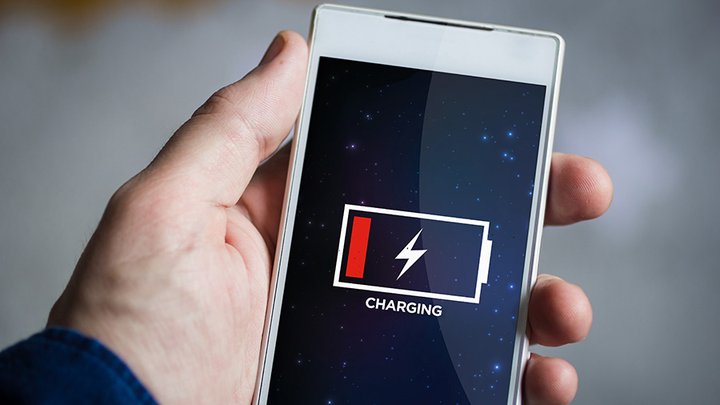
If you are buying a new phone in 2026, yes — almost every new phone already supports 5G, and it costs nothing extra to have it. But you do not need to replace a working 4G phone just to get 5G. Check whether your carrier actually offers 5G where you live and work first: if there is no 5G signal in your area, a 5G phone gives you nothing extra. Also note that 5G uses slightly more battery than 4G, so some people turn 5G off when they need maximum battery life.
What about 5G health concerns?
5G uses radio waves, like 4G, Wi-Fi and FM radio. Decades of research and the world's health agencies, including the WHO, have found no evidence that mobile networks at regulated levels harm human health. The higher-frequency mmWave bands used by some 5G networks are actually less able to penetrate the body than lower frequencies.
Sources
What's Your Reaction?
 Like
0
 Dislike
0
 Love
0
 Funny
0
 Angry
0
 Sad
0
 Wow
0