




























Meta Opens the Door to Muse’s Next AI Era With Early Access Program
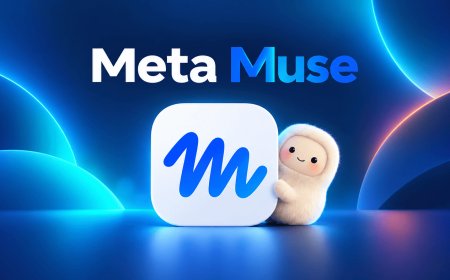
Meta has opened an early access program for new features coming to Muse, its personal AI agent. Following the announcements at Meta Connect 2026, selected users can now express interest in testing Muse’s latest capabilities before wider availability, giving the public an early look at Meta’s vision for an AI assistant that can do more than simply answer questions.

Meta Wants Muse to Become More Than a Chatbot
Meta is moving quickly with Muse. Just weeks after launching its new personal AI agent, the company has opened an early access program for new Muse features, giving users a chance to join the testing list before the latest capabilities become broadly available. Meta announced the program on September 25, shortly after showcasing a much wider vision for Muse at its Connect 2026 developer conference.
The timing is important because Meta is clearly trying to position Muse as something much bigger than another chatbot. The company describes Muse as a personal AI agent that can actually perform tasks on a user's behalf. Instead of simply telling someone how to send an email, plan a trip or complete an online task, Muse is designed to carry out parts of that work itself, while asking for approval when an important action requires the user's permission. Meta says Muse runs inside a dedicated secure virtual machine and can interact with connected services through controlled access.
What Is Coming to Muse?
At Meta Connect 2026, Meta showed several new directions for Muse. The company highlighted more natural interactions, new connectors and a more capable underlying model, while also expanding the idea of Muse beyond a traditional phone or desktop application. Meta says Muse will eventually work through its smart glasses as well, bringing the personal AI agent closer to users throughout their everyday lives.
The broader feature push also includes more ambitious ways of interacting with Muse. Reports following Connect describe capabilities including real-time video conversations with customizable digital avatars, a dedicated email address for Muse and expanded computer-use features that allow the agent to interact with applications on a Mac. These features point toward a future where an AI assistant is not just a window users open when they need help, but something that can remain involved in their digital life and take action across different services.
Meta Is Letting Users Get In Early
For people who want to see where this is going before everyone else, Meta's new early access program provides a direct route into the testing process. According to TechCrunch, users can ask Muse to add them to the early access list through a prompt Meta shared publicly. Being on the list does not necessarily mean everyone will immediately receive every new feature, but it gives Meta a way to identify users interested in trying upcoming capabilities.
That approach also makes sense for a product like Muse. An AI agent that can send messages, interact with services, shop online or perform computer tasks is fundamentally different from a normal chatbot. Real-world use exposes problems that laboratory testing cannot always predict. Meta has already acknowledged the importance of safety and security around Muse, including isolated computing environments, permission controls and a separate Sentinel system designed to control the agent's access to the outside world.
Muse Is Arriving at a Complicated Moment
Muse's rapid expansion is happening while the AI-agent industry is beginning to collide with the rules and boundaries of the traditional internet. One example came recently when Amazon blocked Meta's Muse from making purchases on its platform, saying the AI agent's access was not authorized under Amazon's terms. At the same time, Shopify has moved in the opposite direction by working with Meta on agentic shopping features.
That disagreement could become one of the defining issues of the next generation of AI. If people increasingly ask agents to search, compare, communicate and buy things for them, websites may no longer be dealing primarily with human visitors. They will also be dealing with software acting on behalf of humans. Muse is one of the clearest examples of this shift, and Meta's decision to open early access suggests the company wants real users helping shape how that future works.
Meta's Bigger Bet on Personal AI
Meta launched Muse on September 8 as a personal AI agent designed to work across everyday tasks. The company says users can connect services such as email and other applications, give Muse goals rather than simple questions, and allow it to continue working in the background. Meta has also emphasized privacy and security controls, including user-managed permissions and the ability to disconnect connected services.
The bigger story is that Meta appears to be betting that the next major stage of AI will not be about having the smartest chatbot. It will be about having an AI system that can do things for you. Muse is still early, and its capabilities, limitations and real-world reliability will need to be tested by users. But by opening early access so soon after its launch, Meta is making one thing clear: it wants Muse to evolve quickly, and it wants people to be part of that process.
What's Your Reaction?
 Like
0
Like
0
 Dislike
0
Dislike
0
 Love
0
Love
0
 Funny
0
Funny
0
 Angry
0
Angry
0
 Sad
0
Sad
0
 Wow
0
Wow
0