




















































Qualcomm Just Showed the World's First Real 6G Device — and It's Already Talking to Live Networks
Qualcomm has publicly demonstrated the world's first physical 6G device prototype at the 9th China International Import Expo in Shanghai — a terminal built to the latest 3GPP definitions that has already been used with China Mobile and ZTE for 6G technology tests and interoperability verification, moving 6G from research papers to system validation ahead of a targeted commercial launch in 2029.
Qualcomm Just Showed the World's First Real 6G Device — and It's Already Talking to Live Networks
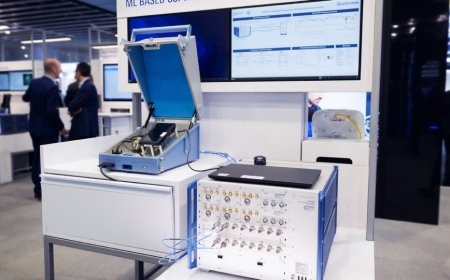
For years, 6G has lived mostly in white papers, conference slides and laboratory benches. At the 9th China International Import Expo in Shanghai, Qualcomm put a physical piece of it on a stand for the world to see.
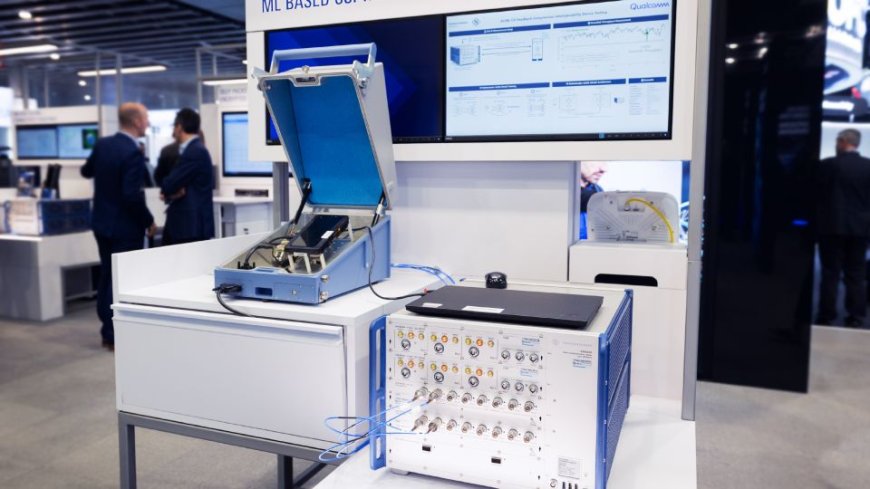
The US chipmaker debuted what it describes as the world's first 6G terminal prototype outside the laboratory, built to the latest definitions set by 3GPP, the international body that writes mobile network standards. The expo's organisers singled it out as a "hard technology exhibit" and a world premiere, and it was one of 25 advanced technologies selected from roughly 10,000 exhibits at the event, which opened on November 5 and runs to November 10 with 4,142 overseas exhibitors, including more than 300 Fortune Global 500 companies.
The important part is not that the device exists, but that it has already been used. According to Qualcomm, the prototype has been put to work with Chinese partners including China Mobile and ZTE for 6G technology tests and interoperability verification — the unglamorous checking that different vendors' equipment can actually talk to each other under the same standard.
The test that came first
The public debut follows a quieter milestone two months earlier. On September 20, China Mobile and Qualcomm completed what they describe as the world's first interoperability test between a U6G-band base station prototype and a 6G terminal prototype, carried out at China Mobile's Collaborative Innovation Base under the latest 3GPP definitions.
The U6G band — the upper 6 GHz range, from 6,425 to 7,125 MHz — is the spectrum where much of the early 6G work is concentrated. The test terminal used four transmit and eight receive chains, with a 400 MHz downlink and a 200 MHz uplink channel, and Qualcomm says it produced the first end-to-end measured data exchange conforming to 3GPP definitions — a result that can serve as a reference for designing future 6G terminals.
That sequence matters. The September test showed the specifications behave in practice; the November unveiling shows the hardware in public. Together they mark the point where 6G stops being a research topic and becomes a system being validated — the same transition every mobile generation has to make before it can be commercialised.
6G, built around AI from the start
Qualcomm's pitch for 6G is not mainly about speed. At the 2026 Mobile Network Conference, chief executive Cristiano Amon said 6G is designed from the ground up as AI-native — artificial intelligence built into the network itself rather than bolted on afterwards. In that design, AI helps the network estimate and even predict changing radio conditions, keeping performance up where signals are weak, and coordinates computing across devices and the network.
The industry is working toward commercial 6G services in 2029, and Qualcomm expects to gradually push its prototype toward commercialisation over the next two years. Amon has also predicted that by 2035, AI-related traffic will account for 25% to 30% of wide-area network traffic — the demand that 6G's AI-native design is meant to serve.
Qualcomm's chairman for China, Frank Meng, framed the CIIE appearance as part of a longer story of innovating together with Chinese partners — a notable note given that the prototype's testing partners, China Mobile and ZTE, are Chinese, and the expo itself is China's flagship import fair.
What this is not — yet
It is worth being precise about what was shown. This is a prototype terminal for testing and validation, not a consumer phone, and Qualcomm has not announced consumer specifications, data rates achieved in the tests, or a date for a 6G handset. The 6G standard itself is still being written — China Mobile's chief engineer has noted that less than 30 months remain before the standard freeze — and commercial deployment is a 2029 target, not a promise for next year.
Qualcomm also used the expo to show where its AI work is heading more broadly, including a 30-billion-parameter model running on-device, part of the same shift of inference workloads from data centres to the device edge that dominated the expo's technology hall. The 6G prototype and the on-device model are two halves of the same argument: the next generation of networks and the next generation of AI are being built together, and the hardware to prove it is now sitting on a table in Shanghai rather than locked in a lab.
Sources
- Kimkj — China AI, Robotics, Semiconductor & Telecom In-Depth Briefing, November 9, 2026
- Xinhua — From products to partnerships, CIIE sets stage for global debuts (November 8, 2026)
- DIGITIMES — Qualcomm to debut 6G terminal prototype at China expo (November 5, 2026)
- BigGo Finance — At CIIE, Chip Giants Pivot in Unison (November 8, 2026)
- KuCoin / AIBase — Qualcomm Envisions an AI-Native 6G Network by 2029 (November 6, 2026)
- AlexTech — Qualcomm targets 2029 for 6G, with AI built into the network (November 7, 2026)
What's Your Reaction?
 Like
0
 Dislike
0
 Love
0
 Funny
0
 Angry
0
 Sad
0
 Wow
0