


































































NASA Is Building a Nuclear Rover From Mars Spare Parts to Hunt for Ice at the Moon's South Pole
NASA has opened its Moon Base programme with awards to eight companies for lunar cargo missions under a 10-year framework worth up to $10 billion, while its Jet Propulsion Laboratory builds the nuclear-powered PROMISE rover from Mars mission spare parts to drill for water ice at the lunar South Pole, targeting a late-2028 launch.
NASA Is Building a Nuclear Rover From Mars Spare Parts to Hunt for Ice at the Moon's South Pole
NASA has kicked off its Moon Base programme with a round of awards to eight companies for lunar cargo missions — and tucked inside the announcement is a plan that sounds like it comes from a scrapyard engineer with a dream.
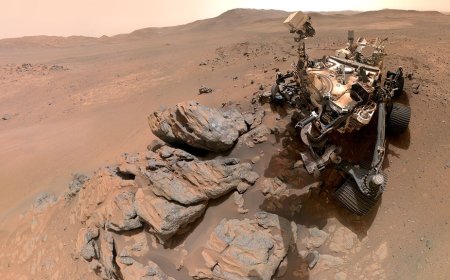
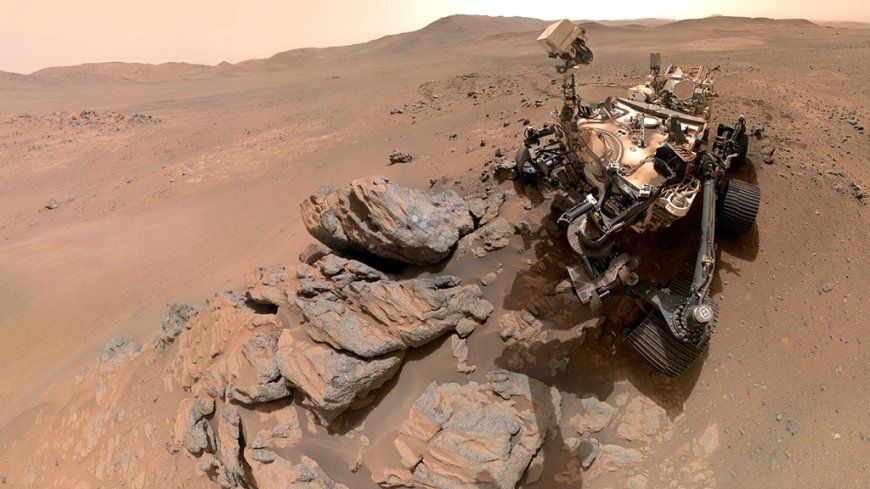
The agency's Jet Propulsion Laboratory is building a nuclear-powered rover, called PROMISE, from spare parts left over from the Curiosity and Perseverance Mars missions. The six-wheeled machine will carry a drill capable of reaching a metre into the Moon's surface, hunting for water ice buried near the lunar South Pole — the resource NASA needs to make a permanent presence on the Moon possible. The target launch is late 2028, with an 18-month mission planned once it lands.
The awards were announced at the "MAX POWER" expo at Kennedy Space Center in Florida on Saturday, November 7, by NASA Administrator Jared Isaacman.
The Moon Base contracts
The core of the announcement is the second round of the Commercial Lunar Payload Services (CLPS) programme, known as CLPS 2. Eight companies will compete for individual task orders to carry cargo to the lunar surface: Blue Origin, Firefly Aerospace, Intuitive Machines, ispace-U.S., Lockheed Martin, Northrop Grumman, SpaceX and Voyager Technologies.
The contracts are structured as indefinite-delivery, indefinite-quantity awards — NASA issues task orders to whichever companies it chooses, rather than guaranteeing work to all of them. The combined maximum value across the ten-year period is $10 billion, a ceiling on total spending, not money already committed or spent.
The first two task orders, issued alongside the awards, go to Blue Origin to deliver the PROMISE rover. The base task is worth $94 million, with a performance option worth a further $140 million that Blue Origin can earn by meeting milestones.
Blue Origin will deliver the rover aboard its Mark 1 lunar lander, with NASA providing about $3.7 million of government equipment to integrate the rover onto the lander. In a separate move, NASA has also raised the ceiling on the existing CLPS 1.0 contracts from $2.6 billion to $4.2 billion.
PROMISE, the rover made of spares
PROMISE stands for Polar Rover for Observation, Mapping, and In-Situ Exploration. It is a six-wheeled, nuclear-powered rover designed by NASA's Jet Propulsion Laboratory, assembled using spare hardware from the Curiosity and Perseverance Mars missions — wheels, motors and components that were built as backups and never flew.
Its job is to look for water ice, which is believed to lie hidden in permanently shadowed craters near the lunar South Pole. The rover's drill will reach a metre into the regolith, far deeper than any previous lunar drill, to find and characterise the ice.
Water ice is the key resource for a lunar base. Split into hydrogen and oxygen, it provides drinking water, breathable air and rocket propellant — the difference between a base that must be supplied from Earth at enormous cost and one that can sustain itself.
"This is the first of a family of lunar rovers for a return to the Moon," Isaacman said.
What else was announced
The Moon Base package included more than the rover and the CLPS awards. NASA issued six additional task orders, worth a combined $1.3 billion, under its VADR programme to three companies — Arrow Science and Technology, Blue Origin and Impulse Space — covering a range of lunar support services.
SpaceX was awarded work to design and fly a constellation of cislunar communication satellites by 2028, to keep lunar missions in contact with Earth. A separate technology award, miniCAST, went to Honeybee Robotics, Redwire and Yank Technologies for small-scale power and communications technologies for the lunar surface.
One detail comes from a single source and should be treated as such: the Thursday Times reports that Pakistan's space agency, SUPARCO, will place a 35-kg rover aboard China's Chang'e-8 mission in 2028 to search for water ice, reporting alongside the PROMISE announcement. That detail appears in no other reporting consulted, and NASA's own release does not mention it.
Why it matters
The Moon Base announcement marks a shift in how NASA approaches the Moon. Rather than a single flagship programme, the agency is building a marketplace: multiple companies competing for task orders, a rover assembled from proven spares rather than built from scratch, and a commercial communication network to tie it together.
If PROMISE finds accessible water ice at the South Pole, it will change the economics of everything that follows — from crewed landings to a permanent base. The rover is a scout for a settlement, built from the leftover parts of the machines that explored another planet. The launch window is late 2028. The ice, if it is there, has been waiting four billion years.
Sources
- NASA — NASA Awards Moon Base Transportation, Technology, Science Projects (November 7, 2026)
- Central Florida Public Media — NASA finds PROMISE in old equipment for moon rover (November 10, 2026)
- The Thursday Times — NASA unveils $10B Moon Base contracts; PROMISE rover to hunt lunar ice (November 8, 2026)
What's Your Reaction?
 Like
0
 Dislike
0
 Love
0
 Funny
0
 Angry
0
 Sad
0
 Wow
0














