




























































Bond Investors Are Losing Their Nerve on AI Debt as Democrats Get Ready to Take Congress
Bond investors are growing more cautious about the debt behind the AI boom, with high-yield credit spreads hitting their widest since May 2025, as a Democrat-controlled Congress prepares legislation that could slow AI investment and data center expansion.
Bond Investors Are Losing Their Nerve on AI Debt as Democrats Get Ready to Take Congress
Bond investors are growing more cautious on the debt tied to the artificial intelligence boom, as the prospect of a Democrat-controlled Congress slowing the pace of AI investment and data center expansion starts to weigh on the market.
US high-yield credit spreads widened to 348 basis points in last Thursday's stock-market swoon, according to ICE BofA US Corporate Index data — the highest since May 2025, just a month after President Donald Trump imposed global tariffs. Spreads narrowed on Friday to 342 basis points, but the anxiety has not gone away.
"The markets are definitely anxious right now. I wouldn't be surprised to see some continued volatility in both high yield and loans," said Larry Holzenthaler, senior portfolio manager at Catalyst Funds in New York.
A political risk the bond market had not priced in
The worry is not about the companies' finances. Healthy corporate fundamentals continue to support the market. The worry is political: a deeper reassessment of AI-related risk could push credit spreads wider in both high-yield and investment-grade debt in anticipation of stricter regulations on the technology, analysts and portfolio managers said. Investment-grade spreads stood at 93 basis points last Thursday, against 91 the previous session.
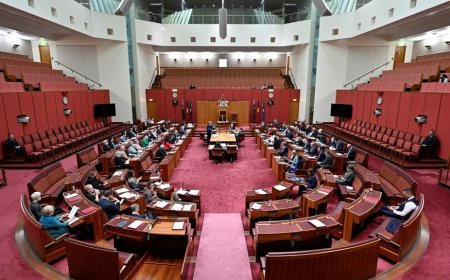
Democrats are already planning to unleash a flood of new legislation targeting AI systems and data center development when they take control of Congress in January, after their sweeping victories in the midterm elections. President Trump has repeatedly dismissed calls to write mandatory rules for AI technology, but over the weekend, following his party's historic midterm loss, he signalled openness to safeguards.
"Appetite is more cautious and more discriminating," said Ali Hassan, portfolio manager at Thornburg Investment Management. "Political and regulatory scrutiny is prompting a review of credits up and down the chain, from developers to contractors to suppliers."
Data center bonds under pressure
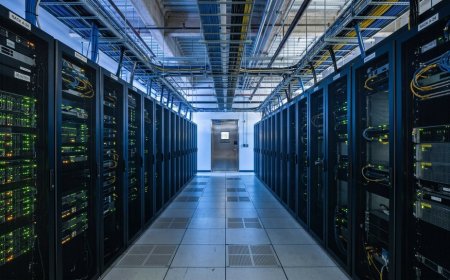
Data center bonds, many of them concentrated in the BB and single-B tiers of the junk bond market, have come under fresh pressure in recent weeks, especially during the technology selloff. Single-B spreads widened 35 basis points to 367 basis points, leading the deterioration in the high-yield market and hitting their highest levels since March.
Galaxy Helios Data Center bonds fell to 89.25 cents on the dollar on November 5, for instance, lifting yields to 13% from the 9.875% offered when Galaxy Digital's wholly owned unit sold the B+ rated debt in late July.
"A slowdown in the AI buildout that hits the supply chain, power producers, electrical contractors, equipment and machinery, data center developers, all of these are going to have a second-order effect," said Peter Yanulis, multi-asset portfolio manager at Loomis Sayles.
The bigger question: growth
For investors, the larger concern is the potential impact of AI regulation on economic growth. Investment in artificial intelligence and the infrastructure underpinning it has been a major engine of US expansion, helping keep growth resilient this year despite broad uncertainties.
"Any slowdown in the pace of data center development has the potential to materially slow overall business investment," said Abiel Reinhart, senior economist at J.P. Morgan.
The scale of the borrowing is part of the problem. Goldman Sachs tallied AI "hyperscaler" debt supply at $296 billion already this year, well above the bank's $250 billion forecast for 2026, with Meta, Microsoft and Oracle borrowing another $67 billion since late October, according to Morningstar. Goldman expects a further $440 billion of hyperscaler debt supply in 2027.
Some see relief in a slowdown
In the near term, some investors believe a slowdown is probably a healthy thing for the credit market and for AI companies themselves, as stricter AI regulations mean less bond issuance — which should help support prices.
"We can expect a bit more relief from the open floodgates that we've experienced on the AI supply and the market can now digest this transition period over the next six to 12 months," said Yanulis.
Investors also see little risk of an immediate pullback in borrowing or capital spending tied to projects already under construction. "The political and regulatory uncertainty could impact the later years, 2028-2030 (and later), but it is unlikely to significantly change the capex and issuance numbers for 2027 as many of those projects are already underway and capital commitments have been made," said Karen Choi, portfolio manager at Capital Group.
And many argue the bigger question is whether policy changes can meaningfully alter AI's long-term outlook at all. "AI is not going to slow down," said Ben Emons, chief investment officer at FedWatch Advisors. "If it's going to slow down in Texas, it will pop up somewhere in another state and just continue."
Sources
What's Your Reaction?
 Like
0
 Dislike
0
 Love
0
 Funny
0
 Angry
0
 Sad
0
 Wow
0