





























Apple's HALO Humanoid Trained in 1,000 Fake Homes — Then Walked Into Real Ones It Had Never Seen
Apple researchers have taught a humanoid robot to navigate real homes it has never seen, after training it only in 1,000 computer-generated ones — the HALO system passed 91% of 360 real-world trials on a Unitree G1 carrying a Mac mini on its back.
Apple's HALO Humanoid Trained in 1,000 Fake Homes — Then Walked Into Real Ones It Had Never Seen
Apple researchers have shown a humanoid robot learning to move around real homes it has never seen before — after practising only in homes that do not exist.
The system, called HALO, was described in a paper posted to arXiv on November 4, 2026 by eight Apple researchers led by Siyuan Hu, with Vladlen Koltun as senior author. The paper, titled "Perceptive Humanoid Motion from Simulation", reports a 91% success rate across 360 real-world trials in six homes the robot had never been scanned or mapped in.
HALO stands for Humanoid Autonomy, Learned in simulation, running Onboard. It is a research system, not a product: Apple has announced no humanoid robot, and the work runs on a Unitree G1, a compact research humanoid bought from the Chinese maker Unitree.
The data bottleneck — and Apple's way around it
Teaching a humanoid to turn what it sees and what it is told into joint movements needs paired examples of images, language and motion, and no dataset of that kind exists at a large enough scale. The usual way of collecting it is human teleoperation or wearable motion capture, which takes at least an hour of a person's time to produce an hour of data.
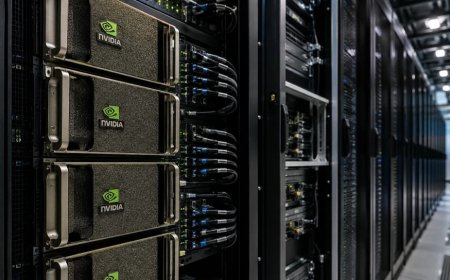
Apple took the human out of the chain. Its pipeline synthesizes vision-language-motion data across 1,000 procedurally generated homes, built with the Infinigen scene generator, and renders the scenes in Nvidia's Isaac Sim. A motion generator called Kimodo produces movements from text descriptions — sit on the armchair, crawl under the table — with geometric checks that discard slipping, interpenetration and jumps. The result is 162,698 episodes, about 296 hours of training data, generated in 48 hours on 250 Nvidia H100 GPUs, with no human teleoperation at all. The corpus grows with compute rather than with operator hours, which is the point Apple is making.
The number of homes matters. In the paper's simulation tests, success on the sitting task rose from 43% with a single training home to 64% with ten, 81% with a hundred and 84% with a thousand.
A Mac mini on the robot's back
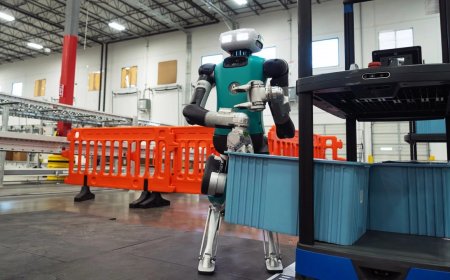
The test robot is a nearly stock Unitree G1 with two physical changes: a wide-angle OAK-1W camera on its head, and a protective shell on its back housing a Mac mini M4 Pro with 64 GB of unified memory, powered straight from the robot's electrical bus. There are no cables running outside and, in the base configuration, no cloud servers.
Three layers run on board, each on its own clock. A "director" built on Alibaba's Qwen3.6-35B-A3B language model, quantized to 4 bit and served with Apple's MLX framework, turns an operator's sentence into a sequence of tasks about every two seconds. A motion generator, using a small frozen Qwen3.5-2B model, looks at the camera image and the current task about three times a second and draws five seconds of whole-body motion, committing only the first half second. A "tracker" running at 50 Hz on the Jetson Orin NX already inside the G1 reads depth from a second, downward-facing camera and turns the plan into commands for the robot's 29 joints.
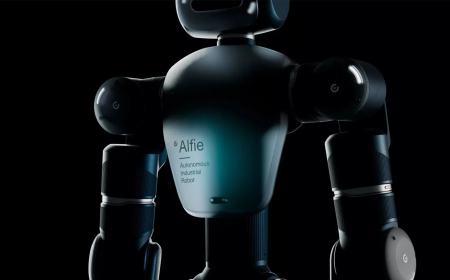
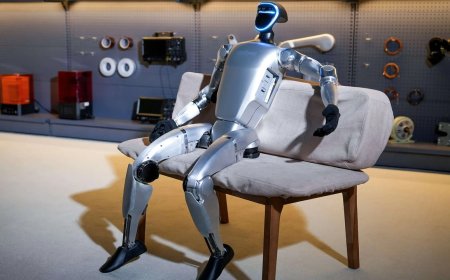
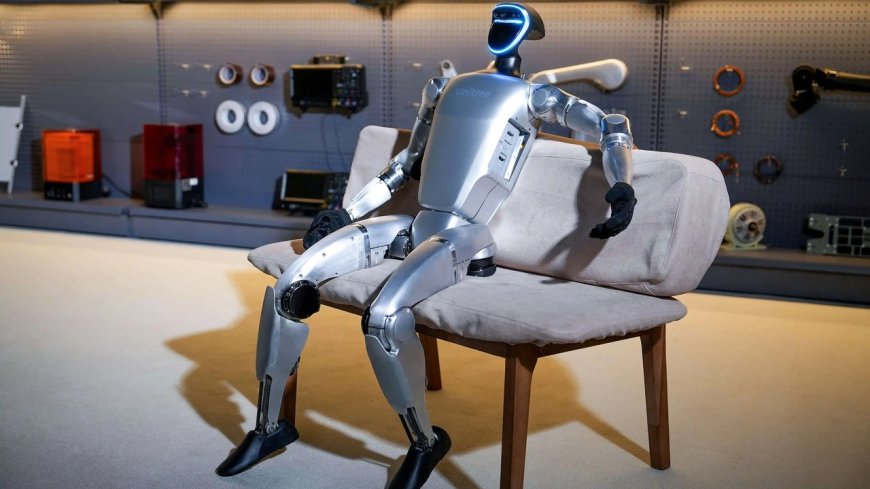
The Unitree G1 in the photo is a standard model; Apple's test robot carried the Mac mini in a shell on its back.
What the trials showed
The team tested six single skills in six unseen real environments, ten trials per skill per environment — 360 trials in all. The average success rate was 91%, identical to the figure seen in simulation. Crouching under a desk or table succeeded in every trial, slipping sideways through a half-open door in 93%, walking to a named person or object in 92%, crawling under a low obstacle in 90%, pushing a box in 88% and sitting on a chair, armchair or sofa in 85%.
Chained tasks were harder. Across three multi-step sequences the real-world average fell to 70%: door followed by reaching scored 100%, crouching and then sitting 60%, and the three-step chain of crouch, reach and push 50%. The authors attribute much of the drop to the robot's final pose — after crouching it can stand up with its head turned elsewhere, lose sight of the box and head for the sofa instead of the chair. The chained tests also ran in a single home, against six for the single tasks, so the 70% figure rests on about thirty trials.
What HALO cannot do yet
The paper is candid about its limits. None of the six skills involves grasping or manipulating objects with the hands, and the robot relies mainly on vision, so it cannot directly sense contact. Adding a new skill still requires a person to write the description and draw the motion keyframes. And the paper runs no head-to-head comparison against other published systems on the same tasks, so the 91% figure cannot be set directly against anyone else's numbers.
The code is public on Apple's machine-learning research GitHub, but the release ships no trained model weights and no dataset, so anyone rerunning the work must first generate the data and train the models. The paper is a preprint and has not been peer reviewed.
Still, the result is a notable one for a company that has said almost nothing publicly about humanoid robots. Where rivals collect data with fleets of human operators, Apple is betting that synthetic data and ordinary desktop hardware can do the job — and in six real homes, for single tasks at least, the bet paid off.
Sources
- arXiv — Perceptive Humanoid Motion from Simulation (2611.06908, Nov 4, 2026)
- AI & Humanoid Robotics Weekly — Apple trains a humanoid entirely in simulation (Nov 9, 2026)
- Pasquale Pillitteri — Apple unveils HALO, a Unitree G1 robot run by a Mac mini and Qwen
- CocoLoop — Apple runs Unitree's G1 humanoid on two Qwen models
- Maccus — Apple researchers trained a humanoid in simulation. It passed 91% of 360 tests in unseen homes
- Asia Daily — Apple Tests HALO on Unitree G1, Reporting 91% Success
What's Your Reaction?
 Like
0
 Dislike
0
 Love
0
 Funny
0
 Angry
0
 Sad
0
 Wow
0