








































German Robotics Startup RobCo Reaches $1 Billion Valuation as CEO Moves to the U.S.
German robotics startup RobCo has crossed the $1 billion valuation mark after a new secondary share transaction, becoming one of Europe’s latest robotics unicorns. The Munich-based company is also stepping up its U.S. expansion, with CEO and co-founder Roman Hölzl relocating to the United States as RobCo prepares to scale its autonomous industrial robotics business.
RobCo Hits $1 Billion Valuation as German Robotics Enters a New Phase
Germany’s robotics industry has produced another billion-dollar startup.
Munich-based robotics company RobCo has surpassed a $1 billion valuation, marking a major milestone for a company that was founded only in 2020. At the same time, its co-founder and CEO, Roman Hölzl, has relocated to the United States, signaling just how important the American market has become to the company's next stage of growth.
The announcement comes as investors increasingly pour money into robotics companies that combine artificial intelligence with machines capable of operating in the physical world. For RobCo, however, the milestone is not simply about becoming another technology unicorn. The company is trying to turn industrial robots into flexible systems that can work in factories where traditional automation has historically been difficult or expensive to deploy.
According to RobCo, the latest transaction pushed its valuation above $1 billion, roughly doubling the company's valuation in nine months. The transaction also gave existing employees an opportunity to sell some of their shares while bringing additional investors into the company.
Why the U.S. Is Becoming RobCo’s Biggest Growth Target
The most significant part of the announcement may actually be happening outside Germany.
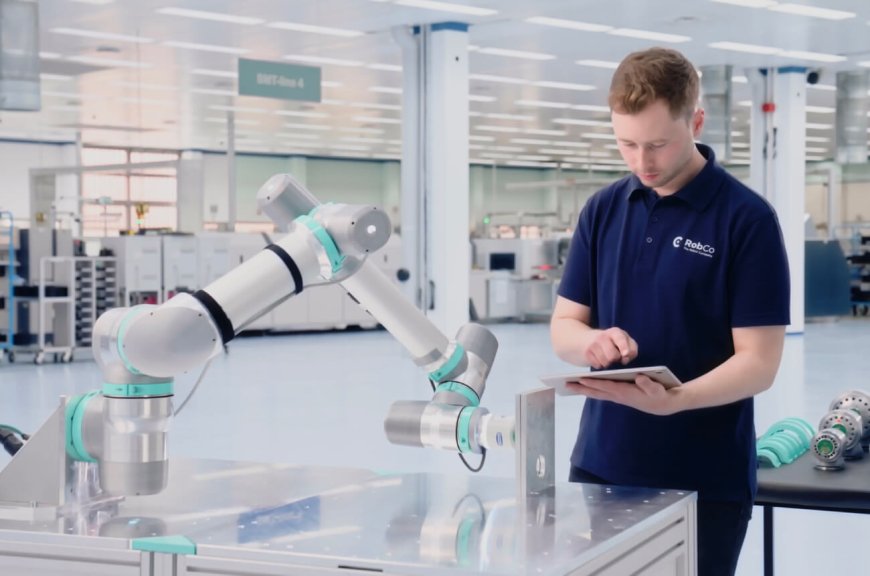
Hölzl has moved to the United States to personally focus on the company's expansion there. RobCo already has operations in Austin and San Francisco, and the company says it now has customers across more than a dozen U.S. states.
The reasoning is straightforward. Hölzl told Reuters that the U.S. market is larger in absolute terms and is growing faster than Europe. That matters because RobCo is selling industrial automation to manufacturers, and the American manufacturing sector represents a huge potential market for companies attempting to automate repetitive or difficult production tasks.
RobCo is not abandoning Germany, however. Its Munich operation will remain important, while the company plans to assemble some products for U.S. customers in Austin. That creates a two-continent operating model in which Germany remains a major engineering and manufacturing base while the United States becomes increasingly important for sales, deployment and expansion.
From Factory Robots to Physical AI
RobCo's ambitions are closely connected to one of the biggest shifts taking place in artificial intelligence: the move from software-only AI toward Physical AI.
Traditional industrial robots are extremely useful when a factory performs the same operation repeatedly in a controlled environment. The problem begins when production becomes more varied. A machine may need to deal with changing objects, different workpieces, unpredictable positioning or tasks that are difficult to program in advance.
This is where RobCo believes AI can change the economics of industrial automation.
The company's approach combines robotic hardware with software that allows machines to become more adaptable. Instead of treating every new manufacturing task as a completely separate automation project, RobCo is working toward systems that can understand their surroundings, reason about tasks and execute actions with less conventional programming.
That shift is important because labor shortages, rising production costs and the push to bring more manufacturing closer to major markets are creating demand for automation that is easier to deploy and more flexible than older industrial systems.
Alfie Is RobCo’s Big Bet
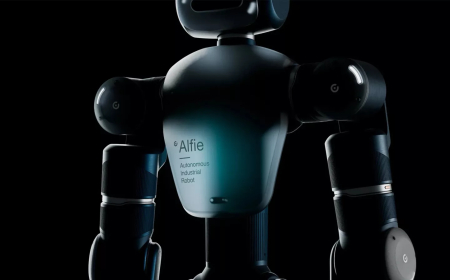
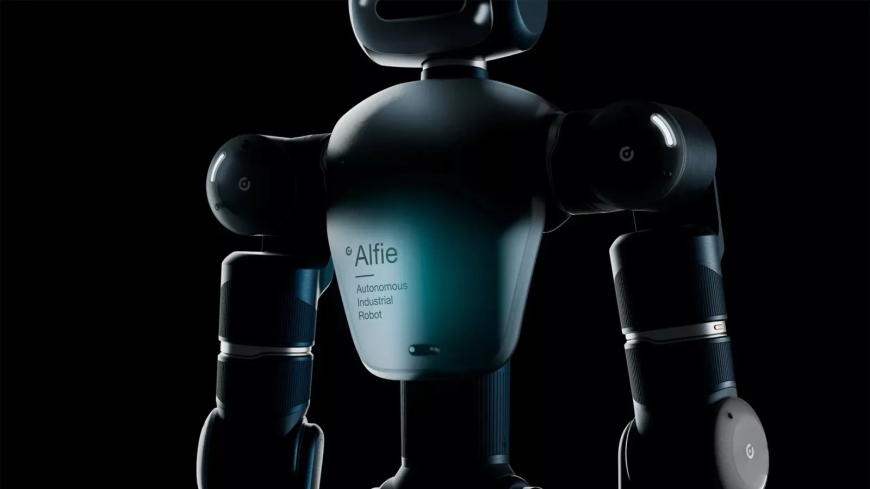
At the center of RobCo's next chapter is Alfie, the company's upcoming autonomous industrial robot.
Unlike the company's earlier industrial robotics systems, Alfie is designed as a two-armed, self-learning robot capable of handling industrial tasks that are difficult to automate using conventional machinery. RobCo says Alfie combines perception, reasoning and execution to work in more complex factory environments.
The company plans to commercially launch Alfie at its first annual RobCoN event in Munich on March 4, 2027. Several customers have already installed prototypes, according to Reuters.
That timeline makes Alfie particularly important for the new valuation. Investors are not simply betting on RobCo's existing industrial robotics business; they are also betting that AI-enabled robots can open a much larger market.
RobCo describes this as the next generation of autonomous industrial robotics. The broader technology industry increasingly uses terms such as physical AI and embodied AI to describe systems that allow artificial intelligence to perceive and interact with the physical world rather than simply generate text, images or software.
Nearly $200 Million Raised So Far
RobCo's new valuation follows significant investment.
The company raised $100 million in January, with investors including Lightspeed Venture Partners, Sequoia and Lingotto. RobCo said its total funding has now approached $200 million.
The latest transaction was structured as a secondary share sale, allowing employees to sell part of their holdings while existing and new investors participated. The Wall Street Journal reported that the transaction involved approximately $40 million worth of shares. New investors included Cherry Ventures and European Tech Collective.
That structure is notable because it provides liquidity to employees without being simply another conventional fundraising round. It also gives investors an opportunity to increase their exposure to a company whose valuation has risen sharply in a relatively short period.
RobCo Joins Europe’s Growing Robotics Unicorn Club
RobCo is now part of a relatively small group of European robotics startups valued at $1 billion or more.
Germany already has several ambitious companies operating in the robotics sector, including NEURA Robotics and Agile Robots, while the United Kingdom has companies such as Humanoid pursuing next-generation robotic systems.
The timing is significant. Artificial intelligence has dramatically increased investor interest in robotics because advances in computer vision, machine learning and AI reasoning are making robots potentially more capable outside tightly controlled production lines.
The result is a new competitive landscape. Robotics companies are no longer competing only on motors, sensors and mechanical engineering. Increasingly, the software intelligence controlling those machines may become just as important as the hardware itself.
The Bigger Challenge Is Turning AI Into Reliable Factory Work
There is still a considerable gap between demonstrating an impressive robot and deploying one reliably inside a factory.
Industrial customers care about uptime, safety, accuracy, maintenance, integration and measurable financial returns. A robot that can perform an impressive demonstration is not automatically a commercially successful industrial system.
RobCo's challenge will therefore be proving that AI-powered machines can deliver consistent results under real production conditions. The company's robotics-as-a-service approach is designed to make advanced automation easier for businesses to adopt, while its software platform is intended to allow systems to be adapted as production requirements change.
This is also why the company's U.S. expansion matters beyond geography. Being physically closer to customers can make deployment, support and integration easier while giving RobCo direct access to one of the world's largest industrial markets.
What RobCo’s $1 Billion Valuation Really Means
RobCo's new valuation is more than another startup milestone. It reflects a broader change in how investors view robotics.
For years, robotics startups faced a difficult problem: sophisticated machines could be expensive to build and difficult to program for anything beyond narrowly defined tasks. The recent progress of AI is changing that equation by giving robots increasingly capable perception and decision-making systems.
RobCo is betting that this combination can make industrial automation more flexible and accessible.
The company's success will ultimately depend on whether that vision translates into large-scale deployments and sustainable business growth. But with its valuation now above $1 billion, an expanding U.S. footprint and Alfie approaching commercial launch, RobCo has clearly moved from being a promising German robotics startup into a much more closely watched player in the global physical-AI race.
Sources
What's Your Reaction?
 Like
0
Like
0
 Dislike
0
Dislike
0
 Love
0
Love
0
 Funny
0
Funny
0
 Angry
0
Angry
0
 Sad
0
Sad
0
 Wow
0
Wow
0