






















Tesla Secures $30 Billion Credit Buffer as AI and Capital Spending Enter a New Phase
Tesla has arranged $30 billion in new credit facilities as the company prepares for a major expansion in capital spending focused on AI computing, robotics, autonomous vehicles, solar manufacturing and semiconductor production. The facilities remain undrawn for now, but they give Tesla additional financial capacity as its planned 2026 capital expenditure rises above $25 billion.

Tesla Lines Up $30 Billion as Its AI and Robotics Ambitions Get More Expensive
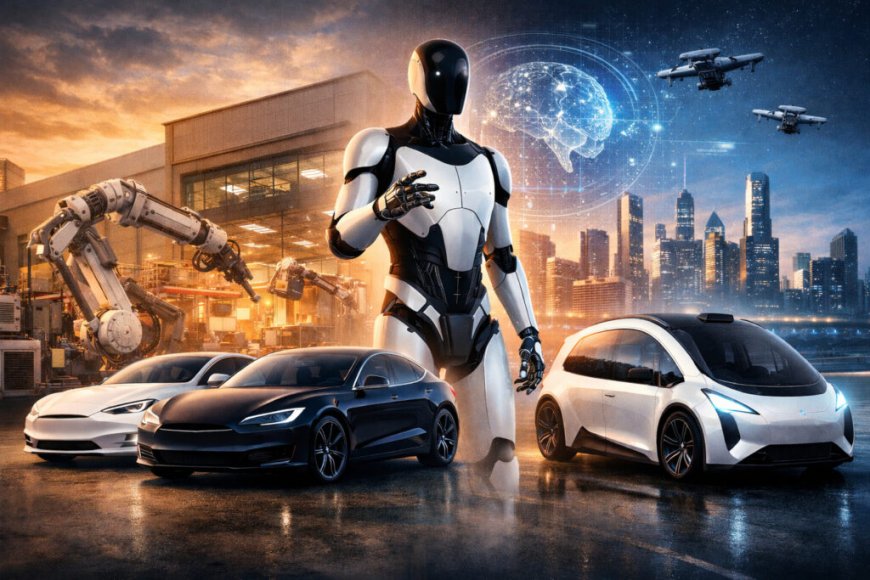
Tesla is preparing for one of the most capital-intensive periods in its history. The electric-vehicle company has entered into agreements providing access to $30 billion in new credit facilities, giving it substantially more financial flexibility as spending accelerates across artificial intelligence, robotics, autonomous vehicles, semiconductor manufacturing and energy projects.
The financing package was disclosed in a regulatory filing on September 29. Importantly, Tesla said it had no borrowings outstanding under the new facilities at that time and does not currently plan to draw on them during 2026. In other words, the $30 billion is available borrowing capacity rather than $30 billion of newly borrowed cash.
That distinction matters because Tesla is simultaneously planning to spend more than $25 billion on capital expenditures in 2026, compared with $8.53 billion in 2025. The company expects a large portion of that investment to go toward infrastructure that supports its longer-term push into AI and robotics rather than traditional vehicle manufacturing alone.
The $30 Billion Credit Package Explained
Tesla's new financing arrangements are divided into three major facilities.
The largest is a $20 billion three-year delayed-draw term loan facility arranged with Citibank. Tesla also secured an $8 billion five-year revolving credit facility and a $2 billion 364-day revolving credit facility with Wells Fargo.
Together, those agreements provide $30 billion of potential financing capacity. Tesla can also increase the commitments under the two revolving facilities by up to another $4 billion if the applicable conditions are met. The new arrangements replace a previous $5 billion revolving credit facility that had no outstanding borrowings when it was terminated.
The structure gives Tesla flexibility rather than requiring it to immediately take on $30 billion of debt. The company can draw funds when needed, allowing it to match financing with the timing of major capital projects.
AI Is Becoming a Major Part of Tesla's Spending
Tesla's investment plans increasingly extend beyond electric vehicles.
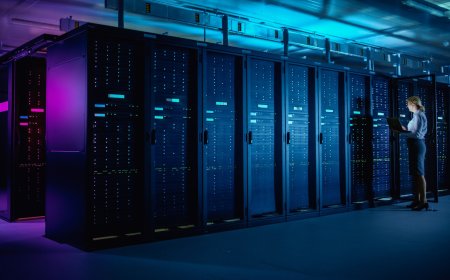
The company expects significant capital spending on AI compute infrastructure, which is becoming an increasingly important part of its autonomous-driving and robotics strategy. Tesla has been expanding its internal computing capabilities as it develops systems intended to process large volumes of vehicle and robot data.
During the first half of 2026, Tesla's onsite AI training compute capacity in Texas more than doubled to more than 205 megawatts across its Cortex facilities, according to reporting on the company's second-quarter results.
This infrastructure is important because Tesla's ambitions for autonomous driving and humanoid robots require substantially more computing power for training and deploying AI models. The company is therefore spending not only on vehicles and factories but also on the underlying computing infrastructure needed to develop those systems.
Robotaxi and Optimus Add Another Layer of Investment
Tesla's capital requirements are also being driven by its plans for autonomous transportation and humanoid robots.
The company has been developing its Cybercab robotaxi program while simultaneously preparing manufacturing infrastructure for Optimus, its humanoid robot project. Both programs require substantial investment in hardware, manufacturing equipment, AI systems and supply chains.
Tesla executives have previously indicated that capital expenditure could continue growing for the next several years as the company expands its robotaxi fleet, increases Optimus production capacity, builds semiconductor manufacturing capabilities, expands solar production and develops additional AI compute infrastructure.
That makes the new credit facilities more than simply a short-term liquidity arrangement. They provide Tesla with additional financial capacity while the company moves into businesses that require heavy upfront investment before they can potentially generate significant revenue.
Semiconductor and Solar Projects Are Also on the List
Tesla's investment strategy is not limited to AI servers and robots.
The company expects part of its record 2026 spending to support solar cell manufacturing capacity and a semiconductor fabrication project being developed with SpaceX. Tesla CEO Elon Musk also said Tuesday that SpaceX and Tesla are targeting 200 gigawatts of solar production per year.
Semiconductor production could become particularly important for Tesla because advanced computing hardware is central to autonomous vehicles, robotics and AI training. Greater control over chip development and manufacturing could potentially give the company more control over an increasingly important part of its technology infrastructure.
The projects also demonstrate how Tesla's definition of itself is expanding. The company remains an automaker, but its future investment plans increasingly involve energy, computing, robotics and semiconductor technology.
Tesla Still Has Significant Financial Resources
Although the $30 billion credit package is substantial, Tesla is not entering the arrangement with an empty balance sheet.
As of June 30, the company had approximately $15.22 billion in cash and $28.31 billion in short-term investments, giving it a combined total of roughly $43.5 billion in those liquid resources. At that point, Tesla also had about $9 billion of outstanding debt.
The new facilities therefore provide an additional layer of financial flexibility rather than replacing Tesla's existing cash resources.
The decision not to draw on the new facilities during 2026, as currently stated by Tesla, also indicates that the company does not view the credit lines as immediate funding for this year's spending. Instead, they can provide optionality as larger projects progress.
Why Tesla's Capital Spending Is Surging
Tesla spent $8.53 billion in capital expenditures during 2025, but the company's forecast for 2026 is more than three times that amount.
The sharp increase reflects a fundamental change in the company's investment priorities. Tesla is simultaneously trying to expand vehicle and battery manufacturing while developing autonomous vehicles, robotaxis, humanoid robots, AI infrastructure, semiconductor capabilities and solar manufacturing.
This creates a much broader capital requirement than Tesla would face if it were simply expanding its traditional EV production footprint.
The company has described 2026 as a major capital-spending year, while management has indicated that spending could remain elevated for several years as these new businesses scale.
The Free Cash Flow Question
Heavy investment also creates an important financial challenge.
LSEG data cited by Reuters indicates analysts expect Tesla to report negative free cash flow of about $9.78 billion for 2026. That does not mean Tesla is necessarily facing a liquidity crisis; rather, it reflects the possibility that its investment spending will exceed the cash generated by operations during the year.
For a company investing heavily in long-term projects, negative free cash flow can occur during periods of expansion. The key issue is whether those investments eventually produce enough additional revenue and cash generation to justify the expenditure.
Tesla is effectively betting that AI, autonomous transportation, robotics, energy and related technologies will become meaningful businesses rather than remaining expensive research and development projects.
A Different Tesla Is Emerging
The $30 billion credit package highlights how different Tesla's investment profile has become.
The company was originally built around electric vehicles and battery technology. Today, its major investment plans increasingly connect vehicles with AI computing, autonomous systems, robotics, energy generation and semiconductor technology.
That creates both opportunities and financial demands. AI infrastructure requires expensive computing hardware and data-center capacity. Robotaxis require vehicles, software and autonomous-driving systems. Optimus requires new manufacturing processes and supply chains. Semiconductor and solar projects require factories and equipment of their own.
Tesla is therefore preparing its balance sheet for a much larger technology and infrastructure footprint.
What the $30 Billion Really Means
The most important point is that Tesla has not borrowed $30 billion. It has secured access to up to $30 billion of credit facilities, while stating that it currently does not plan to draw on them during 2026.
The financing nevertheless shows the scale of the company's ambitions. With capital expenditure expected to exceed $25 billion this year and potentially remain elevated for years, Tesla is building additional financial capacity ahead of a period of aggressive investment.
The next major question will be whether the company's AI, robotaxi, Optimus, semiconductor and energy investments can eventually generate the level of economic returns management expects. For now, Tesla is preparing its finances for a future in which artificial intelligence and robotics could become just as important to the company as electric vehicles.
What's Your Reaction?
 Like
0
Like
0
 Dislike
0
Dislike
0
 Love
0
Love
0
 Funny
0
Funny
0
 Angry
0
Angry
0
 Sad
0
Sad
0
 Wow
0
Wow
0