


















RTX 5090 Has Practically Disappeared in the US — and Resellers Are Asking Up to $9,500
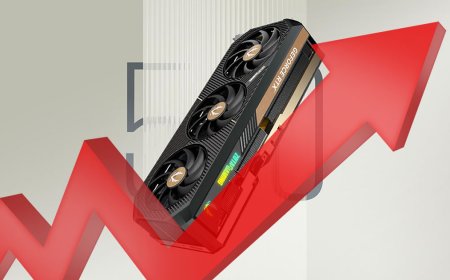
Nvidia’s flagship GeForce RTX 5090 has become extremely difficult to find through major U.S. online retailers. As normal inventory disappears, third-party sellers are listing the GPU for roughly $6,500 to $9,500 or more, turning a graphics card that launched at $1,999 into one of the most expensive consumer PC components on the market.

The RTX 5090 Has Become Extremely Hard to Find
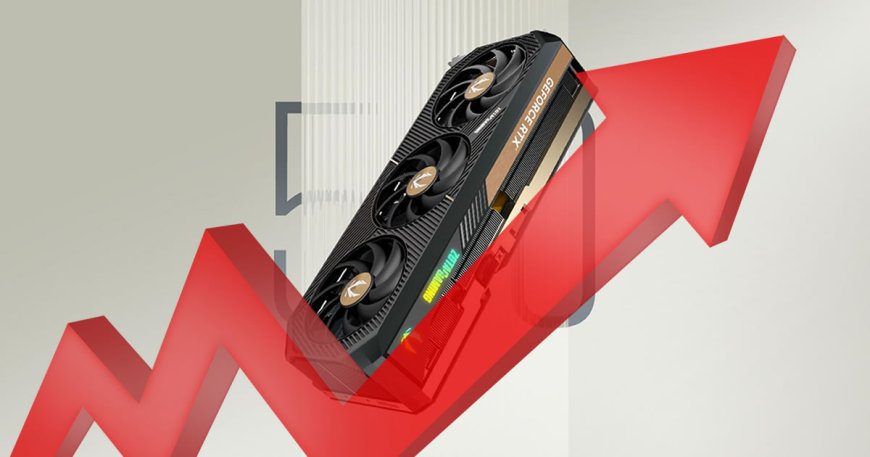
For PC enthusiasts who have been watching Nvidia’s flagship RTX 5090, the U.S. market has taken a rather dramatic turn. Nvidia’s most powerful GeForce gaming GPU has largely disappeared from normal online retail channels, leaving buyers with far fewer options — and some of those options come with eye-watering price tags. Recent listings from third-party sellers have pushed the RTX 5090 to roughly $6,500–$9,500, with some asking even more. The card originally launched with a $1,999 MSRP.
That means someone looking for a new RTX 5090 today could theoretically be asked to pay several times what Nvidia originally intended the card to cost. The situation is particularly striking because this isn't simply a case of one retailer running out of stock. According to Tom's Hardware's latest market check, normal online inventory has largely dried up across major U.S. marketplaces, leaving third-party sellers to fill the gap. And when supply disappears while demand remains high, the price can quickly become detached from the original retail price.
From $1,999 to Nearly $10,000
The price movement has been unusually aggressive. In June, the median RTX 5090 price was around $4,299. At the beginning of September, the lowest online price tracked by Tom's Hardware was about $5,199. Within less than two weeks, mainstream online availability had deteriorated further, while third-party listings climbed as high as $9,500.
Some individual listings show just how strange the market has become. Newegg had an MSI Ventus 3X listed around $6,449, while an overclocked model was listed around $8,699. Amazon also had an Asus TUF Gaming OC model listed around $6,395. The issue isn't only the price: some of the sellers attached to these listings have received poor customer feedback, including complaints about orders not being fulfilled.
So, Where Did All the RTX 5090s Go?
The obvious answer is demand — and increasingly, that demand isn't coming only from gamers.
The RTX 5090 was designed as Nvidia's ultimate consumer gaming graphics card, but its hardware has another extremely valuable use. The GPU features Nvidia's GB202 chip and 32GB of GDDR7 memory, giving it enough memory and computing capability to attract people building AI systems as well as traditional high-end gaming PCs. For some AI workloads, the card can look surprisingly attractive compared with much more expensive professional hardware.
That creates an unusual situation. A product originally marketed to gamers is now competing for supply with people interested in local AI development and other compute-heavy workloads. The result is that the person who simply wants to build an extremely powerful gaming PC can end up competing against buyers who view the same GPU as a piece of computing infrastructure.
The RTX 5090 Is Still the King of Gaming GPUs
Despite the shortage, the reason people are willing to pay so much is straightforward: the RTX 5090 remains Nvidia's flagship consumer GPU and is still positioned at the top of the gaming performance hierarchy.
Its 32GB of GDDR7 memory gives it substantial headroom for demanding games and creative workloads, while Nvidia's latest rendering technologies give the Blackwell-based card additional performance features. The company's newer DLSS 5 Neural Rendering technology has also increased the appeal of RTX 50-series hardware, although Nvidia's own technology is not limited exclusively to the 5090.
For gamers, however, there is a painful irony here. The more capable the card becomes for AI and other workloads, the more attractive it becomes to buyers who don't actually care about gaming. A product that was supposed to represent the ultimate enthusiast gaming experience is increasingly being treated as a relatively accessible source of high-end GPU compute.
There Is Still One Interesting Exception
The U.S. retail situation isn't completely hopeless. Tom's Hardware found that Micro Center still had RTX 5090 inventory at a local store around the $4,299 level when it checked. Its predominantly in-person sales model appears to have helped shield its stock from some of the online buying pressure affecting marketplace listings.
That difference is revealing. The shortage isn't necessarily proof that every RTX 5090 has disappeared from the country. Rather, it shows how difficult it has become to find the card through ordinary online channels at anything resembling a reasonable market price.
The Bigger Problem: Buying a $9,000 GPU Is a Risky Game
The extreme prices are also creating an environment where scams become more tempting. Tom's Hardware has previously documented RTX 5090-related scams, including a case where customers expecting a graphics card received something completely different. The publication has also reported suspicious secondhand-market listings involving cards that had been stripped of major components.
That makes the current market particularly uncomfortable. When a product is difficult to find and buyers become desperate, people can become more willing to trust unfamiliar sellers simply because a listing appears to be the only available option. A $9,000 price tag doesn't automatically mean the product is legitimate — it can simply mean that someone knows how badly buyers want the hardware.
Nvidia's AI Success Is Creating a Strange Problem for Gamers
There is something almost symbolic about the RTX 5090 shortage. Nvidia built one of the most powerful consumer GPUs ever made, but the AI boom has changed what people think that hardware is worth.
The same 5090 that can deliver an extraordinary gaming experience can also be used for AI workloads, and that second use is helping push demand far beyond the traditional PC-gaming audience. Meanwhile, Nvidia's professional GPUs designed specifically for AI and workstation applications can cost considerably more, making a consumer RTX 5090 look attractive to some buyers even when its price has already climbed far above MSRP.
For now, the RTX 5090 has become a strange symbol of the modern GPU market: a $1,999 gaming card that has become a $5,000-plus commodity, with some sellers asking nearly $10,000. Whether prices eventually settle back down will depend heavily on supply, manufacturing and the extraordinary demand coming from the AI industry.
Until then, the most powerful GeForce card isn't just hard to afford — in the U.S. online market, it's becoming hard to find at all.
What's Your Reaction?
 Like
0
Like
0
 Dislike
0
Dislike
0
 Love
0
Love
0
 Funny
0
Funny
0
 Angry
0
Angry
0
 Sad
0
Sad
0
 Wow
0
Wow
0