


































CScale Secures $145 Million to Build a New Optical Backbone for Massive AI Systems
Silicon Valley startup CScale has raised $145 million in Series C funding, with NVIDIA and Intel Capital joining as strategic investors. The company is developing optical interconnect technology designed to connect thousands of AI accelerators across large data centers while containing optical failures without interrupting computing workloads.

CScale Raises $145 Million as AI Infrastructure Moves Beyond Copper
The race to build larger and more powerful artificial intelligence systems is creating a problem that has little to do with the performance of individual AI chips. As companies connect thousands of accelerators into enormous computing clusters, the network linking those processors together is becoming just as important as the processors themselves.
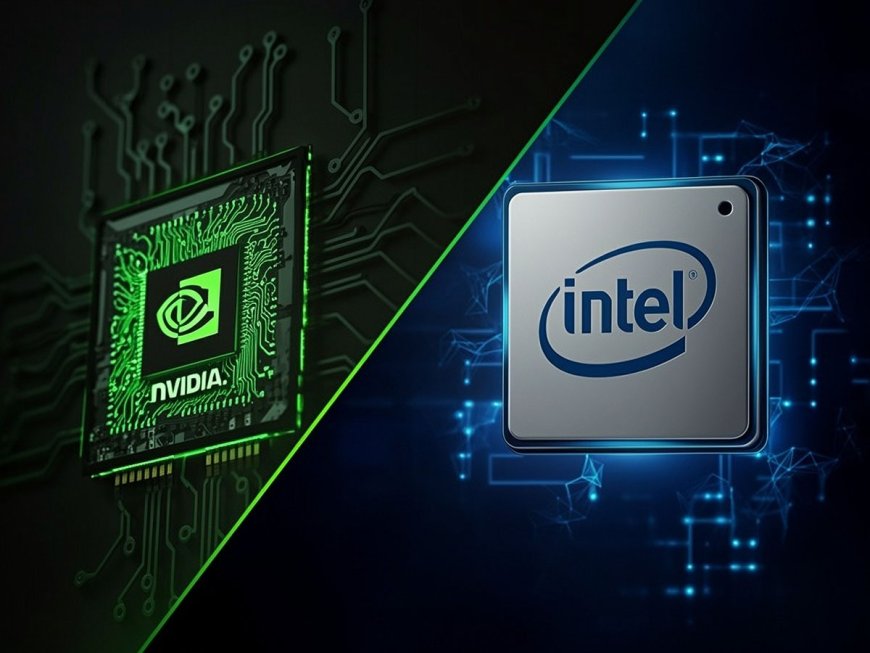
That is where Silicon Valley startup CScale is entering the market. The company has emerged from stealth with $145 million in Series C funding to accelerate development and commercialization of optical interconnect technology for AI infrastructure. The financing brings CScale's total funding to $188 million. NVIDIA and Intel Capital have joined the round as CScale's first strategic investors, alongside financial backers Atreides Management, Valor Equity Partners and Premji Invest. Existing investors Sutter Hill Ventures and Maverick Silicon also participated.
CScale's technology is aimed at the connections that allow large numbers of AI accelerators to communicate and operate together as a single computing system. The company believes optical networking will become increasingly important as AI data centers expand from individual server racks to much larger clusters spanning dozens of racks.
Why AI Data Centers Need a Different Kind of Network
Modern AI workloads depend on enormous amounts of communication between processors. Training and running advanced AI models is no longer simply a matter of putting a faster GPU into a server. Thousands of accelerators may need to exchange data continuously, and even relatively small delays or failures can affect the efficiency of the entire computing system.
Traditional copper connections remain fast and widely used, but their physical reach is limited. As AI clusters grow, keeping processors close enough together to maintain those connections can create additional engineering challenges, including dense system designs and significant cooling requirements.
Optical connections offer a different approach. Instead of transmitting information primarily through electrical signals in copper, optical networking uses pulses of light through fiber or optical components. That makes it possible to move large amounts of data over longer distances while maintaining the bandwidth needed by increasingly large AI systems.
The technology is not entirely new. Optical networking has been used in telecommunications and data centers for years. The challenge is adapting it to the extremely demanding scale-up networks required by next-generation AI computing.
CScale Wants to Put Optical Technology Closer to the AI Chips
CScale has revealed relatively few technical details about its architecture, but the company says it is developing an integrated optical light engine for AI scale-up systems.
One of the company's key ideas involves integrating lasers with the chip-side networking system while designing the architecture so that a laser failure does not bring down the wider computing workload.
That reliability issue becomes more important as AI clusters become larger. A component failure that is relatively uncommon on an individual optical connection can become a recurring operational event when an infrastructure deployment contains thousands—or eventually hundreds of thousands—of connected accelerators.
CScale's approach is therefore focused not only on increasing bandwidth but also on containing failures. The company says its interconnect architecture is being designed so that optical failures can be isolated without interrupting compute.
NVIDIA and Intel Are Joining the Funding Round
The involvement of NVIDIA and Intel Capital is notable because both companies have significant interests in the infrastructure surrounding AI processors and data centers.
NVIDIA has built much of its AI computing platform around tightly connected accelerator systems, networking hardware and high-speed interconnect technologies. As AI clusters continue to expand, the networking layer becomes increasingly important to overall system performance.
Intel, meanwhile, has longstanding expertise across processors, data-center infrastructure, networking and optical technologies. Intel Capital's participation gives CScale another strategic connection to the broader semiconductor and data-center ecosystem.
However, their participation does not mean CScale has announced a commercial partnership to deploy its technology in NVIDIA or Intel products. The companies are described as strategic investors in this financing round.
The Funding Round Brings CScale's Total to $188 Million
The $145 million Series C was co-led by Atreides Management, Valor Equity Partners and Premji Invest. Sutter Hill Ventures and Maverick Silicon also participated.
With the latest investment, CScale has now raised $188 million in total funding since its founding in 2023.
The company is based in Palo Alto, California, and is led by CEO Martin Lund, a veteran of the semiconductor and networking industry. Lund previously held senior positions at Cisco, where he oversaw hardware and networking systems, before joining CScale.
The startup was previously known as CSpeed and operated quietly while developing its technology.
The Bigger Challenge: Scaling AI Beyond Individual Racks
The significance of CScale's work becomes clearer when looking at where AI infrastructure is heading.
Today's large AI systems already require huge numbers of processors connected through high-speed networks. Future systems are expected to connect even more accelerators across increasingly large physical footprints.
CScale says future gigawatt-class AI data centers could contain scale-up domains spanning thousands of tightly coupled accelerators across dozens of racks. At that scale, the network is no longer simply a peripheral component—it becomes part of the computing architecture itself.
If processors cannot communicate quickly and reliably, adding more processors does not automatically translate into proportional increases in useful AI performance. The network can become a bottleneck.
This is one reason companies across the semiconductor and infrastructure industries are investing heavily in optical technologies. The goal is to move data faster, farther and more efficiently while allowing AI computing systems to continue growing in physical size.
Optical Networking Is Becoming a Major AI Infrastructure Battleground
CScale is entering a market that is attracting significant attention from established semiconductor companies and startups alike.
The industry is increasingly exploring optical technologies because electrical connections face physical limitations as bandwidth requirements increase. Optical links can provide high bandwidth over longer distances, making them attractive for large-scale AI clusters.
But optical systems introduce their own engineering challenges. Laser components can fail, and replacing or servicing those components inside a massive AI installation can be difficult. That makes reliability and fault isolation particularly important.
CScale's strategy is built around this problem. Rather than treating optical failure as something that should simply never happen, the company is designing its architecture around the assumption that individual components can eventually fail while the larger AI system continues operating.
CScale Plans to Ship Its Chips in 2028
CScale says the newly raised capital will be used to accelerate development and commercialization of its optical interconnect technology.
CEO Martin Lund told Reuters that the company plans to ship its chips by 2028. The company has not yet disclosed the complete technical specifications or commercial deployment details of those products.
That timeline puts CScale directly into the period when AI data centers are expected to become substantially larger and more interconnected. Whether its architecture can deliver the reliability, bandwidth and economic advantages promised by the company will depend on future engineering and commercial execution.
For now, CScale remains an emerging infrastructure company rather than an established supplier with a large-scale commercial deployment.
Why This Matters for the Future of AI
The most important aspect of CScale's funding is not simply the $145 million investment. It is another indication that the AI infrastructure race is moving beyond the traditional competition over faster GPUs and AI accelerators.
As AI models become larger and computing clusters expand, the connections between processors increasingly determine how effectively those processors can work together. A powerful accelerator can only contribute its full potential if the surrounding system can continuously feed it data and receive results without creating major bottlenecks.
CScale is betting that optical technology will become a critical part of that next generation of infrastructure. Its focus on fault containment also highlights an increasingly important reality: at massive scale, reliability is not just about preventing failures—it is about ensuring that individual failures do not bring down the entire system.
With NVIDIA and Intel Capital now among its strategic investors and $188 million raised overall, CScale has significant resources to develop that vision. The company's next major test will be turning its optical interconnect architecture from a promising infrastructure concept into commercially deployable technology capable of supporting the enormous AI computing systems expected later this decade.
What's Your Reaction?
 Like
0
Like
0
 Dislike
0
Dislike
0
 Love
0
Love
0
 Funny
0
Funny
0
 Angry
0
Angry
0
 Sad
0
Sad
0
 Wow
0
Wow
0