
























































DeepX Bets Over $100 Million on Samsung's 2nm DX-M2 Chip for On-Device AI
South Korean AI chip startup DeepX will spend more than $100 million to build its DX-M2 edge AI chip on Samsung's 2-nanometre process, with first silicon due in March 2027 and mass production planned for 2028.
DeepX Bets Over $100 Million on Samsung's 2nm DX-M2 Chip for On-Device AI
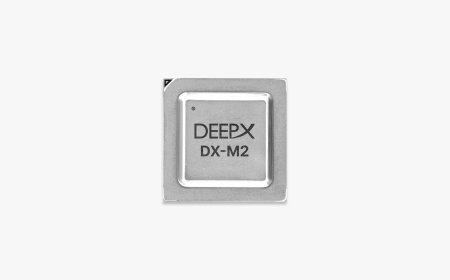
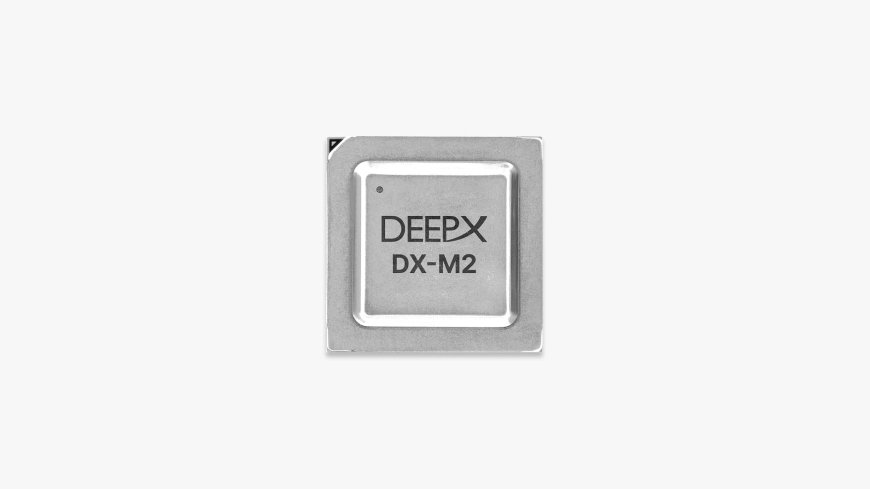
South Korean AI chip startup DeepX is putting more than $100 million behind its next processor, the DX-M2, which will be built on Samsung's 2-nanometre manufacturing process. The bet is a striking one for a startup: the chip has not been made yet, no customer has been named for it, and the first working silicon is still months away. What DeepX is selling is a different idea of where artificial intelligence runs — not in a distant data centre, but inside the robot, drone or factory machine itself.
DeepX said it has finished the DX-M2 design and handed the final plans to Samsung's foundry business, completing the mask tape-out in early November. The announcement, reported by Bloomberg and carried by TechInAsia on November 14, puts DeepX among the first chip designers to commit serious money to Samsung's most advanced process node.
A 2nm chip built for the edge, not the data centre
The DX-M2 is an edge AI accelerator, designed to run generative AI models directly on a device. DeepX says the chip delivers 80 TOPS of AI performance while drawing about 5 watts — a power budget closer to a light bulb than to the hundreds of watts a data-centre accelerator consumes. It is aimed at robots, drones, industrial equipment and AI-enabled personal computers, machines that need to understand language and images without a constant connection to the cloud.
That positioning is deliberate. The most powerful AI chips in the world live in data centres, but they are expensive, power-hungry and useless the moment a network drops. DeepX is targeting the opposite end of the market: devices that must keep working on their own, in factories, warehouses and the field.
The schedule DeepX has laid out is a long one. First silicon is expected in March 2027, customer evaluation samples should follow in the second quarter, initial mass-production shipments are planned for the fourth quarter of 2027, and full-scale production is targeted for 2028. The $100 million-plus budget covers performance verification and production engineering, not just the tape-out itself.
DeepX is no stranger to Samsung's fabs. The startup became the first commercial customer for Samsung Foundry's 2nm gate-all-around process under a deal signed in August 2025 with design partner Gaonchips, and its first-generation chip, the DX-M1, has been in mass production on Samsung's 5-nanometre process since August 2025.
What the DX-M2 is designed to do
On paper, the DX-M2 is built around memory rather than raw compute. DeepX says it can run models with 20 billion to 100 billion parameters — with roughly 3 billion to 20 billion parameters active per token, the signature of sparse mixture-of-experts models — at about 10 to 30 tokens per second. Memory bandwidth roughly triples from the DX-M1's 50 GB/s to about 150 GB/s across eight channels, and the chip supports up to 96 GB of external LPDDR5X memory.
The more unusual part of the design is the memory itself. DeepX is working with Samsung's memory division on an LPDDR5X-PIM part — processing-in-memory, where some of the arithmetic happens inside the DRAM die instead of being shuttled back and forth across the bus. In DeepX's own simulations, that approach produced up to 6.7 times the tokens per second of the DX-M2 alone on the Llama 3.1 8B model, at 2.7 times the power; holding power flat still left about a twofold gain. Those are simulation figures, not measurements from real hardware, and the compiler for the real chip is still being adapted.
South Korean reports have also put the chip's target price at under $50 — a figure set before tape-out that DeepX has not restated since, and one that will face pressure from the cost of 2nm wafers. No DX-M2 customer or design win has been named in any report so far.
What is still unproven
Everything about the DX-M2 remains pre-silicon. The roughly 5-watt figure is a design target, not a measured result, and the specifications on DeepX's own product pages carry the standard warning that they may change. Until the first wafers come back from Samsung's fab in March 2027 and are tested, the performance claims are promises rather than proof.
Samsung has not commented publicly on the DX-M2, and the second-generation 2nm process name used in Korean press reports — SF2P — comes from industry outlet TheElec rather than from Samsung itself. That caution cuts both ways: if the chip works as designed, DeepX will have a genuine lead in low-power on-device AI; if the silicon disappoints, the startup has committed nine figures to a part with no announced buyers.
A track record to build on
DeepX does arrive with something most AI chip startups lack: a shipping product. As of October 2026, the company said it had secured 88 commercial purchase orders worth approximately $13.3 million across eight industries in more than 10 countries for the DX-M1. And the DX-M2 has already picked up a public honour — it was named a CES 2027 Innovation Awards honoree in the AI category, announced on November 10.
The broader race is heating up around it. Google recently unveiled new variants of its eighth-generation TPU as cloud demand surges, and the industry's biggest players are all chasing cheaper, more efficient ways to run AI outside the data centre. DeepX's answer is a small, frugal chip that tries to do the heavy lifting where the data is created. Whether the silicon lives up to the design will not be known until the spring — but the money, at least, is now committed.
For more on the AI chip race, see our report on Google's new TPU variants for confidential AI and long-context work.
Sources
- TechInAsia — "Samsung to produce DeepX's next-generation AI chip" (November 14, 2026; reporting by Bloomberg)
- Technology.org — "DeepX Tapes Out the DX-M2, a 2nm Edge AI Chip" (November 11, 2026)
- The Korea Times — "Korean NPU maker DEEPX's new chip wins CES Innovation Award" (November 10, 2026)
- SiliconNoon — "DeepX DX-M2: 100B-parameter models at 5W, for under $50 a chip" (November 13, 2026)
- Longbridge / Zhitong Finance — "DeepX Invests $100 Million in Samsung's 2nm Technology" (November 13, 2026)
What's Your Reaction?
 Like
0
 Dislike
0
 Love
0
 Funny
0
 Angry
0
 Sad
0
 Wow
0