






























Google Adds TPU 8tx and TPU 8i Max, Completing Four New AI Chip Systems in a Single Year
Google has expanded its eighth-generation TPU lineup with two new systems, TPU 8tx for secure and confidential AI workloads and TPU 8i Max for massive context windows, as surging demand turns its custom AI chips into a major cloud business. Neither system has a price or release date yet, with Google pointing to availability in 2027.
Google Adds TPU 8tx and TPU 8i Max, Completing Four New AI Chip Systems in a Single Year
Google has added two more systems to its eighth-generation Tensor Processing Unit lineup, TPU 8tx and TPU 8i Max, bringing the number of TPU systems it has introduced this year to four. The company announced the new systems on November 9, 2026, in a blog post by Amin Vahdat, Google's senior vice president and chief technologist for AI and infrastructure, who said it is the first time Google has introduced four TPU systems in a single year.
The two new systems are aimed at the two problems Google says its enterprise customers now raise most often: keeping sensitive data protected while AI models work on it, and giving autonomous AI agents enough memory to reason across very large amounts of information at once. Both are built on the same silicon Google introduced in April, rather than entirely new chips, and both are aimed squarely at the market for AI accelerators that Nvidia currently dominates.
Two new systems, not two new chips
Google was careful to draw a distinction in its announcement. Designing a new chip takes years, Vahdat wrote, but a system — the way compute, memory, networking and security are packaged around a chip — can be reconfigured in months. That is what Google has done here. TPU 8tx reuses the silicon of the TPU 8t training chip, while TPU 8i Max packages two existing TPU 8i inference chips together. The approach lets Google respond to customer demand without waiting for a new chip design cycle.
The eighth generation began at Google Cloud Next in April, when Google introduced TPU 8t for large-scale training and TPU 8i for real-time reasoning. Google says TPU 8t delivers up to 2.7 times better training performance than the previous TPU generation, and TPU 8i offers 80 percent better inference price performance. Those figures describe the April systems, not the two new ones, and they are Google's own claims rather than independent benchmarks.
TPU 8tx: confidential AI for regulated industries
TPU 8tx is built for banks, government agencies and other regulated organisations that want to run AI on their most sensitive data. Data is normally encrypted when it is stored or sent over a network, but it has to be unlocked in memory while a computer processes it. Google says TPU 8tx builds security directly into the hardware layer, keeping sensitive data and model weights protected and isolated even while they are in active use.
The system pairs the TPU 8t silicon with fifth-generation AMD EPYC host processors and adopts the low-latency Boardfly network Google created for real-time reasoning. Google claims the combination delivers up to two times lower latency than TPU 8t, with a near-zero performance penalty from the security approach.
Because the system combines training-grade compute with a fast inference network, organisations can also fine-tune models on their private data, distil large models into smaller ones, and train agents through reinforcement learning on a single system, without moving sensitive data between separate clusters.
TPU 8i Max: built for the memory wall
TPU 8i Max tackles a different bottleneck. When dozens of AI agents work together across an entire software codebase or hours of video at once, memory bandwidth quickly becomes the limiting factor. Google's answer is to put two low-latency TPU 8i chips onto a single package, doubling the compute, the on-chip SRAM and the high-bandwidth memory bandwidth of a single TPU 8i. Mark Lohmeyer, Google Cloud's vice president and general manager of AI and computing infrastructure, put the system's memory at 384 GB of high-bandwidth memory.
Google positions the system for agentic workloads with very large context windows, including coding assistants, mathematical reasoning and drug discovery. Because it fits twice the silicon within the existing rack footprint, Google says data centres can deploy significantly more computing power per square foot and per watt.
Demand is outrunning supply
The announcement lands at a moment when Google's AI chip business is growing fast. Google says TPUs are now a rapidly growing business with nearly 100 customers, including frontier AI labs, trading firms, retailers and universities. Alphabet reported that Google Cloud revenue more than doubled in the September quarter, to 30.71 billion dollars, and said TPU sales made a meaningful contribution. The company has also said every TPU it currently has available is already contracted.
Anthropic, the headline customer, estimated in its IPO filing that it could buy between 125 billion and 150 billion dollars' worth of TPUs between 2028 and 2031, although those payments depend on capacity being made available. Bloomberg Intelligence projects that TPU sales, including related hardware and software but excluding chips rented through Google Cloud, will rise from about 12 billion dollars in 2026 to more than 135 billion dollars by 2028.
Google also used the announcement to push the software side of the platform. It open-sourced TorchTPU last month, so PyTorch code and Hugging Face models now run natively on TPUs, and it introduced a TPU agent suite in preview, an Agent Compute Engine that suspends and resumes idle agent sessions, and TPU Sync, an open-source model-state layer for TPU clusters. Cloud Pathways and GKE dynamic slicing, which orchestrate large TPU systems across Google Kubernetes Engine, are now generally available.
The new systems also connect to Google's own products: TPUs train and serve the company's Gemini models, including the Gemini 4 Hydrogen model Google introduced this week.
What Google has not said yet
For all the detail on the hardware, Google gave no prices, release dates or regions for either new system. Vahdat told Bloomberg to expect them in 2027. That leaves the immediate question — how much of the demand Google is describing will turn into machines customers can actually buy — unanswered for now, and it means the new systems are a statement of direction rather than a product launch. Nvidia still holds the dominant position in AI accelerators, and demand continues to outrun supply across the industry.
Even so, the shape of Google's strategy is now clear: instead of one faster chip for everything, four specialised systems, each aimed at a different stage of the AI lifecycle — TPU 8t for large-scale training, TPU 8i for low-latency reasoning, TPU 8tx for confidential computing, and TPU 8i Max for massive context windows.
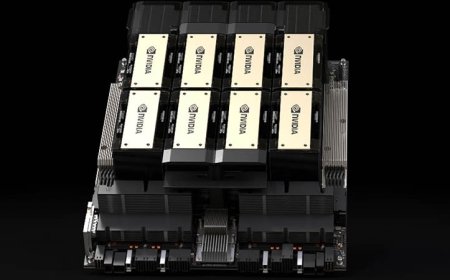
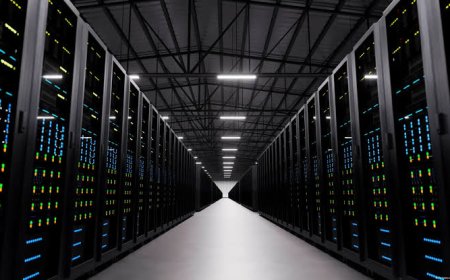
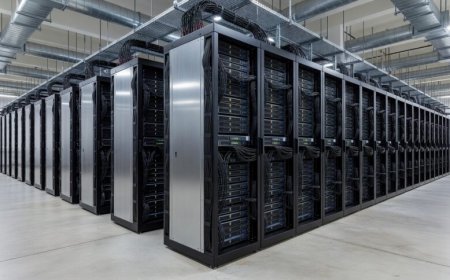
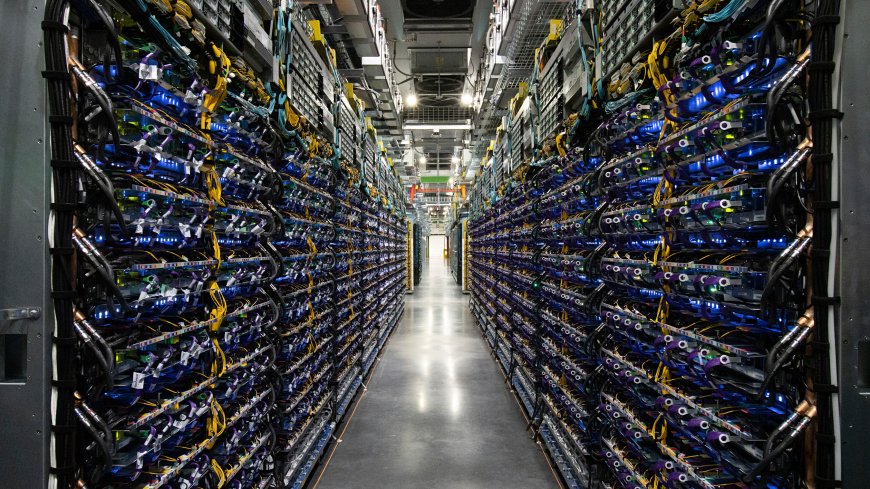
Photo: Google TPU hardware in a data centre. The photo shows an earlier-generation TPU pod; the new TPU 8tx and TPU 8i Max systems are eighth-generation configurations.
Sources
- Google — Introducing TPU 8tx and TPU 8i Max (Amin Vahdat, November 9, 2026)
- The Indian Express — Google unveils new AI chip variants as cloud demand surges (November 10, 2026)
- Data Center Knowledge — Google Adds TPU 8tx, 8i Max for Enterprise AI (November 9, 2026)
- RCR Technology — Google TPU 8tx and 8i Max: new AI chip systems (November 10, 2026)
What's Your Reaction?
 Like
0
 Dislike
0
 Love
0
 Funny
0
 Angry
0
 Sad
0
 Wow
0