



















































Nebius Bets $40 Billion on 2027 AI Buildout as Microsoft Delays Send Shares Down 17%
Nebius reported record third-quarter revenue of $980.8 million but told investors it will spend $40 billion to $45 billion on AI infrastructure in 2027, far more than Wall Street expected. Delays at its Microsoft data centre in New Jersey and questions over how the buildout will be funded sent the neocloud company's shares down 17%.
Nebius Bets $40 Billion on 2027 AI Buildout as Microsoft Delays Send Shares Down 17%
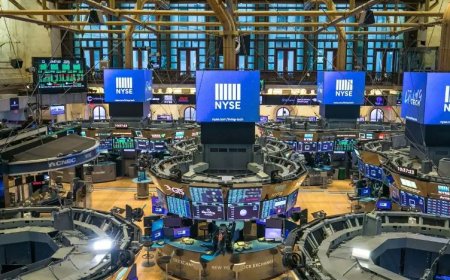
Nebius has just reported the strongest quarter in its history, and the market punished it anyway. The Amsterdam-based AI cloud company, one of the fast-growing "neoclouds" renting out Nvidia-powered computing to artificial intelligence developers, told investors on Thursday, November 12, that it plans to spend $40 billion to $45 billion on new infrastructure in 2027. That figure came in more than $11 billion above what analysts had been modelling, and it arrived alongside delays at a flagship Microsoft site that is already months behind schedule. By the close of trading, Nebius shares had fallen 17 percent.
The sell-off captures the tension at the heart of the neocloud business model. Demand for AI computing is still surging, and Nebius is growing at a pace few companies can match. But building data centres at this scale is enormously expensive, and the company is increasingly financing its expansion with customer prepayments and loans secured against contracts that have not yet been delivered. When a project slips, the costs keep coming while the revenue waits.
A record quarter overshadowed by the bill for growth
On the numbers alone, the third quarter was a clear beat. Revenue reached $980.8 million, up 571 percent from $146.1 million a year earlier and above the $907.5 million consensus compiled by LSEG and cited by CNBC. Adjusted earnings came in at 31 cents a share, against an expected loss of 69 cents, and adjusted EBITDA swung to $465.8 million, a 47.5 percent margin, from a $5.2 million loss in the same quarter last year. The net loss narrowed to $37.5 million, or 13 cents a share, from $119.6 million a year earlier.
Almost all of the revenue came from the AI Cloud business, which generated $973.8 million, about 99 percent of group revenue. Roughly $325 million of the quarter's total was non-recurring income tied to a new "asset-light" partnership model, in which partners fund the capacity while Nebius supplies its architecture, software platform and supply chain. The company ended the quarter with $7.4 billion in cash and equivalents.
Yet the guidance is what moved the shares. Nebius raised its 2026 capital expenditure plan to about $27 billion, up from its previous $20 billion to $25 billion range and above the $23.85 billion FactSet expected. For 2027 it guided to $40 billion to $45 billion of spending, against a FactSet expectation of $28.77 billion. At the same time it trimmed its 2026 revenue outlook to the low end of its $3 billion to $3.4 billion range, cutting the top end by $200 million, because some third-party capacity expected this year will now slip into the first half of 2027. The 2027 revenue outlook of $12 billion to $13 billion, roughly four times the 2026 level, was roughly in line with expectations, and management said it expects to break even on a pre-tax basis by the fourth quarter of 2027.
How Nebius plans to pay for it
The scale of the spending plan raises an obvious question: where does the money come from? Nebius says most of it is already spoken for. Management expects customer prepayments and asset-backed financing on investment-grade contracts to cover 75 to 85 percent of the 2027 capital expenditure, with customer prepayments of $17 billion to $20 billion expected next year. Chief financial officer Maria del Dado Alonso Sanchez named Microsoft and Meta as the contracts that can be financed this way, and chief revenue officer Marc Boroditsky said the company could tap prepayments to cover any additional cash requirements.
The logic is straightforward. When customers commit to long-term contracts and pay in advance, Nebius can borrow against those contracts to build the data centres that will serve them. Deals signed in the third quarter came with prepayments that more than covered the cost of building the capacity behind them, according to Boroditsky, and customers have committed more than $12 billion of contract value since the start of the quarter.
But the model only works if the capacity arrives on time. If projects are delayed, Nebius keeps spending while the revenue those contracts were meant to produce slips into later quarters. That is exactly what happened in the third quarter, when delays at sites run by third parties pushed some 2026 revenue into 2027 and forced the company to push back its annual recurring revenue target, first to February and then to drop the metric altogether.
The Microsoft site in New Jersey
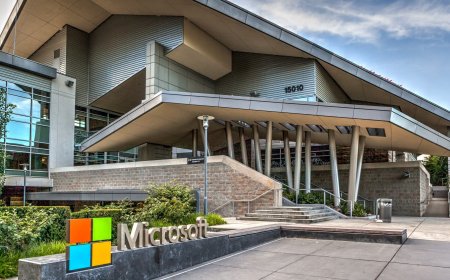
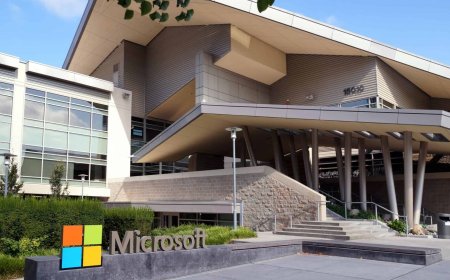
The most important delay sits in Vineland, New Jersey, where Nebius is building AI computing capacity for Microsoft under a contract worth up to $19.4 billion. The site is now months behind schedule. Only just over half of the Microsoft capacity is planned for delivery by the end of this year, with the remainder now due in the second quarter of 2027, well beyond the original 2025 and 2026 deployment windows. Under the contract terms, Microsoft can terminate affected services after a grace period if dates are missed and no alternative capacity is offered, and the contract includes financial penalties for late delivery.
The delay stems from the site's power arrangements. DataOne, the third-party operator of the facility, decided to wind down temporary generation faster than expected as the site switches over to Bloom Energy fuel cells, according to chief product and infrastructure officer Andrey Korolenko. The transition was not entirely by choice: investigators found at least 45 natural gas generators operating at the site without permits, and New Jersey regulators fined the facility $1.1 million. DataOne is also facing a noise-complaint lawsuit from nearby residents over a constant humming sound from the data centre.
Nebius says Microsoft "has been part of the planning process" and has not publicly cancelled anything, but it did not say whether Microsoft has agreed to the new dates. The backdrop is unhelpful: Bloomberg has reported that Microsoft is cooling on neocloud deals that are not delivering on time, tightening oversight of projects run by third parties including Nebius, IREN and Nscale, and debating whether to sign new agreements. Microsoft's own quarterly report noted that its capital spending came in lower than expected because of third-party delays.
"Building at this scale is hard, and delays are part of our industry right now," chief executive Arkady Volozh said on the earnings call. "We are not immune." Nebius says the data centres it builds itself are coming online on time or ahead of schedule, and that those sites will supply most of its new capacity from 2027.
What it means for the neocloud sector
Nebius is not alone in facing investor scepticism about the cost of the AI buildout. The whole neocloud group fell on Thursday, with CoreWeave down nearly 12 percent and IREN down 8 percent, and the slide continued into Friday as AI stocks fell more broadly. Lenders are also growing more cautious: Nebius dropped plans for a high-yield bond, according to Reuters, and took a one-year, $3.5 billion loan from Citi in October instead.
For now, Nebius is betting that the demand is real enough to justify the spending. Its 2027 plan is sized for more than a gigawatt of new capacity a year, and chief executive Volozh described the $12 billion to $13 billion revenue outlook as "a conservative approach to the pace of our build-out." Whether that confidence is rewarded will depend on something largely outside the company's control: whether the data centres it does not build itself start arriving on schedule.
Sources
- TechCrunch — Nebius tests the neocloud playbook with $40 billion in planned spending
- TheStreet — Nvidia-backed AI cloud stock sinks 18% despite record quarter
- MLQ.ai — Nebius shares sink 16% as it raises 2026 capex to $27 billion, despite revenue jumping 571% to $981 million
- Innopark IT — Neocloud, AI stocks slide again as Nvidia turmoil rattles sector
What's Your Reaction?
 Like
0
 Dislike
0
 Love
0
 Funny
0
 Angry
0
 Sad
0
 Wow
0