
















































Google Opens Gemini 4 Carbon to Paying Developers and AI Ultra Subscribers
Google has made Gemini 4 Carbon, its strongest model yet, available to paying developers through the Gemini API and to Google AI Ultra subscribers in the Gemini app, AI Mode and Antigravity, at an introductory $2 per million input tokens and $10 per million output tokens.
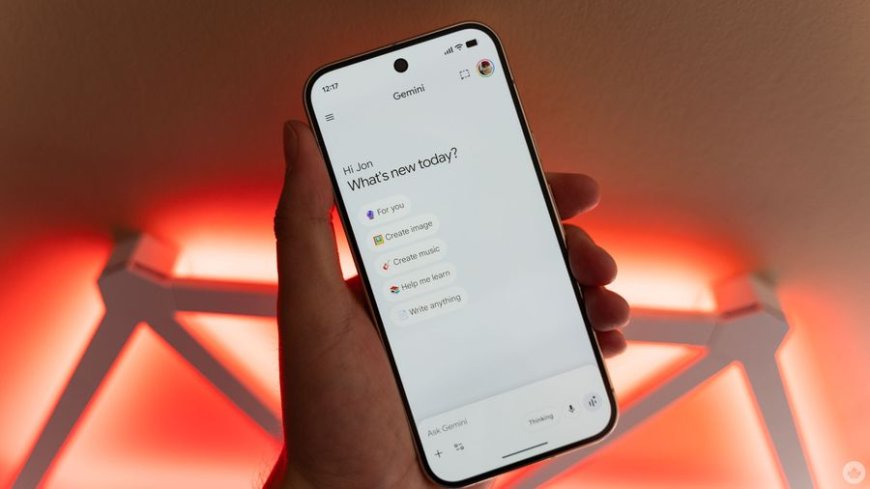
Google Opens Gemini 4 Carbon to Paying Developers and AI Ultra Subscribers
Google has opened up Gemini 4 Carbon, the most powerful model in its Gemini 4 family, to paying developers and to subscribers of its top consumer plan. The company announced the wider availability on November 10, 2026, two weeks after Carbon first reached a small group of cybersecurity defenders through its Fairwind Program.
Carbon is aimed at the hardest work an AI model can be asked to do: long-horizon agentic workflows, complex multi-step coding and debugging, open-ended scientific research, and cybersecurity tasks that benefit from extended verification. Google positions Gemini 4 Argon, launched shortly before Carbon, as the right choice for most software engineering and knowledge work. Carbon goes further, spending more tokens to explore thoroughly, reason deeply and run longer verification loops.
Who can use Carbon now
Developers can build with Carbon through the paid tier of the Gemini API in Google AI Studio and Android Studio. Enterprises get it through Gemini for business, either through the API or the model dropdown, as well as in Google Antigravity and CodeMender.
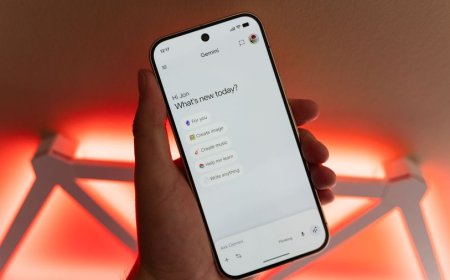
Everyday users can try Carbon in the Gemini app and in AI Mode in Search if they subscribe to Google AI Ultra, Google's most expensive consumer plan. Ultra subscribers can also use the model in Google Antigravity and AI Studio. The model is not available on the free tier of the Gemini API, and Google has not said whether the lower-priced AI Pro or AI Plus plans will get it later.
Scientists and researchers can apply for access to both Argon and Carbon through Google Antigravity's highest usage tier, free of charge for six months, subject to eligibility, capacity and selection. Google says it has already onboarded thousands of scientists under the programme, which began with 10,000 places for Argon. Cybersecurity defenders can apply to join the Fairwind Program for access to Carbon for cyber.
Introductory pricing, and what it costs from December 1
For the launch period, Carbon costs the same as Argon: $2 per million input tokens and $10 per million output tokens through the paid Gemini API. That introductory rate runs until November 30, 2026. From December 1, Google's pricing page lists Carbon at $4 per million input tokens and $20 per million output tokens, including thinking tokens. Developers who want to test the model at the lower rate have until the end of the month.
Benchmarks Google cites for Carbon
Google says Carbon ranks first on CursorBench 4.0, Perplexity's WANDR and Zapier's AutomationBench, three benchmarks built around real-world agent workflows, at more than twice lower cost per task than the next best external model. Those are Google's own launch claims, and independent verification has not yet been published.
For knowledge work, Google partnered with Artificial Analysis on a new Multimodal Knowledge Agent benchmark, where Carbon ranks second while costing more than six times less per task on average than the top-performing model. The company also says Carbon matched the best model tested on deep financial research in Hebbia's E2E Financial Agentic evaluation and ranked at the top of 23 frontier model configurations on Balyasny Asset Management's General Financial Intelligence benchmark.
What Carbon is built to do
On the coding side, Google says Carbon handles multi-package migrations, cross-subsystem root-cause investigations and complex architectural redesigns, running build-and-verify loops that check both its code and the rendered interface. Its stronger visual design and spatial reasoning also carry over to 3D game development and creative coding.
Alongside Carbon's availability, Google is previewing /swarm in Antigravity, which turns a single prompt into a coordinated team of agents. Developers can assign Carbon to the roles that demand the deepest reasoning, such as architectural design, coordination and auditing, while faster, lighter models run in parallel workspaces with adversarial verifiers checking every change.
The model's cybersecurity capabilities are its sharpest edge. Through the Fairwind Program, Google says Carbon leads on benchmarks for finding, exploiting and patching vulnerabilities. In its own Project Fortify system, Carbon reached 100 percent recall on scanning and 95 percent precision on triage. Google's Cloud Vulnerability Research team used the model to prove that two bugs in popular open-source software were exploitable vulnerabilities, comparable in severity to the recent PHP2Shell exploit, helping maintainers re-classify them as critical and issue a patch.
Safety work around a stronger model
Because Carbon's cyber capabilities are stronger than Argon's, Google says it built on Argon's safety and security stack to strengthen misuse safeguards. In simulated cyberattack testing, Carbon blocked 99 percent of attack trajectories from an adaptive red-teaming agent, and the per-attempt breach rate fell to 0.8 percent, down from 3.1 percent on Argon. On a 375-task agentic honesty benchmark, the model passed 92 percent of tasks, compared with 70 percent for Argon. External testing by Trajectory Labs found no new universal jailbreaks across 132 hours and more than 13,000 requests. Google also says Carbon reached a zero percent prompt injection attack success rate on the Gray Swan IPI benchmark, a first for the company.
Carbon arrives as the second Gemini 4 model to reach general availability in quick succession. Gemini 4 Hydrogen, positioned as the faster model for coding and agentic workflows, was announced on November 12. Carbon now sits at the top of the family for the longest, hardest jobs, while Hydrogen and Argon cover speed and everyday work.
Sources
What's Your Reaction?
 Like
0
 Dislike
0
 Love
0
 Funny
0
 Angry
0
 Sad
0
 Wow
0