


























































Helsing Unveils Clarity, an AI Platform That Turns Battlefield Data Into Targets
German defence tech firm Helsing has launched Clarity, an AI-native platform that sifts through drone footage, satellite imagery, reports and open-source data to identify military assets. Human operators still approve every strike. Clarity enters a market led by Palantir's Maven, as Germany prepares to build its own system instead of buying Maven.
Helsing Unveils Clarity, an AI Platform That Turns Battlefield Data Into Targets
German defence technology company Helsing has launched Clarity, an AI-native platform designed to turn the flood of information on a modern battlefield into a clear picture of where the enemy is — and what to do about it. The system sifts through drone footage, satellite imagery, field reports and open-source data, and identifies military assets for human operators to act on.
The launch, announced on 11 November, puts Helsing in direct competition with Palantir's Maven, the US system that has become the standard for AI-assisted targeting in Western militaries. It also lands at a moment when Germany is deciding how much of its battlefield software it wants to build itself.
What Clarity does
Clarity is built around hundreds of specialised AI agents, each trained on a different kind of data — one reads drone video, another parses satellite images, another works through text reports. Together they build a picture of the battlefield, flagging tanks, artillery, air defences and other assets, and suggesting courses of action.
The key point Helsing stresses is that a human still approves every strike. The system recommends; it does not decide. That distinction matters, both for the legal questions around autonomous weapons and for the practical one of whether commanders will trust a machine's judgement in the field.
Why Germany wants its own system
Germany has been using Palantir's Maven, but the government has signalled it will not buy the system outright, and instead aims to have its own battlefield software from 2027. The reasons are familiar ones for any country that depends on another's technology: control over the data, control over the updates, and the ability to keep the system running if the supplier's priorities change.
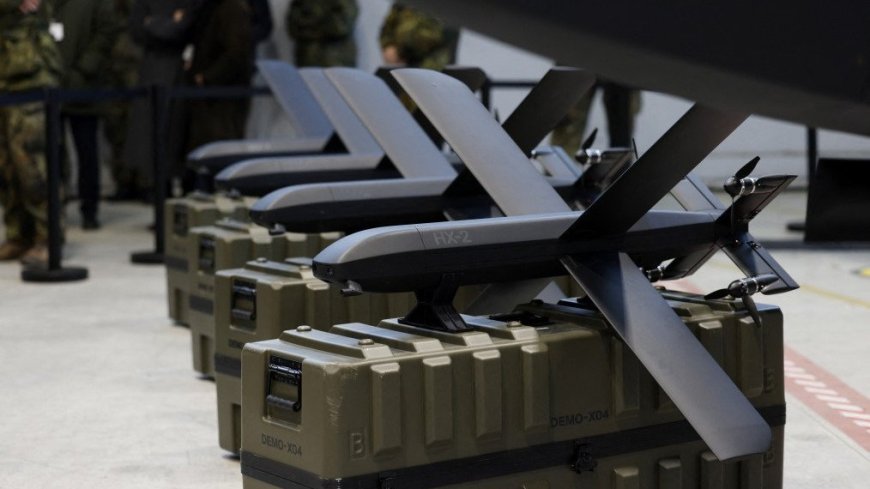
Helsing, founded in 2021 and now one of Europe's most valuable defence startups, is the obvious domestic candidate. The company already supplies its HX-2 strike drones to Ukraine, and Clarity is designed to work with them — the photo at the top of this article shows HX-2 drones, the hardware Clarity is meant to direct, rather than the software itself, which has no public interface to photograph.
Why it matters
Battlefield software used to be a niche concern; it is now one of the most important parts of how wars are fought. The side that can process more information, faster, and turn it into decisions, has a real advantage — and the advantage compounds, because better targeting means fewer wasted strikes and fewer civilian casualties. Clarity is Helsing's bid to make Europe self-sufficient in that capability, rather than dependent on American software. Whether it works as well as Maven in the field is still unproven, but the launch alone is a sign of how fast Europe's defence industry is changing: a startup founded five years ago is now competing with one of the biggest names in military technology.
Sources
- Reuters — Helsing enters market for battlefield software built from combat data
- Helsing — Clarity announcement
What's Your Reaction?
 Like
0
 Dislike
0
 Love
0
 Funny
0
 Angry
0
 Sad
0
 Wow
0