























































A US Senator Says Nvidia's Jensen Huang Must Resign Over the Spy Affair — but the Board Still Backs Him
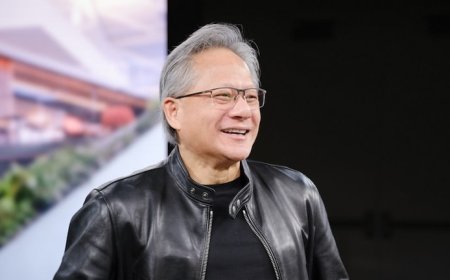
Republican Senator Kevin Cramer, a member of the Senate Banking Committee, has told Politico that Nvidia chief executive Jensen Huang should resign over his affair with Alice Huang, an alleged Chinese intelligence asset, citing the risk of extortion. Nvidia's board says it has no reason to believe secrets or US security were compromised, and Huang faces a Wednesday deadline to tell Congress whether he will answer questions.
A US Senator Says Nvidia's Jensen Huang Must Resign Over the Spy Affair — but the Board Still Backs Him
Republican Senator Kevin Cramer, a member of the Senate Banking Committee, has said Nvidia chief executive Jensen Huang should resign over his affair with Alice Huang, an alleged Chinese intelligence asset. Cramer told Politico on Tuesday night that the relationship creates a risk of extortion, and that the head of the world's most valuable company cannot be in that position.
Nvidia's board disagrees. It has said it has no reason to believe that company secrets or US security were compromised, and it continues to back Huang. The clash sets up a confrontation between Congress and one of the most powerful chief executives in the world — and Huang faces a Wednesday deadline to tell Congress whether he will answer its questions.
What Cramer said
Cramer, who sits on the Senate Banking Committee, told Politico that Huang's affair with Alice Huang — who US officials believe is a Chinese intelligence asset — creates an extortion risk that is incompatible with running Nvidia. His argument is not that Huang passed secrets, but that the relationship itself makes him vulnerable: someone who knows about the affair could use it to pressure him.
Cramer is the first senator to call publicly for Huang's resignation, but he is not the only voice in Congress raising concerns. The affair has become a political issue because Nvidia sits at the centre of the US-China technology rivalry, and because the company's chips are the most sought-after AI hardware in the world.
What the board says
Nvidia's board has backed Huang, saying it has no reason to believe that secrets or US security were compromised. The board's position is that the affair is a personal matter, and that there is no evidence it affected the company. That is a significant statement: the board is effectively telling Congress that it has investigated and found nothing to act on.
Huang himself has not spoken publicly about the affair in detail. He faces a Wednesday deadline to tell Congress whether he will answer its questions — a deadline that will force the issue into the open one way or another.
Why the timing matters
Nvidia reports its quarterly earnings on 17 November, and the results will be watched closely — not just for the numbers, but for what Huang says about the affair and about the company's position in China. Nvidia's shares have already fallen sharply since the story broke, and the market is waiting to see whether the board's backing holds.
For the background on how this story developed, our report on the US investigation into Nvidia's chip sales covers the Justice Department probe, and our profile of Alice Huang covers who she is and what she is alleged to have done.
Why it matters
This is no longer just a story about a chief executive's private life. It is a test of whether the board of the world's most valuable company can stand behind its chief executive when a US senator says he must go — and whether Congress can force a reckoning over an affair that, on the evidence so far, has not been shown to have compromised anything. The Wednesday deadline and the 17 November earnings report will both force the issue forward. For Nvidia, the risk is not just the share price: it is that the affair becomes a reason for Washington to tighten the screws on the company's China business, at exactly the moment when that business is under the most scrutiny it has ever faced.
Sources
What's Your Reaction?
 Like
0
 Dislike
0
 Love
0
 Funny
0
 Angry
0
 Sad
0
 Wow
0