





















































A $900 Device That Claims to Track Blood Flow to Your Brain — and the Doctors Calling It a Scam
Deepinder Goyal's Temple wearable, priced at 85,000 rupees ($907), claims its BrainFlow sensor tracks real-time blood supply to the brain and scores it from 1 to 250. Doctors have called the claims a scam and a gimmick, saying they lack peer-reviewed research. Goyal says Temple is a fitness and wellness device, not a medical one, and orders have come in from more than 62 countries since 1 November.
A $900 Device That Claims to Track Blood Flow to Your Brain — and the Doctors Calling It a Scam
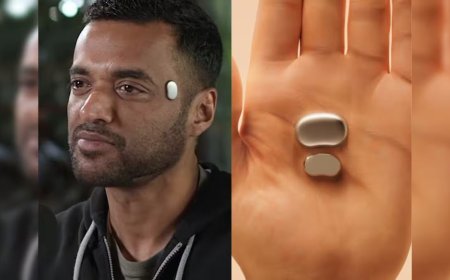
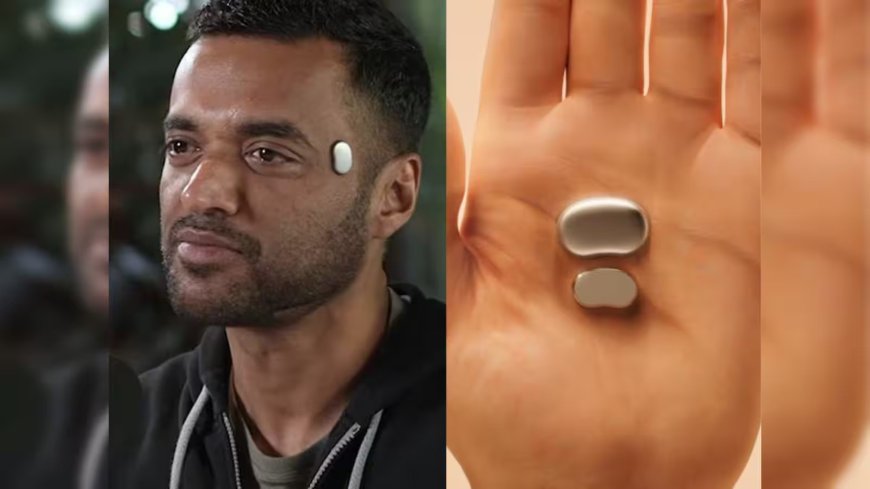
Deepinder Goyal, the billionaire founder of Zomato, has launched a wearable device called Temple that claims to track blood flow to your brain in real time. The device costs 85,000 rupees — about $907 — and it has set off a furious argument between its maker and the doctors who say its claims are not backed by evidence.
The device, which sits on the forehead, uses a sensor called BrainFlow to measure the brain's blood supply and gives the wearer a score from 1 to 250, which it calls Entropy. Goyal says it is a fitness and wellness device, not a medical one. Doctors say the claims are a scam and a gimmick. Both sides have a point — and the argument matters, because Temple is selling fast.
What Temple claims to do
Temple's BrainFlow sensor measures blood flow to the brain and turns it into an Entropy score, a number from 1 to 250 that is meant to reflect how well the brain is working. The idea is that by tracking blood flow, the device can tell you when your brain is performing well and when it is not — and, over time, help you improve it.
The device has been on sale since 1 November, and Goyal says orders have come in from more than 62 countries. At 85,000 rupees, it is far more expensive than a smartwatch, and it is aimed at people who are willing to pay a premium for a new kind of health data.
What the doctors say
Doctors have been blunt. Cyriac Philips, a hepatologist, called Temple "the biggest health scam" he had seen, and Sanjeev Bagai, a paediatrician, called it a "gimmick". Their argument is that the claims Temple makes — that it can track brain blood flow in real time and turn it into a meaningful score — are not backed by peer-reviewed research. The company has published two preprints, neither of which has been peer-reviewed, and the doctors say that is not enough to support claims of this kind.
Those words — "scam" and "gimmick" — are the doctors' words, not a finding of fact. No regulator has found Temple to be a scam, and Goyal says the device is a wellness product, not a medical device, which means it is not held to the same standard of proof as a medical product would be.
The wider argument about wearables
Temple sits at the centre of a wider argument about wearable health devices. Smartwatches already track heart rate, sleep and blood oxygen, and their makers have faced similar questions about how accurate their measurements are and what they mean. Temple goes further than a smartwatch: it claims to measure something — brain blood flow — that has never been tracked by a consumer device before, and to turn it into a score that users are meant to act on.
That is a big claim, and the doctors' point is that big claims need big evidence. Goyal's point is that Temple is not a medical device, so it does not need to meet medical standards — it is a wellness product, and its users can judge for themselves whether it is useful. The argument is unlikely to be settled soon, and it will probably be settled by the market: if Temple's users find it useful, it will sell; if they do not, it will not.
Why it matters
Temple matters because it is a test of how far wearable technology can go before it needs to prove itself. A device that claims to track blood flow to the brain is a long way from a step counter, and the gap between what it claims and what it has proven is the heart of the argument. The doctors are right that the evidence is thin. Goyal is right that Temple is not a medical device. Both of those things can be true at the same time — and the people who have already ordered it from 62 countries will have to decide for themselves whether $907 is a fair price for a score that may or may not mean what it claims to.
Sources
What's Your Reaction?
 Like
0
 Dislike
0
 Love
0
 Funny
0
 Angry
0
 Sad
0
 Wow
0