






















































Singapore's Chip Hub Is Now Caught Between Washington and Beijing, Reuters Analysis Warns
A Reuters Breakingviews analysis warns that Singapore is now "firmly in the hot seat" after reports that Alice Huang, an alleged Chinese intelligence asset, facilitated at least $7.5 billion of Nvidia chip shipments to China through Singapore. The city-state must balance the US, its largest source of foreign investment, against China, its biggest trading partner — while Nvidia has shed about $430 billion in market value over two sessions.

Singapore's Chip Hub Is Now Caught Between Washington and Beijing, Reuters Analysis Warns
Singapore is now "firmly in the hot seat", according to a Reuters Breakingviews analysis, after reports that Alice Huang — an alleged Chinese intelligence asset at the centre of the Nvidia spy affair — facilitated at least $7.5 billion of Nvidia chip shipments to China through the city-state. The analysis warns that Singapore, one of the world's most important chip hubs, is caught between its two largest economic partners: the United States, its biggest source of foreign investment, and China, its biggest trading partner.
This article is based on the Breakingviews analysis and the reporting behind it. The full text of the column was not available at the time of writing, so the judgements below are attributed as analysis, and the facts are drawn from the reporting that the analysis is based on.
What the analysis says
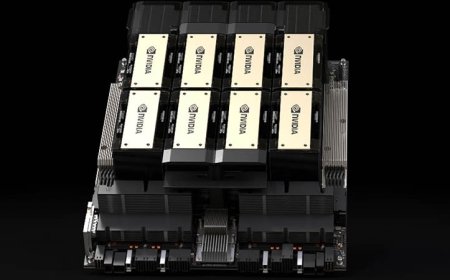
The Information reported on 10 November that Alice Huang facilitated shipments of at least $7.5 billion worth of Nvidia chips — around 240,000 H100, H200 and A100 units — to China, routed through Singapore. Megaspeed, a Singapore-based company, is named in the reporting as one of the intermediaries. Nvidia's board is investigating, and the FBI is involved.
Breakingviews argues that the affair puts Singapore in a difficult position. The city-state has built its economy on being a trusted hub for global trade and technology — a place where American companies invest and Chinese companies do business, and where both sides trust the rules. If Singapore becomes known as a route for smuggling restricted chips to China, that trust is damaged. And if Washington decides Singapore is not policing the flow tightly enough, the city-state could face pressure to choose sides.
Why Singapore matters to the chip trade
Singapore is one of the world's largest chip hubs. It manufactures semiconductors, it hosts the regional headquarters of major chip companies, and it sits on the trade routes between the US and China. The US is Singapore's largest source of foreign direct investment; China is its biggest trading partner. That balance has worked for decades, but the chip war is making it harder to maintain.
The numbers show how much is at stake. Nvidia has shed about $430 billion in market value over two sessions since the affair broke, as investors worry about what the scandal means for the company's China business and its relationship with Washington. There is also an allegation, reported in the coverage, that US Secretary of State Marco Rubio briefed President Trump on the affair — a sign of how seriously Washington is taking it.
The wider pattern
The Singapore case is part of a wider pattern. The Financial Times reported in July 2026 that Nvidia had cut its list of approved Asian chip buyers by more than half, as the company tried to tighten control over where its chips end up. The H200 case — in which a blacklisted Chinese university bought Nvidia's most advanced chips — shows the same problem from the other side: even with tighter controls, restricted hardware is reaching China.
For the background on the affair itself, our profile of Alice Huang covers who she is and what she is alleged to have done, and our report on the H200 purchase covers how a blacklisted university bought Nvidia's chips.
Why it matters
Singapore's dilemma is the dilemma of every country caught between the US and China on technology. The city-state has thrived by being open to both — but the chip war is forcing a choice that Singapore has spent decades avoiding. If Washington concludes that Singapore is a weak link in export controls, it could demand tighter rules, more inspections, or restrictions on what can pass through. If Singapore complies too eagerly, it risks its relationship with China, its biggest customer. The Breakingviews analysis does not predict which way it will go. But it makes the stakes clear: Singapore's position as a trusted hub is one of its most valuable assets, and the Nvidia affair is the biggest test of that trust in years.
Sources
- Reuters Breakingviews — Nvidia puts Singapore's chip hub in the firing line
- Devdiscourse — Reuters World News Summary
Note: the full text of the Breakingviews column was not retrievable at the time of writing; this article is written from the Reuters search snippet, the Devdiscourse summary of Reuters' reporting, and the underlying reporting on the chip shipments. Judgements are attributed as analysis throughout.
What's Your Reaction?
 Like
0
 Dislike
0
 Love
0
 Funny
0
 Angry
0
 Sad
0
 Wow
0