






























































IBM Links Two Quantum Processors at 99% Accuracy — a Big Step Toward Modular Quantum Machines
IBM researchers have connected two 120-qubit Nighthawk processors with four superconducting links, moving quantum information between them with 99% average accuracy — a key step toward modular quantum computers and the planned Quantum Starling system in 2029.
IBM Links Two Quantum Processors at 99% Accuracy — a Big Step Toward Modular Quantum Machines
IBM researchers have taken a concrete step toward a long-standing goal in quantum computing: getting two separate quantum processors to work together as if they were one machine.
In an experiment described in a paper posted to arXiv on October 21, 2026, the team connected two of the company's 120-qubit Nighthawk processors with four special superconducting links called L-couplers. Quantum information moved across those links with an average accuracy of 99 percent, with the best link reaching 99.29 percent.
It is a modest-sounding number with large implications. The hardest problem in building useful quantum computers is scale: cramming ever more qubits onto a single chip runs into physical limits, and the fragile quantum states those qubits carry are easily disturbed. IBM's answer is to build machines from many smaller modules, stitched together by high-quality links. This experiment shows that the stitching can work.
Four cables, 80 centimeters each
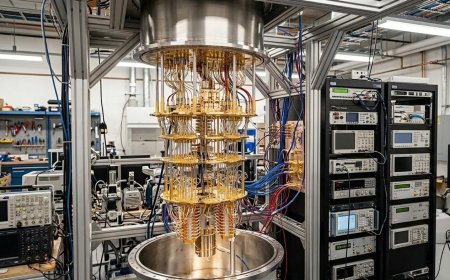
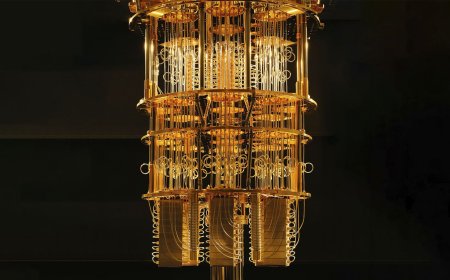
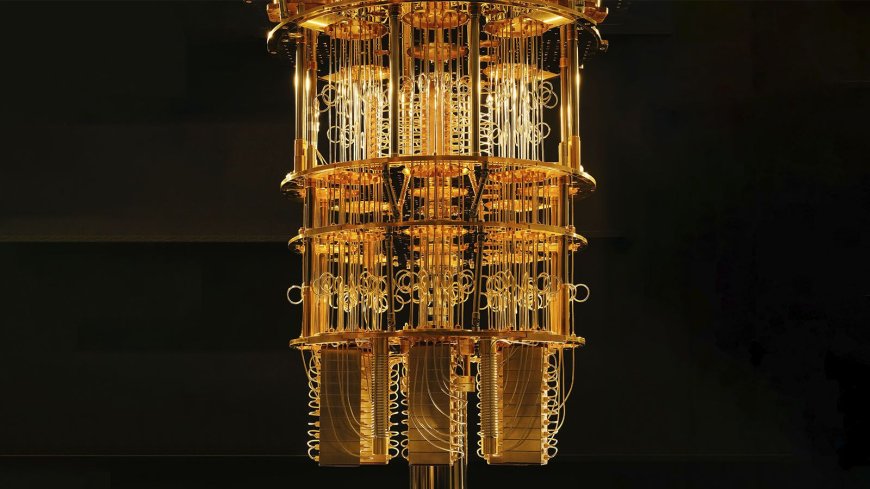
Each L-coupler is an 80-centimeter superconducting aluminum cable, installed inside the same ultra-cold dilution refrigerator as the two chips. The cables were plugged into the processors from above, after both chips were already mounted — a design choice meant to let many such links sit close together in future machines.
Each link joins qubits on the two chips through a chain of components: two frequency-tunable interface qubits, two adjustable couplers, and the cable itself. The team measured the links' quality factors at close to one million, a figure IBM says is appropriate for moving superconducting quantum information.
The results held up under stress. All four links survived three cycles of warming the system up and cooling it back down, and the team generated entangled states shared across the two processors — including two entangled pairs running at the same time on neighbouring cables.
The harder test: logic across chips
Moving a quantum state from one chip to another is one thing. Running a calculation that spans both is harder, and the numbers show it. When the researchers tested a two-qubit operation involving qubits on different processors, accuracy averaged 94.75 percent, with the best link reaching 96.42 percent.
That gap matters. Cross-chip operations still trail the accuracy of operations performed inside a single chip, and IBM's own researchers note that the lifetime of quantum information must improve before the approach is commercially useful. The paper is a preprint, so it has not yet been through peer review or independent replication.
The experiment also used only a portion of the qubits available on the two chips. IBM has not yet built a fully operational system that combines all 240 qubits, and the company is clear about that.
Why it matters for Starling
Still, the result lands squarely on IBM's published roadmap. Nighthawk, the 120-qubit processor line IBM plans to build on. The company aims to introduce Quantum Starling in 2029, a fault-tolerant system expected to use 200 error-corrected logical qubits and perform calculations involving up to 100 million quantum operations. Starling's design depends on exactly this kind of meter-scale link between neighbouring chips.
IBM says the demonstration is the first time superconducting quantum processors have been connected using multiple quantum channels with an average state-transfer accuracy of 99 percent.
The result is a separate development from the quantum error-correction platform IBM announced with AMD and Oak Ridge National Laboratory, which was covered earlier on Innopark IT. That project focuses on correcting errors in quantum calculations; this one focuses on the physical connections that let quantum processors scale.
For now, the achievement is a careful, measured step rather than a finished product. But it answers a question the whole field has been asking: whether separate quantum chips can be joined into something larger without the fragile information they carry falling apart. On the evidence so far, the answer is yes.
Sources
What's Your Reaction?
 Like
0
 Dislike
0
 Love
0
 Funny
0
 Angry
0
 Sad
0
 Wow
0