



































Amazon Alexa Tablets Launch With Google Play Store and Premium Hardware
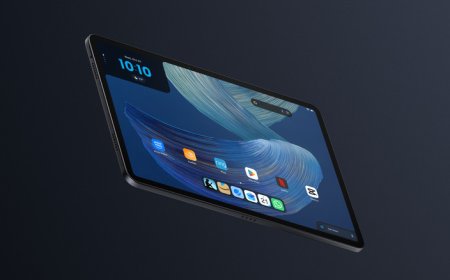
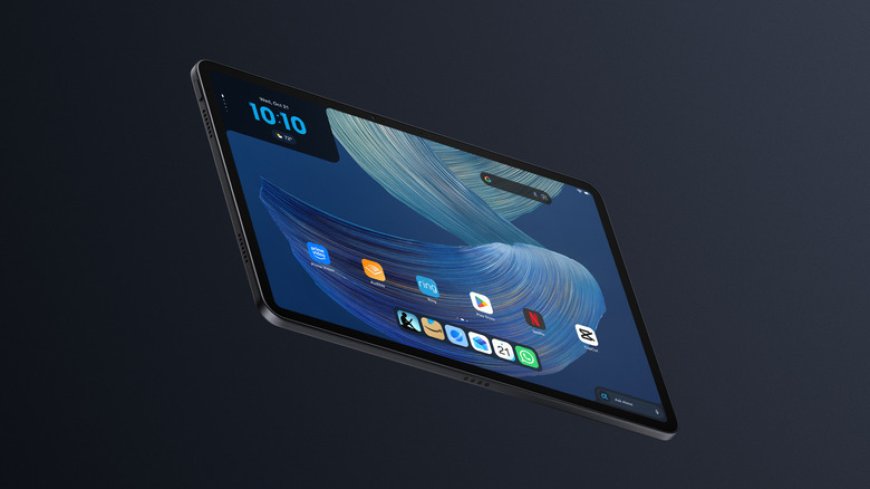
Amazon has unveiled a new Alexa Tablet lineup that brings official Google Play Store access, Android software, Alexa+ AI features and redesigned aluminum bodies to its tablet range. The new series includes the Alexa Tablet 8, Alexa Tablet 11 and Alexa Tablet 12 Pro, with prices starting at $229.99. The launch marks a major change from the company's traditional Fire tablets, which relied on Fire OS and Amazon's own app store.
Amazon's New Alexa Tablets Bring Google Play Store Access and a Major Upgrade Over Fire
Amazon is making one of the biggest changes to its tablet strategy in years. The company has introduced a new family of Alexa Tablets that run Android and include official access to the Google Play Store, addressing one of the longest-standing limitations of its Fire tablet range.
The new lineup includes three models: the Amazon Alexa Tablet 8, Alexa Tablet 11 and Alexa Tablet 12 Pro. All three feature aluminum construction, built-in Alexa+ AI capabilities and access to a much broader app ecosystem than Amazon's previous tablets offered. Prices start at $229.99, with the top model entering a more premium category at $499.99.
For years, Fire tablets occupied a straightforward position in the market: affordable devices for reading, streaming, browsing and using Amazon services. Their low prices made them attractive, but the software experience came with a significant compromise. Fire OS relied on Amazon's Appstore rather than Google's official Play Store, leaving users without the same direct access to many familiar Android applications.
The Alexa Tablet family changes that equation. Amazon is no longer simply refreshing its budget tablet formula. It is moving toward more capable Android devices designed to handle a wider range of entertainment, productivity and AI-assisted tasks.
Google Play Store Finally Comes to Amazon Tablets
The most important upgrade is not the aluminum body or the larger displays. It is the software.
Amazon's new tablets run Android and provide access to the Google Play Store, allowing users to download popular apps such as YouTube, Gmail, Google Docs and Netflix. The devices also retain Amazon's own services, including Prime Video, Kindle, Audible and Amazon Music.
That combination removes a major obstacle for people who wanted an affordable Amazon tablet but did not want to work around Fire OS's more limited app selection. Instead of depending primarily on Amazon's own app marketplace, buyers can access a much broader collection of Android applications through Google's official store.
The distinction matters because an app ecosystem often determines how useful a tablet becomes after the first few weeks of ownership. A device can have a good screen and adequate performance, but missing applications can make it frustrating for schoolwork, document editing, communication or everyday productivity.
Amazon is addressing that weakness directly. The new tablets are intended to be more versatile devices, not simply larger screens for consuming content from Amazon's ecosystem.
Alexa+ AI Becomes a Central Feature
Amazon is also making its Alexa+ assistant a core part of the new experience. Rather than treating Alexa as a voice assistant that users occasionally activate, the company is integrating it more deeply into the tablet interface.
Users can interact with Alexa+ by voice or touch, ask questions, manage compatible smart-home devices and receive assistance with everyday tasks. The new On-Screen Intelligence feature is designed to let the assistant respond to questions about content displayed on the screen.
For example, someone comparing destinations, reading information or browsing a list of options could ask Alexa for contextual assistance instead of manually searching through every detail. The idea is to make the assistant useful within the task already underway.
How consistently these features perform in everyday use will be an important part of the tablets' long-term appeal. AI assistants can be impressive when answering straightforward questions, but their usefulness depends on accuracy, context and how well they work across different applications.
Still, the direction is clear: Amazon wants Alexa+ to become a defining part of its devices rather than an additional feature hidden behind a voice command.
Amazon Alexa Tablet 12 Pro Targets More Demanding Users
The flagship model, the Amazon Alexa Tablet 12 Pro, is the most ambitious device in the lineup. It features a 12-inch display with a 3:2 aspect ratio, a 120Hz refresh rate and a resolution of 2800 × 1840 pixels. Its aluminum body measures just 6.5mm thick.
The taller screen format is particularly relevant for reading documents, browsing websites and working with multiple windows. Compared with a conventional widescreen tablet, a 3:2 display offers more vertical space, which can make productivity tasks more comfortable.
Amazon says the tablet uses a 4nm, eight-core processor and can be configured with up to 16GB of RAM. The company claims nearly three times the processing performance and nine times the graphics performance of its previous tablets. Those are manufacturer comparisons, rather than independently verified benchmark results, but they indicate how far Amazon intends to move beyond its earlier hardware.
The 12 Pro also includes quad Dolby Atmos speakers, Wi-Fi 6E and up to 16 hours of video playback according to Amazon. An optional Nanomatte display uses a specially textured surface designed to reduce reflections, potentially making the screen more comfortable to use under bright lighting.
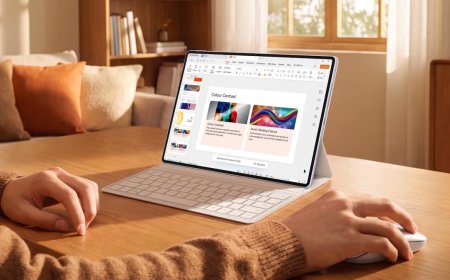
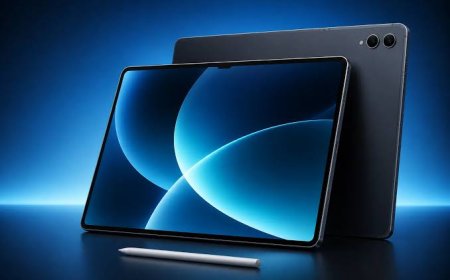
Amazon is offering a Pro Keyboard and Pro Pen separately, allowing the tablet to serve as a more productivity-focused device. With its larger display, faster hardware and accessories, the 12 Pro is aimed at users who want more than a device for watching videos or reading ebooks.
Alexa Tablet 11 Focuses on Entertainment and Everyday Use
The middle model, the Amazon Alexa Tablet 11, takes a more balanced approach. It features an 11-inch display with a 2.5K resolution, a pixel density of 276 pixels per inch and a 90Hz refresh rate.
Amazon positions the device for streaming, gaming, reading and general browsing. It has an eight-core processor, 8GB of RAM, dual Dolby Atmos speakers and a claimed video playback time of up to 15 hours.
The 11-inch size provides more screen space than the entry-level model without moving into the larger dimensions and higher price of the 12 Pro. That makes it a potentially practical choice for people who frequently watch videos, browse websites, use social apps or work with documents.
The tablet will be available in Graphite, Amethyst and Matcha. Its starting price of $329.99 places it between the portable Alexa Tablet 8 and the productivity-oriented flagship.
Alexa Tablet 8 Offers a More Portable Design
The Amazon Alexa Tablet 8 is the smallest model in the family, with an 8.7-inch display and an aluminum body weighing approximately 329 grams.
Its compact dimensions make it easier to hold in one hand than a larger tablet, particularly when reading ebooks, browsing the web or watching content while travelling. Amazon lists up to 14 hours of video playback and support for Wi-Fi 6.
The base configuration includes 4GB of RAM and 64GB of storage. While it does not offer the hardware capacity of the 12 Pro, it provides the same central software shift: Android with Google Play Store access and integrated Alexa+ features.
Available colors include Graphite, Rosette and Teal. With a starting price of $229.99, it is the most affordable entry point into Amazon's new tablet family.
Amazon Alexa Tablet Prices and Availability
Amazon's announced US starting prices are as follows:
- Amazon Alexa Tablet 8: $229.99, with 4GB RAM and 64GB storage.
- Amazon Alexa Tablet 11: $329.99, with 8GB RAM and 64GB storage.
- Amazon Alexa Tablet 12 Pro: $499.99, with 8GB RAM and 128GB storage.
- Alexa Tablet 12 Pro with Nanomatte display: Starts at $549.99.
Amazon also announced optional accessories, including a Pro Keyboard priced at $149.99 and a Pro Pen priced at $89.99. These are additional purchases rather than part of the base tablet price.
According to Amazon, the tablets are scheduled to begin shipping on October 14, 2026, in the United States, Mexico and Canada. Availability in the United Kingdom, Germany, France, Italy and Spain is scheduled to begin on October 19.
These are announced US prices, not confirmed prices for Bangladesh. Local availability, taxes, import costs and warranty arrangements could affect the final price if the devices reach the Bangladeshi market.
What Happens to Amazon Fire Tablets?
The arrival of the Alexa Tablet range represents a significant departure from the Fire tablet approach. Fire devices were known primarily for their low prices and close integration with Amazon's services. Their software limitations, especially the absence of official Google Play Store access, were part of that trade-off.
The new tablets place greater emphasis on premium materials, broader application support and more capable hardware. However, buyers should not assume that every existing Fire tablet will suddenly receive the new software experience. Amazon has described the Alexa Tablets as an all-new product line, with different hardware and an Android-based operating system.
The higher prices also change the comparison. Someone who primarily uses a tablet for Kindle books, Prime Video and occasional browsing may still find an older, cheaper Fire tablet sufficient. People who want Google's applications, more capable multitasking or a larger productivity-focused screen have stronger reasons to consider the new lineup.
Amazon's strategy is therefore not just about replacing a name. It is about competing in a different part of the tablet market, where software compatibility and hardware quality matter alongside price.
Can Amazon's New Tablets Challenge the iPad?
The Alexa Tablet 12 Pro makes Amazon's ambitions particularly clear. Its larger high-refresh-rate display, optional keyboard and stylus, Android app access and integrated AI features put it closer to the productivity-tablet category occupied by Apple and Samsung.
However, a competitive specification sheet does not automatically make a tablet a full laptop replacement. Software optimization, accessory quality, application behavior, long-term updates and real-world performance will determine how useful these devices become for demanding work.
Amazon has an advantage in its established ecosystem of digital content, shopping, streaming and smart-home products. Google Play support gives that ecosystem a broader software foundation, while Alexa+ provides a feature Amazon can integrate closely with its own services.
The challenge will be proving that these benefits justify the higher prices. Amazon's previous tablet strategy relied heavily on affordability. The new generation must demonstrate that customers will pay more for better hardware and a more flexible Android experience.
Final Verdict: A Major Change for Amazon Tablets
Amazon's new Alexa Tablets address one of the most persistent complaints about Fire devices: their limited access to Android applications. Official Google Play Store support, more premium construction and integrated Alexa+ features make the new lineup substantially more versatile on paper.
The three models serve different needs. The Alexa Tablet 8 prioritizes portability and price, the Tablet 11 balances entertainment with everyday use, and the Tablet 12 Pro offers the largest display and the strongest productivity focus.
The real test will come from everyday use, including how reliably Alexa+ works, how well applications perform and how long Amazon supports the devices with software updates. Those details will matter more to buyers than launch-day specifications alone.
For now, the message is unmistakable: Amazon wants its tablets to be more than inexpensive screens for its own services. By embracing Android and Google Play, the company is removing a major limitation and making a more serious attempt to compete in the wider tablet market.
Sources
- Amazon — Official Alexa Tablet announcement and specifications
- TechCrunch — Amazon unveils new Alexa tablets with Alexa+ and Google Play Store access
- GSMArena — Amazon's new Alexa Tablets use the Google Play Store and are more capable than Fire tablets
- Ars Technica — Amazon's new Alexa tablets drop the Fire branding and move to Android
What's Your Reaction?
 Like
0
Like
0
 Dislike
0
Dislike
0
 Love
0
Love
0
 Funny
0
Funny
0
 Angry
0
Angry
0
 Sad
0
Sad
0
 Wow
0
Wow
0