






































































UN Agrees to Draft Rules for 'Killer Robot' Weapons by 2028, But Binding Deal Still Out of Reach
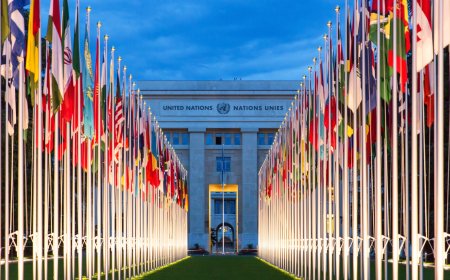
Countries at the United Nations have agreed to spend the next two years drawing up rules for lethal autonomous weapons — the so-called "killer robots" — after a week of talks in Geneva ended on Saturday. Around 100 nations wanted legally binding rules, but opposition from the United States, Russia and Israel meant the deal only promises further talks, leaving the question of a binding treaty open.

UN Agrees to Draft Rules for 'Killer Robot' Weapons by 2028, But Binding Deal Still Out of Reach
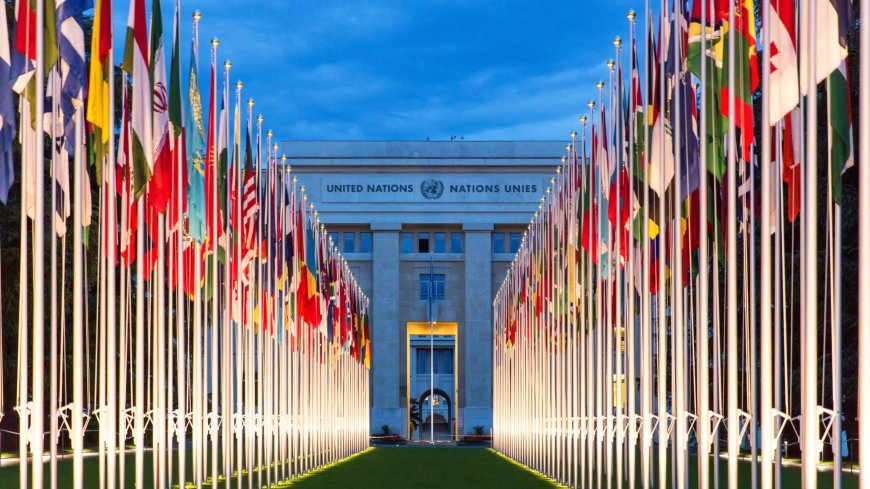
Countries at the United Nations have agreed to spend the next two years drawing up rules for lethal autonomous weapons — the systems often called "killer robots" — after a week of talks in Geneva ended early on Saturday morning. The deal keeps the diplomatic process alive, but it falls well short of what most countries at the table had asked for: a binding treaty, negotiated quickly, to control weapons that can select and attack targets without a human making the final decision.
The 128 member states of the Convention on Certain Conventional Weapons (CCW) had been meeting in Geneva since Monday, as alarm grows over the use of autonomous weapons in conflicts including Ukraine, Sudan and the Middle East. The talks ran into overtime, finally concluding after 4 a.m. local time (0300 GMT) on Saturday, 21 November, after negotiators spent the night wrangling over a handful of words.
What the Geneva talks actually decided
The agreement commits states to "elaborate" on an instrument regulating lethal autonomous weapons systems within two years — in other words, to develop new rules by 2028. It does not authorise negotiations on a legally binding treaty, and it leaves open whether any future measures will be legally binding at all.
That wording was the compromise. The Swiss diplomat who chaired the conference, Julien Thoeni, told reporters that some countries had rejected the very word "negotiate". The agreed text refers instead to the "elaboration" of an instrument. Thoeni nevertheless hailed the outcome as a significant achievement for humanitarian disarmament after more than ten years of talks, telling reporters: "It shows that even in today's deeply divided world, multilateral diplomacy can still deliver concrete results."
A diplomat from a country supporting new laws was more downbeat, describing the outcome to Reuters as "disappointing but could have been much worse". Russian objections to the rules of procedure had forced the cancellation of some formal meetings during the week, diplomats said, and the final hours were consumed by arguments over the wording.
Who wanted binding rules — and who resisted
Around 100 countries backed legally binding rules within a short timeframe, and nearly 100 nations had agreed only last month that such rules should be adopted swiftly. Supporters included the European Union and NATO member states, as well as Ukraine, China and Iran, according to diplomats cited by The Guardian.
But the big arms-producing nations — the United States, Russia and Israel — opposed the push, and decisions under the convention require the agreement of all 128 member states. Diplomats told the Politico news outlet that the US, the UK, South Korea, Japan, Turkiye and Israel also resisted efforts to agree on a binding regulation. Those countries argue that existing humanitarian law is sufficient, and they favour flexible, non-binding frameworks or longer timelines rather than strict legal obligations that could limit their ability to develop, test or use advanced weapons.
The United Nations secretary-general, the Pope and the Red Cross have all called for strong and legally binding rules on autonomous weapons.
What are 'killer robots'?
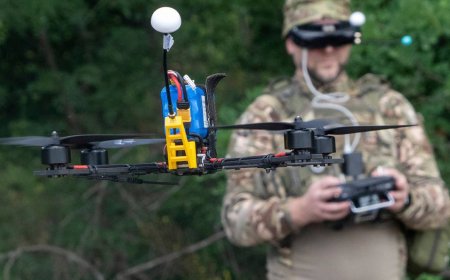
According to the United Nations, lethal autonomous weapons systems are a combination of weapons and technological components that can identify, select and engage a target in a way that results in loss of life, without intervention by a human being operating the system. They are programmed with a target profile before deployment, using sensor data such as facial recognition to search for matching targets — and when the weapon's algorithm judges something a match, it fires.
Not every autonomous weapon uses artificial intelligence, and the UN notes that AI is not what makes a system autonomous. But when AI is used to identify, select and engage targets, the UN warns, it can amplify the serious legal, ethical, humanitarian and security concerns around these weapons. AI-assisted weapons have already been used in the wars in Ukraine and Sudan and in conflicts in the Middle East.
Rights groups call the outcome a disappointment
Human rights groups and campaigners criticised the deal, saying it means technology now has a chance to overtake diplomacy. Stop Killer Robots, a coalition of around 300 organisations opposed to the development and use of autonomous weapons, called the mandate "watered down" and said it offered no clear route to legally binding rules.
"Delaying the creation of a legally binding instrument puts civilians and humanity at risk," said Nicole van Rooijen, the coalition's executive director, on the sidelines of the talks. She noted that autonomous weapons were already being deployed in combat, including systems that use artificial intelligence to choose targets.
Georgia Hinds, a legal adviser at the International Committee of the Red Cross, pointed to the ethical question at the heart of the debate. "There is a fundamental ethical concern with having what are essentially these life-and-death decisions determined by programming, determined by an algorithm," she said. "That's not something that you can fix with better technology. That is a moral red line that we cannot cross."
What happens next
States now have until 2028 to develop the new rules, but with the question of whether they will be legally binding still unresolved, campaigners fear the two-year window could simply repeat the delays of the past decade. Some observers and former military officials say states should be prepared to consider a new process outside the current UN framework, which requires all 128 state parties to agree by consensus — a rule that has allowed a small number of military powers to slow the process for years.
For now, the Geneva deal keeps the talks going. Whether it produces real limits on machines that can decide who lives and who dies will depend on what the next two years of negotiation actually deliver.
Sources
What's Your Reaction?
 Like
0
 Dislike
0
 Love
0
 Funny
0
 Angry
0
 Sad
0
 Wow
0