





































HD Hyundai and Anduril float 600-ton crewless warship ASV Alpha in bid for US Navy drone fleet
HD Hyundai and Anduril Industries have launched ASV Alpha, a 600-ton unmanned surface vessel built in about a year at Ulsan, pairing HD Hyundai's VAone vessel autonomy with Anduril's Lattice mission software as the partners chase the US Navy's medium unmanned surface vessel programme.
HD Hyundai and Anduril float 600-ton crewless warship ASV Alpha in bid for US Navy drone fleet
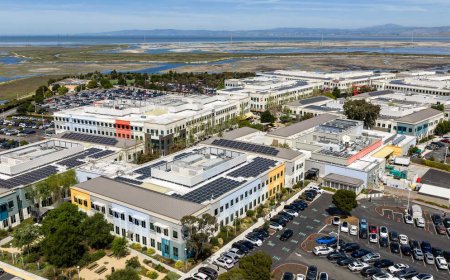
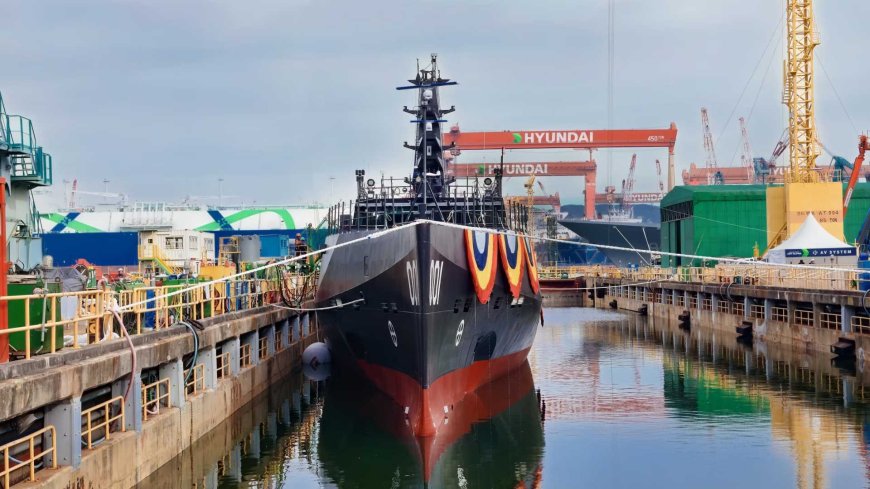
A black-hulled ship with no crew quarters, no bridge watch and the number 001 painted on its bow slipped into the water at HD Hyundai Heavy Industries' Ulsan shipyard on November 12, 2026. The vessel, ASV Alpha, is a 600-ton unmanned surface vessel built jointly by South Korea's HD Hyundai and the US defence company Anduril Industries — and it is aimed squarely at the US Navy's growing appetite for crewless warships.
HD Hyundai announced the launch on November 15, a year after the two companies signed the development contract. Construction took about seven months, a pace the companies say shows how quickly a shipyard and a software firm can move when they are chasing a market that wants new capability in one or two years rather than a decade. A new naval vessel typically takes around nine years from concept design to launch.
Two autonomy systems, one hull
ASV Alpha combines two different kinds of autonomy. HD Hyundai's side is VAone, a vessel autonomy solution developed by HD Korea Shipbuilding & Offshore Engineering that handles navigation and watches over the ship's machinery — engines, generators and damage control, including responding to incidents such as fires — without engineers aboard. Anduril's contribution is Lattice, its AI mission autonomy software, which fuses sensor data, plans missions and assigns tasks to the vessel.
The division of labour mirrors the partnership itself: HD Hyundai designed and built the hull and its autonomous systems, while Anduril supplies the software meant to coordinate military work. The vessel is designed to operate for extended periods without a crew on reconnaissance, surveillance and maritime intelligence-gathering missions. A crewed ship of the same class carries around 50 people, and the space their cabins, galley and life-support systems would have taken can instead hold more weapons or more fuel to extend range.
On deck sits a roughly 12-metre container-type module, intended to carry interchangeable surveillance equipment or weapons so the vessel can be reconfigured for different missions without redesigning the hull. No specific radar, missile launcher or other weapon has been confirmed as installed or tested, and an HD Hyundai representative told reporters that human authorisation would still be required before any missile launch.
A pitch, not a purchase
For now, ASV Alpha is a privately funded prototype, and no US Navy contract has been awarded for it. The partners plan about three months of sea trials off Ulsan, then to ship the vessel to the United States aboard a heavy-lift carrier early in 2027 for further testing, with performance verification to be completed in the first half of next year before a demonstration to Navy officials. If the bid succeeds, the vessel would be built at a US shipyard, with a possible HD Hyundai–Kiewit production arrangement identified as one route to American construction.
The target is the US Navy's Medium Unmanned Surface Vessel (MUSV) programme. The context is competitive: on September 29, 2026, the Navy announced production agreements with Galliano Marine Services, HII and Saronic Technologies for 10 medium unmanned surface vessels each, at an average procurement cost of 40 million dollars per vessel, with first deliveries scheduled before the end of fiscal year 2027. Those awards involve competing suppliers, not the HD Hyundai–Anduril prototype, which would have to win follow-on orders on the strength of its trials.
The launch follows an earlier, separate demonstration in October, when a 368-ton test vessel showed off autonomous navigation near Long Beach, California. That exercise should not be confused with testing of the new 600-ton ship, which has yet to begin its own trials.
What remains unproven
Almost everything that would decide a Navy order is still ahead of ASV Alpha. Its exact dimensions, speed, endurance and payload capacity have not been publicly disclosed — the detailed specifications are classified — and its machinery reliability, endurance and mission performance have yet to be demonstrated at sea. The sea trials off Ulsan and the US testing that follows are where the claims about long crewless operations will be tested for the first time.
Even so, the launch marks a first: the two companies say it is the first unmanned surface vessel jointly built by South Korean and American firms. For HD Hyundai, it is a route into the US defence market; for Anduril, it is a hull to carry its software into a fleet the US Navy is steadily filling with unmanned ships.
Sources
- Chosun Biz — HD Hyundai and Anduril unveil 600-ton autonomous warship to court US Navy
- Maeil Business Newspaper — HD Hyundai Launches First Korea-U.S. Jointly Built Unmanned Surface Vessel With Anduril Industries
- Korea JoongAng Daily — HD Hyundai launches autonomous naval vessel with Anduril for US Navy market
- Army Recognition — South Korea and U.S. Anduril Build 600-Ton Autonomous Warship to Rival U.S. Navy Drone Fleet
What's Your Reaction?
 Like
0
 Dislike
0
 Love
0
 Funny
0
 Angry
0
 Sad
0
 Wow
0