











































Hong Kong Airport's Brushman Robots Repaint Runway Lines in a Third of the Time
Hong Kong International Airport has become the world's first airport to use robots to repaint its runway markings. The AI-powered "Brushman" robots, developed with Shenzhen-based FJ Dynamics, cut the time needed to refresh runway centre lines by about two-thirds and save an estimated HK$400,000 in paint each year. In service since September 2026, the robots handle the overnight repainting work that once needed a team of more than 20 people.
Hong Kong Airport's Brushman Robots Repaint Runway Lines in a Third of the Time
Hong Kong International Airport has become the first airport in the world to hand the repainting of its runway markings over to robots. The machines, called Brushman, refresh the white centre lines that guide aircraft during take-off and landing in about a third of the time manual painting used to take, according to the Airport Authority.
The authority unveiled the system at a media briefing on November 15, 2026. But the robots are not a brand-new arrival: they have been in official service at the airport since September, after nine months of testing on the runways and approval from the Civil Aviation Department.
"We worked with Shenzhen-based company FJ Dynamics to develop Brushman as an alternative to manual painting," the authority's chief operating officer, Steven Yiu Siu-chung, said at the briefing. "This makes us the world's first airport to deploy automatic robots for runway line painting."
A job that once needed more than 20 people
Repainting a runway's markings has always been heavy, overnight work. Each runway carries more than 100 centre-line stripes, and refreshing them by hand previously required a team of more than 20 workers, Yiu said. Done manually, repainting one runway's centre lines took about three hours; the robots finish the same job in about one hour.
The savings go beyond time. The authority estimates the robots save about HK$400,000 worth of paint every year, because the machines lay down paint more precisely than a human crew. Runway markings are repainted at intervals ranging from once a week to once every six months, depending on how quickly aircraft traffic wears them down.
The workload has only grown since the airport's three-runway system opened in November 2024. The three runways carry more than 11 kilometres of lines and markings in total, and passenger and aircraft traffic has risen with the extra capacity.
How Brushman works
Brushman comes in two sizes. The larger, dual-nozzle model handles the wide markings, including the runways' 90-centimetre-wide, 30-metre-long centre lines, which wear quickly under landing aircraft. The smaller, single-nozzle model is more manoeuvrable and paints narrower markings such as edge lines and curves.
The robots use artificial intelligence for mapping and route planning, and real-time kinematic satellite positioning that pinpoints their location to within a few centimetres. The positioning draws on four satellite systems at once: the United States' GPS, Russia's GLONASS, the European Union's Galileo and China's BeiDou.
High-resolution cameras and LiDAR sensors let the machines spot obstacles on the runway and stop automatically when something is in the way — an important safeguard for equipment working on an active airfield.
From sports fields to runways
The robot has an unlikely origin. Brushman was adapted from a machine FJ Dynamics originally designed to mark the lines on sports fields. Testing on the airport's runways began in December 2025, and the machine had to meet the Civil Aviation Department's technical and safety standards before it was allowed into regular service.
The authority plans to run six Brushman robots in total. But Yiu was clear that the goal is not to remove people from the airfield. Staff still carry out some procedures by hand, and the authority expects a long-term mix of robots and people. Repainting work is physically demanding and done through the night, which has made it hard to recruit for — the robots take on the routine painting so staff can move into supervisory roles.
Brushman is the latest addition to the airport's growing fleet of airfield machines, which already includes runway sweepers, rubber-removal vehicles and lawn-mowing robots.
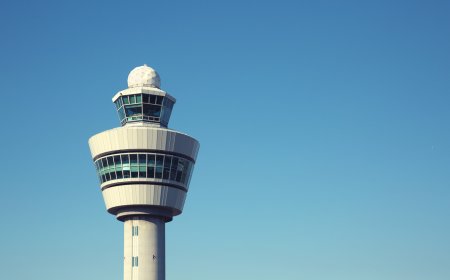
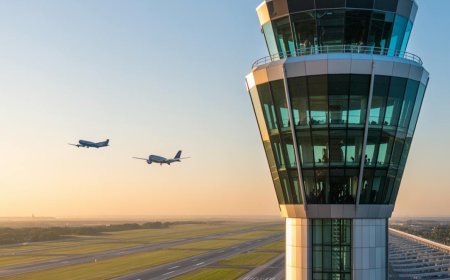
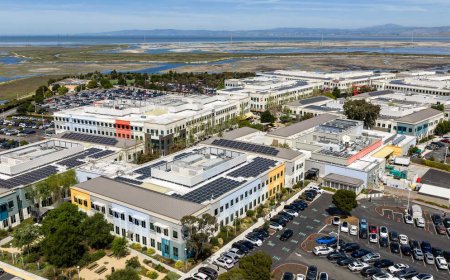
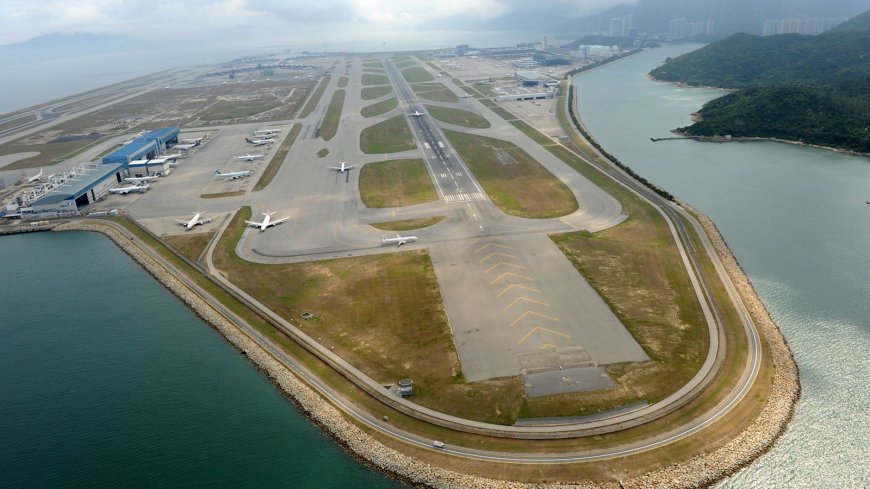
Photo note: the image above shows Hong Kong International Airport's runways, whose markings the Brushman robots repaint; it does not show the robot itself.
Sources
- South China Morning Post — Fresh coat, lighter load: Hong Kong airport puts runway-painting robots to work (November 15, 2026)
- The Standard — HK airport deploys runway-painting robots, cutting work hours by two-thirds (November 15, 2026)
- FJ Dynamics — FJD PaintMaster Airfield, autonomous airfield marking robot
What's Your Reaction?
 Like
0
 Dislike
0
 Love
0
 Funny
0
 Angry
0
 Sad
0
 Wow
0