

















































Jensen Huang's Exit Leaves Nvidia's Open-Source Future in Doubt
Jensen Huang's resignation as Nvidia chief executive has raised fresh questions about the company's commitment to open-source AI. The Hugging Face acquisition is still pending, the Nemotron open-weight models continue for now, and interim CEO Colette Kress has said nothing yet about the open-model strategy Huang championed.
Jensen Huang's Exit Leaves Nvidia's Open-Source Future in Doubt
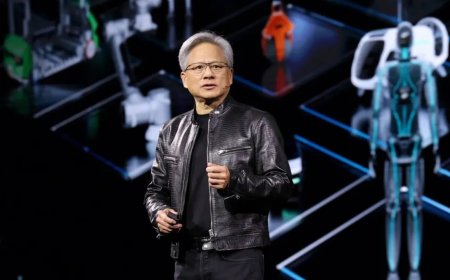
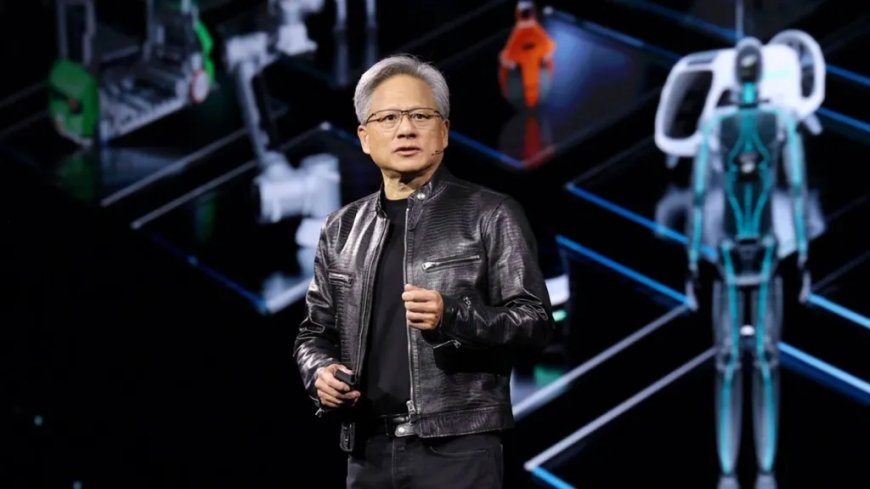
The open-source AI community has lost one of its strongest corporate champions. Jensen Huang resigned as Nvidia's president, chief executive and board member on Thursday, November 12, effective immediately, and his departure has left an uncomfortable question hanging over the company he led for 33 years: will Nvidia keep backing open models now that the man who made them a priority is gone?
Nothing has been cancelled. No policy has been reversed. But as of today, nobody at Nvidia has publicly said the open-source commitment will continue unchanged — and in the world of founder-driven priorities, that silence is exactly what worries the open-model community.
The advocate the open-model world is losing
Huang was not a quiet supporter of open source. He was its most visible corporate advocate in the United States, and he framed the case in terms that went well beyond engineering: open models, he argued, were good for safety, for innovation, for diffusion, and for national sovereignty.
In July, in his first-ever post on X, Huang published an AI policy letter signed by 25 companies — including Microsoft, Meta, IBM and Palantir — urging the United States government not to over-restrict open-weight AI models, many of which come from China. The letter landed in the middle of a Washington debate over allegations that Chinese AI labs were taking intellectual property from American counterparts, with Anthropic and OpenAI reportedly pressing the government directly for stronger protections.
That combination — Huang's personal visibility and Nvidia's market power — made him the strongest counterweight to the closed-model providers arguing for tighter restrictions. AI researcher Nathan Lambert put the fear plainly on X the day before the resignation: "Jensen no longer being CEO would be very very bad for the open model cause in the US."
What Huang actually built
The advocacy was backed by real products and real money. Inside Nvidia, Huang pushed the development of the Nemotron family of open-weight AI models, built for long-running agentic AI systems and reasoning workloads — potential competitors to closed frontier models. One company insider told TechCrunch they do not expect the leadership change to affect Nemotron development.
The biggest open bet, though, is still unfinished. In September, Nvidia agreed to acquire Hugging Face, the open-source platform where much of the world's open-model work is published and distributed, in a deal worth about $12.9 billion — roughly $11.9 billion to shareholders plus up to $1 billion in equity awards to retain Hugging Face employees, according to Nvidia's filing with the US Securities and Exchange Commission. The deal is expected to close in the first half of 2027, subject to regulatory approvals, and Reuters reported in October that the US Department of Justice had begun making inquiries about how the acquisition would affect competition in the AI market.
Huang also put money behind the ecosystem in other ways: Nvidia agreed to pay $6 billion for a non-exclusive licence to the technology of Poolside, an open AI coding startup, and invested in startups built around open models, including Reflection AI and Thinking Machines Lab.
Hugging Face says it will keep fighting
Hugging Face chief executive Clément Delangue reacted to the resignation on X on November 12, calling it "a really sad day" and adding: "This whole thing sucks, and I wish none of it had happened. It's a really sad day! But I want to make one thing clear: we'll keep fighting for open-source AI, harder than ever. This is too important to slow down now."
Delangue's post is the position of someone who expects the deal to close. But the pledge to keep supporting rival models and rival hardware under Nvidia ownership was made by Huang personally, and the deal still needs regulatory clearance. TechCrunch reported that requests for further comment on the deal's status, and on whether Hugging Face has spoken with interim chief executive Colette Kress, were not returned.
The question now facing Colette Kress
Kress, Nvidia's chief financial officer since September 2013, has been named interim CEO while the board searches for a permanent successor. It is not yet clear how she will approach the Hugging Face deal or the open-model ecosystem more broadly — and founder-driven priorities tend to get downgraded when leadership changes, as TechCrunch noted.
That uncertainty cuts both ways. Kress has a record of challenging Huang's riskier bets — she pushed back on the financing arrangements behind some of Nvidia's largest AI infrastructure deals — and a $12.9 billion acquisition of an open platform, still awaiting regulatory approval, is exactly the kind of commitment a new chief executive might want to re-examine. On the other hand, an interim chief executive does not typically cancel a strategic acquisition in her first week, and cancelling it would need a board decision with a stated reason.
Why open source was never just idealism for Nvidia
It is worth remembering that supporting open source was never simply a passion project for Huang. It is increasingly central to Nvidia's business strategy. As some of Nvidia's biggest customers — including Google and OpenAI — develop their own AI chips and reduce their reliance on Nvidia hardware, the company has a strong incentive to cultivate a much broader ecosystem of AI developers and customers.
More players training, fine-tuning and running models means more GPUs sold, and less dependence on a handful of frontier labs. Huang may be gone, but Nvidia still needs an open AI ecosystem. The question now is whether that commitment can survive without the man who made it a priority.
The Washington angle
Huang's exit could also shift the policy debate in Washington. His resignation followed his admission of an affair with Alice Huang, a Chinese businesswoman at the centre of espionage allegations, and the scandal has put renewed scrutiny on his efforts to loosen chip export controls on China. That could strengthen the arguments of those pushing for tougher restrictions on Chinese AI companies — restrictions on open-weight models from China could, in turn, kneecap competition for American companies, most of which have kept their own models closed.
Readers following the wider fallout can find our earlier reporting on Huang's resignation and Kress's appointment, on the Reuters exclusive about Huang misleading Nvidia's top lawyer, and on who Colette Kress is and how she got here.
What to watch next
The first public test comes soon. Nvidia reports its third-quarter fiscal 2027 results and holds its earnings call on November 17, giving Kress her first public forum as interim chief executive. Kress is also due to address staff at an all-hands meeting on November 18 — she has already told employees the company is going through an extraordinarily difficult period.
Until then, the open-model community is left with a deal that is agreed but not closed, a model family that continues but has no public guarantee, and a promise from Hugging Face to keep fighting — whatever happens next.
Sources
- TechCrunch — "Jensen Huang's exit puts Nvidia's support for open source in question", November 12, 2026
- TechCrunch — "Hugging Face CEO vows to keep fighting for open source AI after Jensen Huang's exit", November 12, 2026
- US Securities and Exchange Commission — Nvidia Form 8-K, September 2, 2026 (Hugging Face definitive agreement)
- Al Jazeera — "Why did Nvidia CEO Jensen Huang resign, and who is Colette Kress?", November 12, 2026
What's Your Reaction?
 Like
0
 Dislike
0
 Love
0
 Funny
0
 Angry
0
 Sad
0
 Wow
0