




















































DeepSeek Brings Its App's Web Search, File Reading and Voice Tools to Developers via API
DeepSeek has opened the search, file-reading, voice and safety functions behind its consumer chat app to developers through its API, letting apps built on deepseek-flash search the web, read links and documents, and handle speech — with tool fees charged on top of token prices.
DeepSeek Brings Its App's Web Search, File Reading and Voice Tools to Developers via API
DeepSeek has opened the tools behind its consumer chat app to developers. In an update to its API change log on 13 November 2026, the Hangzhou-based AI lab made web search, link reading, file input, content safety checks and voice handling available through its API, so developers can build the same capabilities into their own products instead of assembling them from separate services.
The move turns DeepSeek's API from a plain chat-completions service into something closer to the full DeepSeek app. The functions run on deepseek-flash, the API name for the DeepSeek-V4.1-Flash-1017 model, and they work across the Messages, Responses and Chat Completions endpoints, with DeepSeek's servers making the tool calls and assembling the retrieved material into the context the model answers from.
Search, files and links inside the conversation
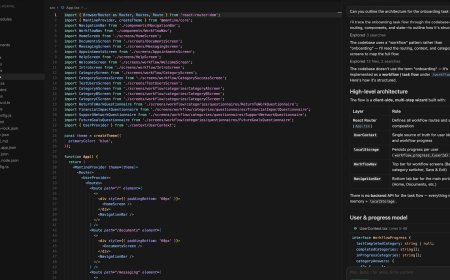
Developers switch the features on with parameters in an existing request. With the deepseek_web_search tool enabled and thinking mode off, the model can search the web or look for images and answer with citations. Turning thinking on lets the same tool search and read pages over several reasoning steps, so the model can follow what it finds rather than answering from a single search.
A separate deepseek_read_url tool fetches pages linked in a user's message, so a conversation can work from a link already supplied rather than one the model went looking for. File input accepts PDFs, Word and PowerPoint documents and images, which are converted to text or parsed with their layout taken into account before the contents are added to the conversation. The update also adds automatic conversation titles and user-context metadata, and a model-safety parameter that screens inputs and outputs.
Standalone APIs for search, documents and audio
For pipelines where code, not the model, decides when a tool runs, DeepSeek has also split out standalone services. The Search API runs queries through DeepSeek's internal search engine and returns structured results for search applications and AI agents, through the /v1/tools/search endpoint, at up to 100 requests per second. Image search is not currently supported through that endpoint. The Fetch API retrieves the contents of a particular page.
Optical character recognition, or OCR, turns images of printed text into machine-readable words. Automatic speech recognition, or ASR, converts audio into text through /v1/tools/asr, supporting 21 languages with automatic language detection, and accepting WAV files with 16-bit PCM audio and Ogg Opus files of up to 120 seconds and 8 MB. Text-to-speech, or TTS, converts text into spoken audio through /v1/tools/tts, supporting 10 languages with two voices — Stella, a female voice, and Tide, a male voice — at up to 10,000 characters per request, with streaming audio available over WebSocket.
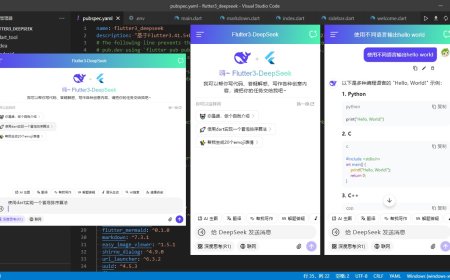
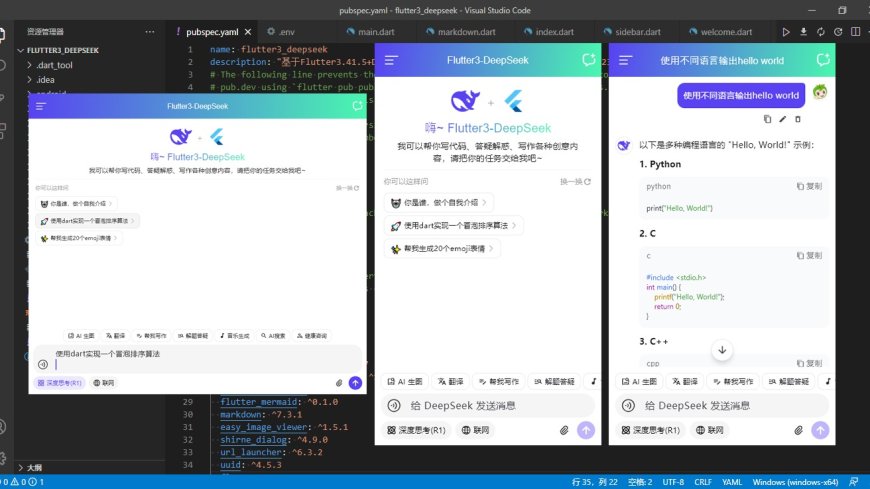
DeepSeek has also released an open-source demo chat client, called chat-demo, to show the functions working together. The static web client connects from the browser to the API and supports search, link reading, attachments, voice input and the thinking mode, and it can import a user's chat history from the DeepSeek app.
Tool fees sit on top of token prices
The tools are billed separately from model tokens. Search and Fetch cost $0.75 per 1,000 successful requests each, whether called directly or used by the model. File parsing and OCR cost $0.225 per 1,000 pages. TTS is listed at $0.45 per 10,000 characters and ASR at $0.116 per hour of audio, with both voice services currently half price — $0.225 and $0.058 respectively — for a limited time, with no end date given.
The model itself is unchanged in price. At peak hours deepseek-flash costs $0.30 per million cache-miss input tokens and $1.20 per million output tokens, with off-peak rates at half those levels. The expansion follows DeepSeek's opening of standalone Search and Fetch APIs on 17 October, when it also updated the V4.1-Flash-1017 checkpoint.
Safety checks are required for public-facing apps
The release carries conditions. DeepSeek tells developers serving the public to enable the safety checks, and says developers remain responsible for content moderation, applicable model registration and AI-generated content labelling. The safety check can be part of a model request, but the compliance duties attach to the service built around it.
There is also a practical caveat for developers tuning model behaviour. Startup Fortune reported that enabling search, page reading, stricter safety or automatic titles makes the model disregard settings governing output randomness and probability-based token selection, and that the output-token limit applies to each inference step in a round rather than to the round as a whole. Developers building on the new tools will need to test how those trade-offs affect their own applications.
Why it matters
The update puts DeepSeek's API on a more equal footing with rivals that already sell hosted search, retrieval and voice as part of their developer platforms, and it does so at prices that undercut much of the market. For small teams and independent developers, the appeal is that a single API key and one account balance can now cover search, document reading and speech, without wiring up separate providers for each step.
It also comes as DeepSeek's models are drawing close scrutiny elsewhere. Researchers recently found evidence, from the weights of Chinese AI models, that export-restricted Nvidia Blackwell chips are behind some of China's most powerful models, as Innopark IT reported. The API expansion is a separate, commercial development, but it shows the lab continuing to push its platform outward while that debate continues.
Sources
What's Your Reaction?
 Like
0
 Dislike
0
 Love
0
 Funny
0
 Angry
0
 Sad
0
 Wow
0