


























































ASEAN Signs World's First Region-Wide Digital Economy Pact in Manila
Trade ministers from all 11 ASEAN member states signed the Digital Economy Framework Agreement (DEFA) in Manila on November 14, 2026 — the world's first region-wide, legally binding digital economy pact. The agreement sets common rules for digital trade, cross-border payments, data flows, cybersecurity and artificial intelligence, and is expected to take effect in early 2027.
ASEAN Signs World's First Region-Wide Digital Economy Pact in Manila
Trade ministers from all 11 member states of the Association of Southeast Asian Nations (ASEAN) signed the Digital Economy Framework Agreement (DEFA) in Manila on Saturday, November 14, 2026, completing a negotiation that began more than three years ago and creating what officials describe as the world's first region-wide, legally binding agreement on the digital economy.
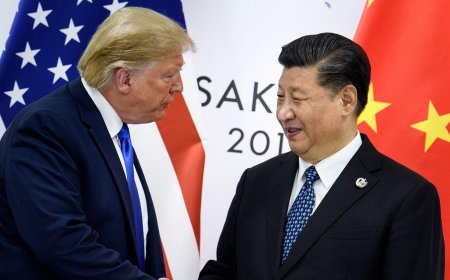
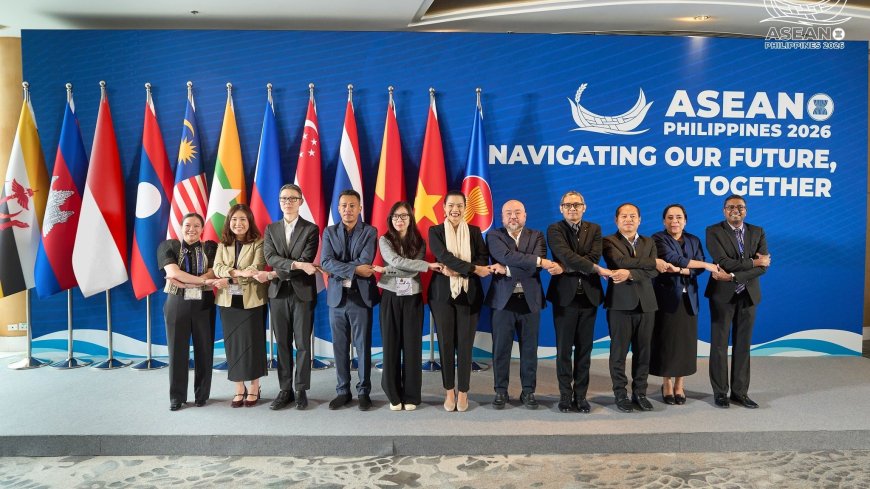
The featured photo shows ASEAN officials at an ASEAN Philippines 2026 event in Manila, not the signing ceremony itself.
The signing took place at a ceremony held alongside the 28th ASEAN Economic Community Council Meeting in Pasay City, on the eve of the 49th ASEAN Summit, which runs from November 15 to 17. Philippine Trade Secretary Cristina Aldeguer-Roque signed for the Philippines, alongside her counterparts from Brunei, Cambodia, Indonesia, Laos, Malaysia, Myanmar, Singapore, Thailand, Timor-Leste and Vietnam. ASEAN Secretary-General Kao Kim Hourn attended the ceremony, and President Ferdinand Marcos Jr. witnessed the ceremonial handover of the agreement during the summit's opening ceremony, according to the Manila Standard.
Roque, who chairs the ASEAN Economic Community Council, called the signing a defining moment for the bloc. "After years of negotiations, consultations, and hard work, we are here to turn that ambition into a shared regional commitment," she said at the ceremony, adding that DEFA "opens a new chapter in ASEAN cooperation, one that brings our economies closer together, extends the benefits of trade beyond physical borders, and positions our region to compete in an increasingly digital world."
What the agreement covers
DEFA is ASEAN's first standalone digital economy agreement. According to Singapore's Ministry of Energy, Trade and Industry and the Philippine Department of Trade and Industry, it sets common rules across nine areas: digital trade, cross-border e-commerce, digital identities and authentication, electronic payments, data protection and privacy, online safety and cybersecurity, competition policy, data and innovation, and cooperation on emerging technologies such as artificial intelligence. The framework also covers the protection of source code and online consumer protection.
The practical aim is to cut the friction that businesses and consumers face when they trade across ASEAN's borders. For companies, that means fewer duplicated compliance requirements and simpler rules for selling goods and services online in another member state. For consumers, the agreement is meant to bring safer online transactions and stronger protection of personal information, with common standards for electronic payments and digital identity.
"Through DEFA, we are building a more integrated digital economy for nearly 680 million people," Roque said. "For our MSMEs, this means greater opportunities to reach customers across ASEAN, access digital platforms, and participate in regional value chains. For consumers, it means safer online transactions and stronger protection of personal information."
Why it matters
ASEAN estimates that its digital economy is worth about US$1 trillion today and could double to US$2 trillion by 2030 if the agreement is implemented successfully. That figure is a projection, not a guaranteed outcome, and it depends on member states turning a shared rulebook into working payment systems, trusted data flows and recognised electronic trade documents — a point Roque herself raised at the signing.
The pact also lands as Southeast Asia's technology sector draws growing global attention. The region's data-centre and artificial intelligence boom has already put its digital rules under scrutiny, as recent fallout around AI chip exports showed. DEFA gives the bloc a single, legally binding framework to govern that growth, rather than a patchwork of national rules.
Singapore Deputy Prime Minister Gan Kim Yong, who signed for Singapore, said the deal had taken several years to negotiate and reflected the different levels of digital readiness among member countries. The Asian Development Bank has pledged up to US$5 billion by 2030 to help ASEAN put the agreement into practice, its president Masato Kanda said at the ASEAN Business and Investment Summit.
The road to the signing
Formal negotiations on DEFA began in September 2023. Senior economic officials concluded the talks in May 2026, settling the remaining issues at a meeting in Manila from May 27 to 29, and economic ministers reaffirmed their commitment to sign the agreement at the 49th ASEAN Summit.
Under the agreement's terms, DEFA will enter into force 180 days after signing, which puts its start in early 2027. Gan said he hoped it would come into force "sometime early next year". Until then, the hard work shifts to implementation: member states must align their domestic rules on data, payments and digital identity with the framework, a process that will test how quickly a diverse bloc can move in step.
What happens next
With the signing done, ASEAN's focus moves to ratification and implementation ahead of the early-2027 entry into force. The agreement was presented to ASEAN leaders at the 49th ASEAN Summit in Manila, which runs through November 17. For the region's small businesses — the group officials say stands to gain most — the first real test will be whether cross-border payments and online sales actually get simpler once the rules take effect.
"DEFA is a landmark achievement, not only for ASEAN, but for the global digital economy," Roque said. "As the world's first region-wide digital economy agreement of its kind, it places ASEAN at the forefront of efforts to build a more connected, trusted, and inclusive digital future."
Sources
- GMA News Online — ASEAN ministers sign landmark region-wide digital economy agreement
- Channel News Asia — ASEAN countries sign world's first region-wide digital economy pact
- The Philippine Star — ASEAN ministers sign digital economy pact
- The Business Times — Asean's economic agenda gets big push as ministers seal concrete outcomes in digital and free trade
- Manila Standard — ASEAN digital pact to expand market access for Filipino small businesses
What's Your Reaction?
 Like
0
 Dislike
0
 Love
0
 Funny
0
 Angry
0
 Sad
0
 Wow
0