

























































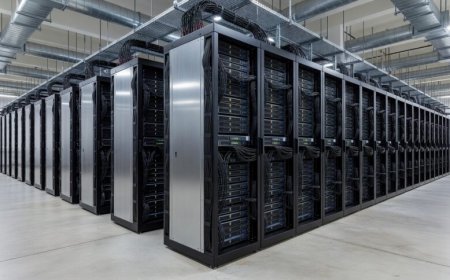

Nvidia Fallout Puts Southeast Asia's AI Boom Under the Microscope
Southeast Asia's booming data centre industry faces fresh scrutiny after the Jensen Huang scandal, with US lawmakers pushing tougher chip export rules and Malaysia weighing a law to monitor high-performance chips inside its data centres.
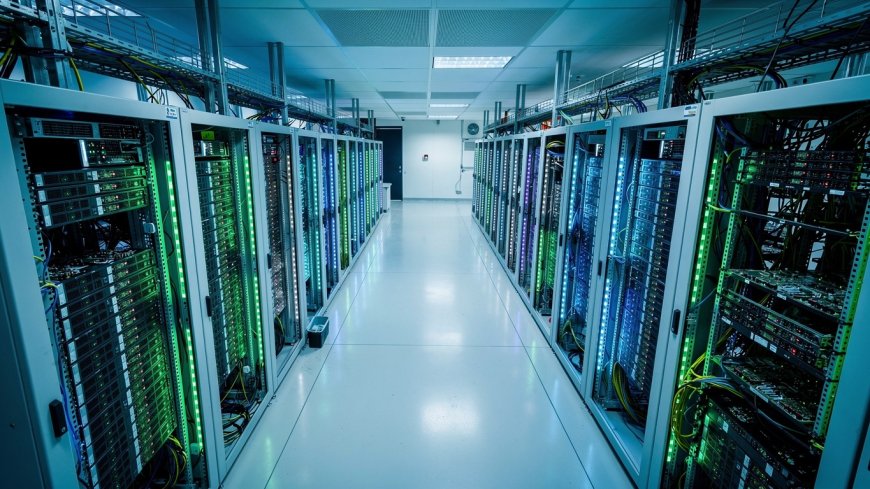
Nvidia Fallout Puts Southeast Asia's AI Boom Under the Microscope
Southeast Asia's fast-growing chip and data centre industries are bracing for a wave of new scrutiny, after the scandal that forced Nvidia co-founder Jensen Huang out of the chief executive's job turned a harsh spotlight on Singapore and Malaysia.
Executives and analysts in the region told Reuters on 13 November that the fallout is likely to bring tighter checks on who buys advanced artificial intelligence chips, where they end up, and who is allowed to use them remotely. For an industry that has drawn tens of billions of dollars in investment on the back of the AI boom, the question is no longer whether the rules will change, but how much they will cost.
Washington moves to close the remote-access loophole
Lawmakers from both major US parties are pushing for tougher restrictions on China's access to advanced AI chips, after the Huang affair sharpened scrutiny of Nvidia's role in American national security. The focus is a loophole that lets Chinese companies rent computing power from data centres overseas and use systems fitted with restricted chips from afar, without ever importing the hardware itself.
Tougher measures could include new export rules and licensing requirements covering Malaysia, Thailand, Indonesia and Singapore, the Wall Street Journal reported, according to Reuters.
Washington already restricts exports of Nvidia's most advanced AI chips to China to protect US leadership in the sector. The new pressure is about what happens after the chips leave American shores — and who is watching them in the countries that receive them.
The Megaspeed connection
At the centre of the affair is Alice Huang, a Chinese businesswoman suspected by US authorities of intelligence ties to Beijing, who was an executive at Megaspeed, a Singapore-based cloud computing company. Megaspeed has subsidiaries in Thailand, Indonesia, Malaysia, Australia and the United States, and has been under investigation by Singapore authorities since February 2025 over potential false declarations relating to the purchase of servers and other related offences.
There has been no public finding that Jensen Huang violated export-control laws, and the Chinese AI projects identified in Reuters reporting have not been linked to Megaspeed or the allegations involving Huang. But the affair has put the entire regional supply chain under a microscope.
"After this case, every operator in the chain will be expected to know its end user. Southeast Asian operators will still get Nvidia chips, but proof of where every chip sits and who it serves is now part of the product," said Ke Yan, head of research at Singapore-based investment research firm Shenton Research.
Singapore has also just charged a fifth person in an AI server fraud case, a reminder of how closely the city-state's authorities are already watching the sector. In February 2025, Singapore said that while 22 percent of Nvidia's chip sales were booked to entities with operations in Singapore, only 1 percent of the chips physically arrived in the country.
Malaysia weighs a monitoring law
Malaysia, the region's biggest data centre magnet, moved first. On Thursday, the government said it was weighing a law that would allow it to monitor data centre operations, including their use of high-performance chips, to make sure chips subject to US restrictions are imported for domestic use rather than re-export.
Investment, Trade and Industry Minister Johari Abdul Ghani said Malaysia needed that visibility as the country faces renewed scrutiny over whether it is being used to circumvent US restrictions on advanced AI chips. Malaysia imposed export controls last year on the movement of high-performance AI chips of US origin, after pressure from Washington to stem the flow of such chips to China.
The stakes for Malaysia are enormous. Since 2021, the country has approved 385.7 billion ringgit — about $94.67 billion — of data centre-related investments, according to the trade ministry. Rising data centre development pushed Malaysia's construction sector up 6 percent in the third quarter of 2026.
Thailand, meanwhile, has 42 data centres representing 3,400 megawatts of IT load and about 750 billion baht ($22.58 billion) in investment as of February. Indonesia's data centre market was valued at $2.81 billion in 2025.
A 'post-DeepSeek moment' for the region
Gary Goh, chief executive of Malaysia-based data centre consultancy Sprint DC, likened the moment to a "post-DeepSeek moment" — a reference to the shock that rippled through the industry when the Chinese AI start-up's breakthrough reset assumptions about computing demand.
"Once the new rules are out, there will be a lot more restrictions for countries like Malaysia. There could be a short- to medium-term market shock to the Malaysian data centre market," Goh said.
The anxiety is already visible. An investor and chief executive of an Asian neocloud company, who declined to be named, spent Friday morning in calls with lawyers in the United States. "Everyone is still figuring out... Maybe every time you export something, there will be additional process to go through. We are worried about more scrutiny which will make it longer for chips to come through," the executive said.
The AI boom has been a powerful tailwind for the region. Singapore raised its economic growth forecast for this year to 4.5 to 5.5 percent in August, up from 2.0 to 4.0 percent, citing the AI cycle. Any slowdown in chip deliveries would land directly on that growth story.
Not everyone expects damage
Some in the industry believe the region can absorb tighter rules. Jarick Seet, head of small-mid caps at Maybank, said Singapore and Malaysia could weather the change. "Singapore itself will be more stringent, I think it's a natural thing that happens. Singapore will tighten rules and the US will tighten rules, but I don't think this will harm Singapore's and Malaysia's prospect of buying chips," he said.
A senior executive at a chip maker in Singapore, who declined to be named, even saw a silver lining in Huang's departure. "With Jensen out, then the Chinese will have a harder time getting chips from the US. Maybe it is not a bad thing for the non-US people who will have more access to chips."
The same executive pointed to another possible upside: if the United States slows its own data centre building after Democratic victories in key data-centre states such as Texas and Georgia in the midterm elections, "those companies are going to look elsewhere and likely come to countries that can offer them land and deals and power. Even if we lose a chunk of the China business, I think we will get other companies coming looking for compute."
What comes next
For now, the region's operators are waiting on the fine print. The shape of any new American export rules — and how strictly Malaysia, Singapore, Thailand and Indonesia enforce their own — will decide whether Southeast Asia's AI boom keeps its momentum or stalls under the weight of compliance.
The scandal has already changed one thing permanently, in the view of those running the region's data centres: knowing where every chip sits, and who it serves, is now part of the business itself.
Related coverage: Reuters found more than $3 billion in Chinese AI projects still built around Nvidia's restricted processors — see China's $3.2 Billion Nvidia-Powered AI Projects at Risk After Huang Exit. Banned Nvidia chips were also found at a Shanghai AI facility linked to Alice Huang — see Banned Nvidia AI Chips Found at Shanghai Data Centre. In Washington, Democrats have opened an inquiry into the Trump administration's Nvidia H200 chip sales to China — see Democrats Investigate Trump Nvidia H200 China Chip Sales.
Sources
What's Your Reaction?
 Like
0
 Dislike
0
 Love
0
 Funny
0
 Angry
0
 Sad
0
 Wow
0