








































Democrats Open Investigation Into Trump Administration's Approval of Nvidia H200 Chip Sales to China
Two senior Democrats opened an inquiry on November 12 into how the Trump administration approved Nvidia's H200 chip sales to China, asking Commerce Secretary Howard Lutnick to preserve records and questioning whether the arrangement amounts to an unconstitutional export tax.
Democrats Open Investigation Into Trump Administration's Approval of Nvidia H200 Chip Sales to China
Two senior congressional Democrats opened an inquiry on Thursday, November 12, into how the Trump administration approved sales of Nvidia's H200 artificial intelligence chips to China, widening the political fallout from the scandal that forced Jensen Huang out as Nvidia's chief executive the same day.
The inquiry comes from Representative Richard Neal of Massachusetts, the top Democrat on the House Ways and Means Committee, and Senator Ron Wyden of Oregon, the top Democrat on the Senate Finance Committee. In a letter to Commerce Secretary Howard Lutnick, they asked the department to preserve records about the export arrangement and raised questions about whether it was legal at all.
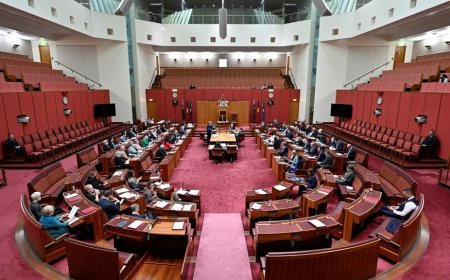
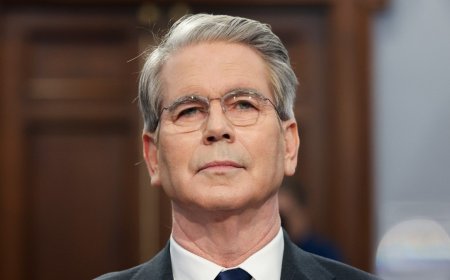
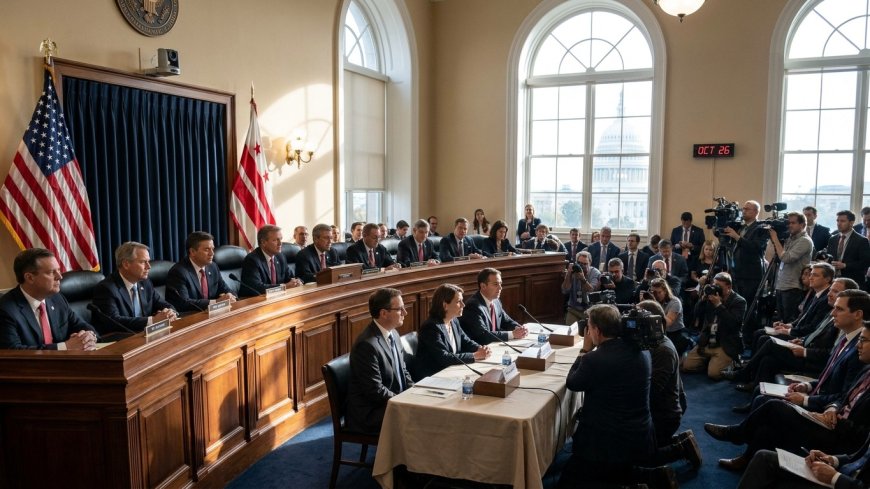
Photo note: the image above shows a congressional hearing room in Washington, DC. No hearing has been held in this inquiry, which so far consists of a letter to the Commerce Department.
The arrangement Democrats call a scheme
"The scheme worked like this," the letter says, as quoted by TechCrunch. President Donald Trump agreed to sales of Nvidia's H200 chips to China as long as the chips, manufactured in Taiwan, were first shipped to the United States. On arrival, Trump added a tariff, "effectively taking a cut of Nvidia's sales to China through what appears to be an unconstitutional export tax system," the letter said. The Commerce Department, under Lutnick, then issued an export license.
The financial terms were not secret. On December 8, 2025, Trump announced that Nvidia could sell H200 chips to approved Chinese customers if the United States received a 25 percent cut of the sales. Months earlier, in August 2025, Nvidia and AMD had both agreed to share 15 percent of their revenue from chip sales to China with the US government as part of a deal to secure export licenses, the Associated Press reported at the time.
What Neal and Wyden are now questioning is whether that whole structure was lawful, and how the approvals were handled inside the Commerce Department.
Questions about Megaspeed and Alice Huang
Much of the letter focuses on Megaspeed, a Singapore-based Nvidia customer that US officials suspect of helping route advanced Nvidia chips into China. Alice Huang, a Megaspeed executive, is the woman accused of being a Chinese spy, and Jensen Huang confessed to an extramarital affair with her before Nvidia's board removed him as chief executive on November 12.
The letter asks why Lutnick continued to allow Megaspeed to buy Nvidia chips even after he was reportedly informed by US intelligence about suspicions surrounding Alice Huang and Jensen Huang's relationship with her. It also questions why the department approved purchases by other Asian companies that, the letter says, had "no physical presence at their listed addresses."
The focus, in other words, is aimed at the administration, not only at Nvidia and Huang. For the background on the Shanghai facility at the centre of the diversion allegations, see our earlier report on banned Nvidia chips found at a Shanghai data centre, and for the full sequence of events, the timeline of the Huang scandal.
The donations question
The letter also asks how Nvidia's donations to Trump's projects factored into the approval. It notes that the export deal was approved after Trump learned of what the lawmakers called "Mr. Huang's compromised position," and after Nvidia donated 26 million dollars toward Trump's projects, including the White House ballroom. The letter appears to ask whether Trump used his knowledge of the affair to secure donations from Nvidia.
TechCrunch also noted that in a "60 Minutes" interview with Trump that aired on Sunday, the president mentioned how he and his team had threatened an unnamed AI executive with jail, after which the executive "totally changed." The letter does not name that executive.
A second inquiry, and the limits of this one
This is the second congressional inquiry since news of the alleged spy affair broke. A Republican-led group, involving leaders from the House Select Committee on the Chinese Communist Party, the House Foreign Affairs Committee and the House Intelligence Committee, demanded that Huang testify in a closed-door session and threatened to subpoena him if he did not agree voluntarily. On Thursday, after his resignation, Huang agreed to testify.
Neal and Wyden face a practical limit: as members of the minority party, they can ask questions but cannot compel answers or documents. Separately, Democratic Senators Elizabeth Warren and Chris Coons sent a similar letter asking for records to be preserved and raising concerns about the government's ability to enforce export controls and protect national security.
The scrutiny is spreading on several fronts at once. Senator Tim Scott has summoned Huang and Lutnick to testify before the Senate Banking Committee, and lawmakers have introduced bills to tighten chip curbs on China in the wake of Huang's resignation. For the resignation itself, see our report on Huang's resignation.
Why it matters
The H200 is among the most advanced AI chips Nvidia makes, and export controls on such chips are Washington's main tool for slowing China's AI build-up. The Democrats' inquiry asks whether those controls were bent for a commercial arrangement, whether the government took a cut of the sales in the process, and whether companies with suspected intelligence ties kept buying the chips anyway.
For now, the lawmakers have asked for documents. No findings have been made, and neither Nvidia nor the White House had publicly responded to the inquiry in the material reviewed for this article. What happens next depends largely on what the Commerce Department hands over, and on whether the Republican-led inquiry, which can compel testimony, turns up the same paper trail.
Sources
TechCrunch — Democrats launch Nvidia investigation, write scathing letter on Huang's 'scheme' with Trump (November 12, 2026)
Daily Inference — Trump Taxes China Chips, and Democrats Want the Receipts (November 13, 2026)
Digital Watch — Nvidia's exports to China investigated by U.S. Democrats (November 13, 2026)
TokenPost — Democrats Open Inquiry Into Nvidia's China Chip Export Deal (November 12, 2026)
SBS — US Democrats Probe Trump Administration over Nvidia's China Export Approval Amid Growing Scrutiny (November 13, 2026)
What's Your Reaction?
 Like
0
 Dislike
0
 Love
0
 Funny
0
 Angry
0
 Sad
0
 Wow
0