






















































Restricted Nvidia AI Chips Traced to Shanghai Data Centre Linked to Alice Huang, Bloomberg Finds
Bloomberg reports that Nvidia H800, H100 and H200 chips under US export restrictions were installed at a Shanghai AI data centre, after servers sold to a Singapore cloud partner ended up with a company founded by Alice Huang. Dell cut ties with the Singapore buyer in February 2025 over diversion concerns, but how the hardware reached China remains unclear.
Restricted Nvidia AI Chips Traced to Shanghai Data Centre Linked to Alice Huang, Bloomberg Finds
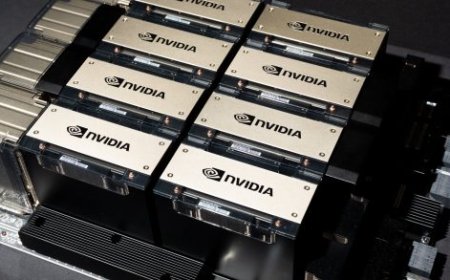
Nvidia's most powerful artificial intelligence chips — processors the United States has barred from sale to China — were installed at a sprawling AI data centre in Shanghai, according to documents reviewed by Bloomberg News. The report, published on Friday, November 13, 2026, traces the hardware through a network of companies in Singapore and China, and puts a firm founded by Alice Huang at the centre of the chain.
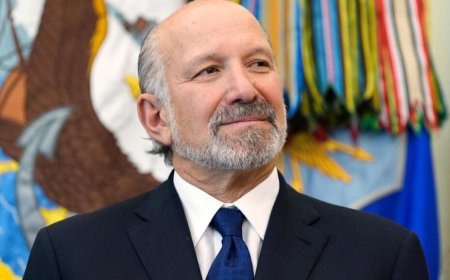
Huang is the former Megaspeed International executive at the heart of the scandal that led to Jensen Huang's resignation as Nvidia's chief executive on Thursday. US officials believe she was recruited by China's main intelligence agency, an allegation Beijing has denied. The Bloomberg findings do not establish that Nvidia or Jensen Huang knowingly facilitated the movement of the chips — and that distinction matters as much as the discovery itself.
What Bloomberg found
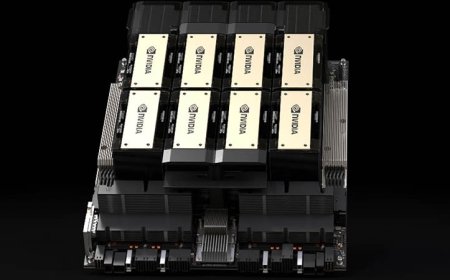
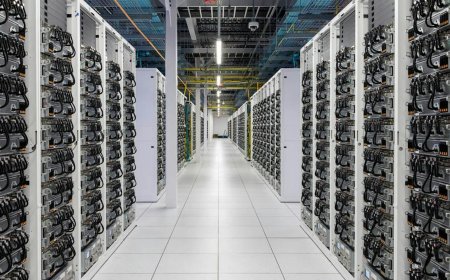
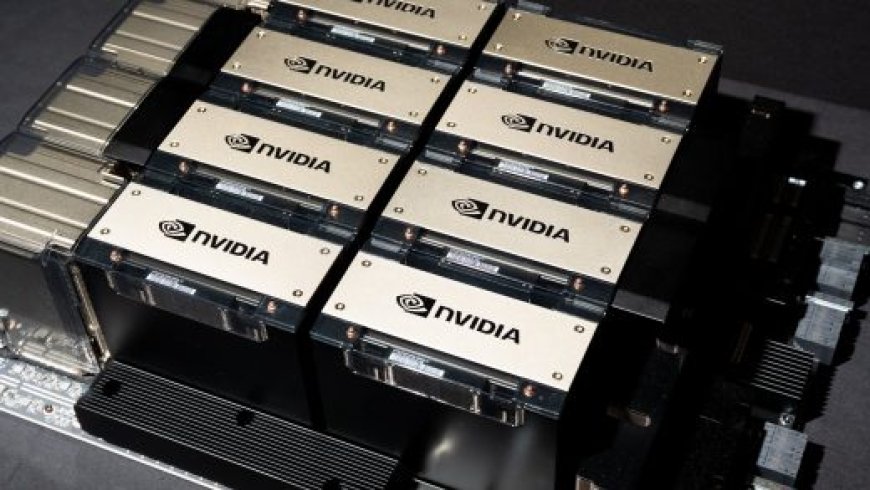
According to Bloomberg, a Chinese company founded by Alice Huang, also known as Huang Le in corporate filings, procured restricted Nvidia chips that were installed at a Shanghai facility identified as the Yangtze River Delta Project. The chips involved were Nvidia's H800, H100 and H200 processors, all of which are subject to US export restrictions.
The trail begins in Singapore. Aperia Cloud Services, then an official Nvidia Cloud Partner headquartered in Singapore, purchased 22 servers from Dell Technologies containing Nvidia H800 chips — processors whose export to China has been prohibited since 2023. Instead of remaining in Singapore, the hardware reportedly ended up with Shanghai Longteng Intelligent Computing, a company Alice Huang founded in 2015.
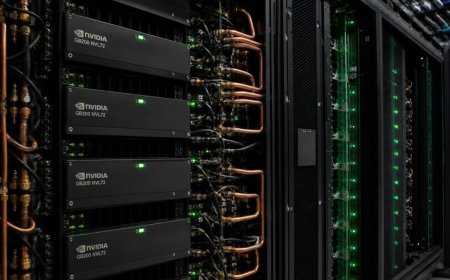
Bloomberg found the hardware details in filings submitted to Chinese authorities. A subsidiary of Shanghai Longteng pledged 193 servers as loan collateral in January 2025, and the filings placed that equipment at the Shanghai facility. Bloomberg put the value of the collateral at about $73 million, based on filings that stated 485 million Chinese yuan. Alongside the 22 Dell machines, the collateral included 52 units made by Super Micro Computer, equipped with Nvidia H100 or H200 chips, which also require a US licence for sale to China.
Bloomberg also reported that the serial numbers of the servers were verified with a source familiar with Dell's sale to Aperia. The Shanghai facility has further links to Megaspeed International, the Singapore-based data centre company Alice Huang founded in 2023, which featured a rendering of the facility in a 2024 investor presentation, according to Bloomberg.
How the chips reached Shanghai — and what is still unknown
The most important gap in the account is the transfer itself. It remains unclear how the hardware moved from a Singapore cloud provider to a Shanghai data centre, and Bloomberg reported that Alice Huang's personal involvement in arranging the purchases has not been established. The filings show where the equipment ended up, not who moved it or how.
That uncertainty is the core of the story. The documents provide explicit evidence that restricted hardware reached a Chinese facility, but they do not show a smuggling route, and they do not connect the movement to any individual decision. What they do show is a supply chain in which authorised sales in one jurisdiction ended up in a restricted destination — the exact failure US export controls are designed to prevent.
Dell cut ties in February 2025
Dell Technologies confirmed that it had discontinued its relationship with Aperia over concerns about unauthorised hardware diversion. The company told Bloomberg it "stopped all sales and support to Aperia International in February 2025 due to unauthorized diversion concerns."
The timing coincided with Singapore authorities arresting Aperia's chief executive in February 2025 on charges of defrauding server suppliers. The executive has pleaded not guilty and is awaiting trial, and Bloomberg reported that Singapore prosecutors have also charged a fifth person in connection with the case. Aperia has denied wrongdoing.
Nvidia previously said Aperia was no longer an active customer when its chief executive was arrested, and the company subsequently removed Aperia from its publicly available list of Nvidia Cloud Partners. Nvidia declined to comment on the Bloomberg report. Super Micro said it sold the identified servers in line with US export rules and denied any connection to the Shanghai data centre.
The export-control backdrop
The United States restricted exports of advanced Nvidia processors to China as part of a broader effort to limit Beijing's access to sophisticated computing technology. Washington banned H800 chip exports to China in 2023, aiming to slow the country's development of advanced artificial intelligence. The H100 and H200 processors are also subject to US export restrictions, although the applicable rules and licensing requirements have evolved over time.
These processors are used to train and run advanced AI models, which makes access to them strategically important in the technology competition between Washington and Beijing. The reported movement of restricted chips through third-country intermediaries highlights the difficulty regulators face in tracking where sophisticated computing equipment ultimately ends up.
The report lands a day after Jensen Huang resigned as Nvidia's president, chief executive and a director, following his admission of an extramarital affair with Alice Huang, a former Megaspeed executive. In May 2025, Jensen Huang had said there was "no evidence" of chip diversion. The Bloomberg report does not contradict that statement directly — it documents the movement of equipment, not knowledge of it — but it sharpens the questions facing Nvidia's board and US regulators.
Investigations widen on several fronts
Megaspeed said on Thursday that it was investigating whether it had complied with export-control requirements for sensitive semiconductors. Malaysian authorities are also investigating a Megaspeed subsidiary over the possible diversion of advanced AI chips to other countries. Separately, the US Attorney's Office in Manhattan is investigating whether entities linked to Huang took part in alleged efforts to move Supermicro hardware containing Nvidia GPUs into China.
A separate investigation by The Information, reported earlier this week, alleged that intermediary networks linked to Megaspeed had routed about 240,000 restricted Nvidia processors worth $7.5 billion into China. That is a distinct set of claims from a different news organisation, and it has not been confirmed by Bloomberg's reporting.
For US regulators, the central challenge remains the same: making sure advanced AI chips sold through authorised partners do not end up in destinations subject to export restrictions. The Shanghai findings show how hard that is to guarantee once hardware passes through several companies and jurisdictions — and they arrive at a moment when Washington is already moving to tighten the rules further. Congress is considering new chip-curb bills in the wake of Jensen Huang's resignation, and Democrats in the House have opened their own inquiry into Nvidia's China dealings.
Read our earlier coverage: China's $3.2 billion Nvidia-powered AI projects at risk after Huang exit, Jensen Huang resigns as Nvidia CEO, and Congress chip-curb bills on China after Huang resignation.
Sources
- BusinessToday — Nvidia's banned H800, H100 and H200 chips found at Shanghai AI facility (reporting Bloomberg News, November 13, 2026)
- Engadget — Bloomberg details web of Chinese AI companies with smuggled NVIDIA chips linked to Alice Huang
- The Hindu — Chinese company linked to Alice Huang obtained banned Nvidia chips: report
- Dealroom — Chinese firm founded by Alice Huang obtained banned Nvidia chips at a Shanghai data centre, Bloomberg reports
What's Your Reaction?
 Like
0
 Dislike
0
 Love
0
 Funny
0
 Angry
0
 Sad
0
 Wow
0