


















































China's $3.2 Billion Nvidia-Powered AI Projects Face Delays and Redesigns After Huang's Exit
A Reuters review of more than 150 Chinese procurement notices and contracts has identified over 23 billion yuan ($3.2 billion) in AI computing projects built around Nvidia's restricted H100, H200 and H800 processors. The projects — from coastal Fujian to Inner Mongolia and Gansu — now face delays, supply disruption or costly redesigns around domestic chips as US scrutiny intensifies after Jensen Huang's resignation.
China's $3.2 Billion Nvidia-Powered AI Projects Face Delays and Redesigns After Huang's Exit
Nvidia has said American export controls have effectively shut it out of China's AI data-centre market. A Reuters review of Chinese documents tells a different story about demand: more than $3 billion worth of computing projects across China are still being built around the company's restricted processors — and the departure of chief executive Jensen Huang may leave them more exposed than ever.
The review, published on Friday, November 13, examined more than 150 Chinese procurement notices, investment plans, construction contracts and corporate disclosures. Together, they identify projects and equipment agreements with a combined reported value exceeding 23 billion yuan, about $3.2 billion, designed around Nvidia's restricted H100, H200 and H800 processors. The projects stretch from China's wealthy coastal technology hubs to remote western provinces, and they reach well beyond the country's largest tech firms, into local government-backed ventures, universities and regional computing centres.
That scale matters because of what it says about enforcement. Washington has spent four years trying to cut off Beijing's access to the processors powering the global AI boom, and Nvidia itself says it can no longer compete for data-centre business in China. The documents Reuters reviewed show Chinese customers still planning purchases — and in some cases already operating restricted processors. The findings arrive a day after Huang resigned as Nvidia's chief executive, and as lawmakers in Washington press for still tighter controls.
One caution is important. The $3.2 billion figure is not spending on Nvidia chips alone. It includes planned investments and signed contracts as well as completed installations, and it covers buildings, power systems and other infrastructure around the hardware. The value of the chips themselves is only part of it — but the projects cannot run as designed without them.
Billions in the pipeline
The projects Reuters identified are spread across the country, and the examples in its review show how local the exposure is. In coastal Fujian province, a proposed 6.2 billion yuan AI computing centre in Xianyou county — about $873 million — is seeking commercial partners and specifies Nvidia H100 chips for a facility intended to support large-scale AI development.
In northwestern Shaanxi province, the state-owned engineering group Sinomach said a subsidiary had won a contract as part of a 3 billion yuan computing centre specifying Nvidia H100 and H200 processors. In northeastern Jilin province, a government prospectus from April describes a 2.26 billion yuan project combining Nvidia H100 processors with Chinese-developed chips. In Inner Mongolia, a 1.5 billion-yuan development proposes installing 625 Nvidia H200 servers. And in northwestern Gansu province, a local company was awarded a 1.16 billion yuan construction contract in July for a computing centre that plans to install approximately 3,072 Nvidia processors.
Some of these facilities are already operational or under construction. Reuters reports that a facility in northwestern Gansu was expected to install thousands of Nvidia chips before the end of the year, though it remains unclear whether those processors ever arrived. Operators of the projects are now exposed to potential delays, supply disruptions, or costly redesigns around domestic chips as export controls tighten — and Huang's departure could deepen those vulnerabilities by weakening Nvidia's lobbying leverage in Washington.
A market Nvidia says it has already lost
The gap between Nvidia's public position and the documents is striking. Huang, a vocal advocate of easing export restrictions, said last year that Nvidia's market share in China had fallen from 95% to zero. The company has excluded China data-centre computing revenue from its forecasts, citing regulatory uncertainty, and its August filing said it was effectively excluded from the country's data-centre computing market.
But that does not mean Chinese demand has disappeared. An IDC report cited by Reuters in October estimated that Nvidia still accounted for 34% of Chinese AI-accelerator shipments in the first half of 2026. The figures measure different things — Nvidia's statements address its own ability to sell directly in China, while the shipment data and the procurement documents show what Chinese customers are still buying, building and running. They do not establish how the restricted hardware identified in the review reached its users, and Reuters is careful to say so.
That uncertainty is the point for enforcement hawks. Sunny Cheung, an analyst at the Washington-based Jamestown Foundation, told Reuters the findings reinforced his view that "Washington must stop focusing solely on who buys the chips on the surface and start examining who ultimately uses the computing power — and for what purpose." China's commerce ministry and Nvidia did not immediately respond to Reuters' request for comment.
Washington's dilemma
The United States began restricting Nvidia's advanced AI processors in 2022 and has since tightened controls on modified chips developed for China, including the H800. In January, the Trump administration moved to review H200 export licences for eligible Chinese customers individually, subject to conditions. Now, with Huang gone, Congress is moving to go further: new bills would tighten controls on advanced AI chip sales to China and on the overseas rental of Nvidia computing power that Chinese firms have turned to as a workaround.
The scrutiny has intensified since Huang's resignation on Thursday, November 12, following allegations involving Alice Huang, a former executive associated with Megaspeed, a Singapore-based Nvidia cloud partner. Megaspeed has denied illegally diverting Nvidia chips to China, and Nvidia's board launched an independent investigation, saying it had no reason to believe company secrets or US national security were compromised. There has been no public finding that Jensen Huang violated export-control laws.
Reuters is explicit on one point that matters for the projects themselves: the Chinese projects it identified have not been linked to Megaspeed or to the allegations involving Huang. Their risk comes from the controls themselves, and from the political climate around them — not from any accusation against the projects. The full background to the scandal is traced in our timeline of how the affair and the chip-diversion allegations unfolded.
Why it matters
The $3.2 billion pipeline is a measure of dependence, not of money already lost. Most of these projects are still being built, and their operators now face a choice Reuters lays out plainly: wait for hardware that may never arrive, pay more for it through indirect channels, or redesign around domestic Chinese chips that may not match the performance of the Nvidia processors the facilities were designed for.
That choice is also a test of American policy. If the controls work as intended, the projects stall or shrink, and China's AI build-out slows. If they do not, the documents suggest the hardware keeps flowing and the restrictions mainly raise costs and push the trade further out of sight. Either way, the departure of the executive who argued most forcefully inside the industry for keeping the China market open removes the loudest voice for easing the rules — and the projects caught in the middle have no say in the argument at all.
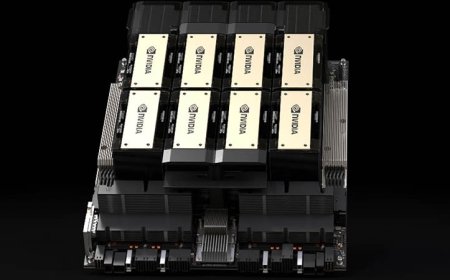
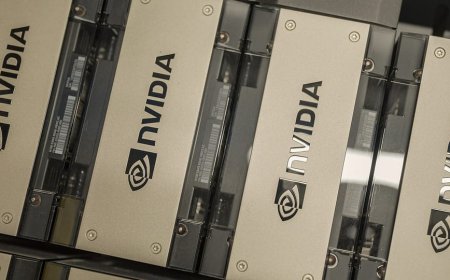
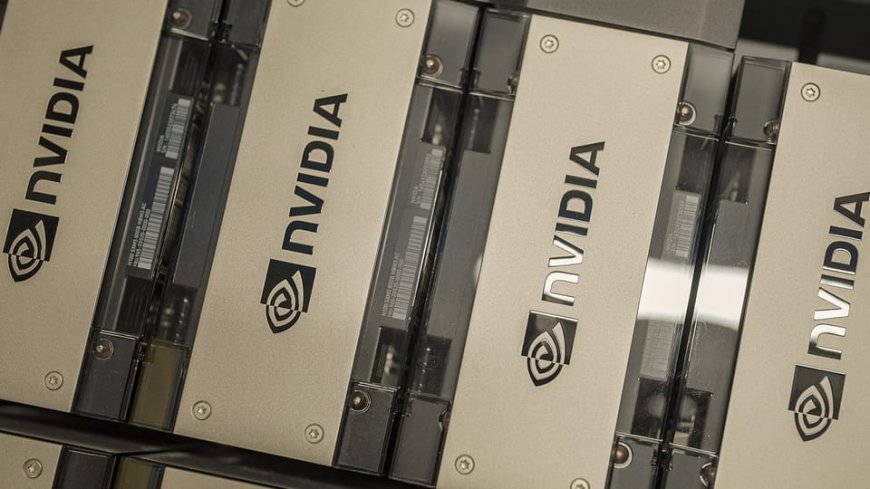
Featured image: Nvidia data-centre GPU modules in a server rack. The photo is illustrative; the projects in the Reuters review specify H100, H200 and H800 processors.
Sources
What's Your Reaction?
 Like
0
 Dislike
0
 Love
0
 Funny
0
 Angry
0
 Sad
0
 Wow
0