





























































LangChain Raises $300 Million Series C at $3 Billion Valuation as CapitalG Bets Big on AI Agents
LangChain has raised $300 million in Series C funding at a $3 billion valuation, led by CapitalG, to expand LangSmith, its platform for building, running and governing enterprise AI agents. The round more than doubles the startup's valuation from a year ago.

LangChain Raises $300 Million Series C at $3 Billion Valuation as CapitalG Bets Big on AI Agents
LangChain, the startup behind the LangSmith platform for building and managing AI agents, has raised $300 million in Series C funding at a $3 billion valuation, the company announced on Friday, November 13, 2026. The round was led by CapitalG, Alphabet's growth fund, and more than doubles LangChain's valuation from about a year ago.
The financing brings LangChain's total funding to date to $460 million. The Wall Street Journal first reported the round on November 12, and the company confirmed it the following day.
Who backed the round
CapitalG was already an investor in LangChain before this round, and its decision to lead the Series C is a continuation of that bet rather than a first one. New investors GIC, Singapore's sovereign wealth fund, and DFJ Growth joined with significant participation, alongside existing backers IVP and Sapphire Ventures.
The round also included new investors Salesforce Ventures, Insight Venture Partners, QuantumLight and MongoDB Ventures, while existing investors Sequoia, Amplify and Benchmark increased their stakes.
The step-up in valuation is striking. About a year earlier, LangChain raised $125 million at a $1.25 billion valuation in a round led by IVP. The new $3 billion mark is roughly 2.4 times that figure, a sign of how quickly investors are pricing the infrastructure layer behind AI agents.
From open-source project to agent platform
LangChain began in 2022 as a popular open-source project that handled tasks early large language models found difficult, such as searching the web, calling APIs and interacting with databases. As the major AI labs built those capabilities into their own models, LangChain shifted its focus toward managing the agents that sit on top of them.
Its main product is now LangSmith, software for creating, deploying, monitoring, improving and governing enterprise AI agents. The company positions LangSmith as model-agnostic: unlike the major clouds or frontier AI labs, it does not try to lock users into a particular model, cloud or ecosystem, and it promises to keep agent behaviour contained and easy to manage.
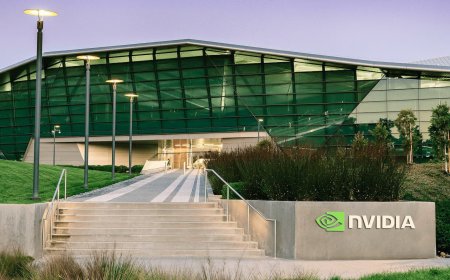
LangChain says more than 7,000 organisations now use LangSmith, including Nvidia, Toyota and Salesforce, as well as fast-growing startups such as Harvey, Rippling and Clay. Those are the company's own figures, and LangChain has not disclosed revenue or said how many of those organisations are paying customers — the key open question for a valuation built on usage rather than audited financials.
The company points to customer examples to make its case. Workday, it says, cut the time needed to deploy a new agent from about five months to under a day using LangGraph and LangSmith, while Clay uses LangSmith to monitor hundreds of millions of agent runs a month.
What the money will fund
LangChain says the new capital will go into LangSmith across three areas: agent runtime, the infrastructure for running agents reliably; agent improvement, through observability, evaluations and automated fixes; and agent governance, giving companies central control over how agents use models, tools and data.
"Agents are going to transform how companies operate and the products they deliver," said Harrison Chase, LangChain's co-founder and chief executive. "Every company should be free to choose the best models for its needs, control its data and infrastructure, and continuously improve its agents, while maintaining the governance needed to operate securely at scale."
Mo Jomaa, a partner at CapitalG, said the shift from experimental language-model applications to production-grade agents is "one of the most significant shifts happening in enterprise software today."
LangChain plans to show several new LangSmith capabilities at a release event on November 20, 2026. That event will be the first chance to see how the product keeps pace with the valuation investors have now put on it.
Why it matters
The round is another marker of where money is flowing in the AI industry. The biggest valuations are no longer going only to the companies that train frontier models; they are also going to the tooling that lets ordinary companies run agents safely in production. LangChain's pitch — that companies should own their own intelligence rather than rent it from a single provider — is finding a receptive audience among investors and large enterprises alike.
Whether that bet pays off will depend on converting a large open-source community and a growing list of enterprise users into steady, paying software revenue. For now, investors have put a $3 billion price on the idea that the agent layer is where the next durable software platform will be built.
Related reading: OpenAI's new ChatGPT Wallet takes the opposite approach, letting AI agents shop and check out on a user's behalf — see ChatGPT Wallet Lets AI Agents Shop and Pay for You.
Sources
What's Your Reaction?
 Like
0
 Dislike
0
 Love
0
 Funny
0
 Angry
0
 Sad
0
 Wow
0