



















































SpaceX Bets $74 Billion on AI Supercomputing Campuses in Texas and Arizona
SpaceX plans to invest more than $74 billion in two AI supercomputing campuses — over $24 billion at Starbase, Texas, and about $50 billion in Cochise County, Arizona — but both projects still need local approval, with key hearings set for December 9.
SpaceX Bets $74 Billion on AI Supercomputing Campuses in Texas and Arizona
SpaceX is moving deeper into artificial intelligence. The company said on Thursday, November 12, that it plans to invest more than $74 billion in two AI supercomputing campuses in the United States — more than $24 billion at its Starbase rocket site in Texas and about $50 billion in Cochise County, Arizona.
The announcement, made in a company statement under SpaceX's "Building the Future" initiative and reported by Reuters, marks the company's biggest step yet beyond rockets and satellite internet. SpaceX's AI division generated more than half of the company's revenue in the third quarter of this year, according to Reuters — a sign of how far the business has already shifted toward computing.
Neither campus is approved yet. Both face local decisions on the same day, December 9, and the projects carry large power, water and permitting questions that will decide whether the money is ever spent.
A 6-gigawatt campus in the Arizona desert
The larger of the two projects would rise in Cochise County, Arizona, on about 747 acres along U.S. Highway 191 near the Willcox Playa. SpaceX's affiliate, Tombstone Resources LLC, has applied for a special use authorization — docketed as SU26-22 — to build up to nine computing buildings in four phases of about 1.5 gigawatts each, reaching as much as 6 gigawatts of electricity demand at full build-out.
That scale is hard to overstate. At 6 gigawatts, the campus would draw roughly six times the power of Project Blue, the large data center development near Tucson, according to KJZZ. One analysis cited by Data Center Dynamics put the full 6 gigawatts at about 19 percent of Arizona's entire 32 gigawatts of net generating capacity in 2024.
SpaceX says the Arizona campus would use dry cooling, with no cooling towers and no planned industrial groundwater use. The application summary lists about 7 to 10 acre-feet of water a year on site. The design also includes a 24-gigawatt-hour battery and 90 megawatts of gas backup, according to Baxtel's reporting on the project.
The company also promises local benefits. SpaceX says the campus could lower electric bills for members of the local power cooperative by up to 20 percent, and that it will transfer $3.6 billion of transmission upgrades to the Arizona Electric Power Cooperative at no cost. Riley Trettel, who leads SpaceX's energy and supercomputer development, said the company is "paying for everything" at the campus.
Those figures are the company's own, and no independent analysis of the bill-reduction claim has been published. Job figures also differ between reports: Reuters put the Arizona construction workforce at about 5,500 jobs, with 1,000 permanent positions, while Baxtel, reporting on a November 4 community meeting, put construction jobs at about 3,000. Construction could begin in March 2027 if the county approves the project.
Local opposition is already organised
The Arizona project is not sailing through. Hundreds of residents attended the November 4 community meeting, many carrying protest signs, according to Baxtel, and a petition asking officials to deny the permit has gathered about 2,400 signatures, Reuters reported.
The Cochise County Planning and Zoning Commission will hold its public hearing on the application on December 9, 2026, at 2 p.m. local time in Bisbee. Reports differ on whether the commission's action that day is final or can be appealed to the county Board of Supervisors.
Starbase gets its own gas-fired power plant
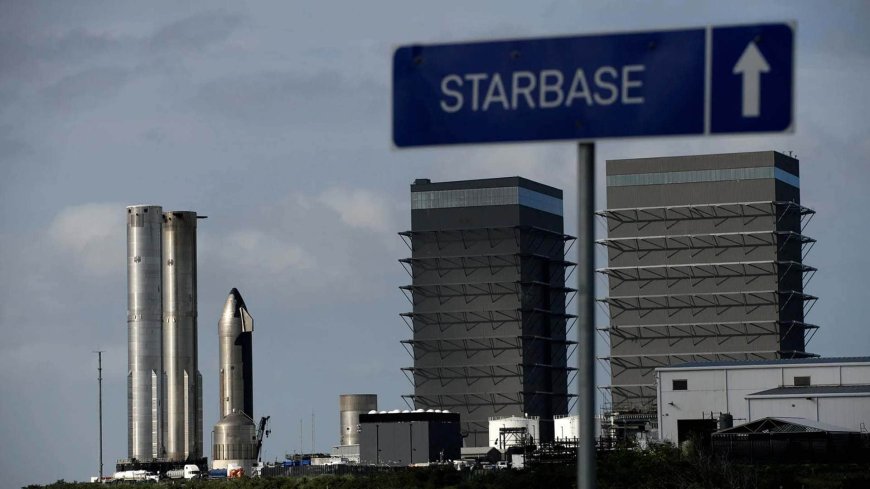
The Texas campus would sit on about 444 acres at Starbase in Cameron County, near Brownsville and the Port of Brownsville. Unlike Arizona, the Texas site would generate its own electricity rather than draw from the public grid, with a dedicated natural gas-fired power plant built alongside the supercomputing facility.
Being off-grid does not mean unregulated. SpaceX filed a registration with the Texas Commission on Environmental Quality (TCEQ) on September 8 under the state's standard permit for electric generating units, and the registration was still listed as pending as of November 12. The filing lists 35 temporary turbines totalling about 748 megawatts, to be followed by eight GE Vernova 7E turbines totalling about 708 megawatts — the two configurations are alternatives, not additions, according to The 956 Report.
The filing also proposes a nitrogen oxide limit of 248.86 tons per year. That sits 1.14 tons under the 250-ton threshold at which the federal Prevention of Significant Deterioration program treats a new source as a major source, bringing tougher review. The 956 Report also found that emissions during startups and shutdowns are not counted toward the caps, and the filing allows 50 startup and shutdown events per turbine per year.
SpaceX has faced permit scrutiny over gas turbines before. Under an agreed order with Mississippi regulators, its SpaceX AI operation has until July 2027 to remove all 69 temporary turbines at its Southaven site, and House Democrats have demanded records.
The Texas project also faces a political test. The City of Starbase commission will consider a property tax abatement and a development agreement for the project on December 9 at 7 p.m. Central time, and neither agreement has been approved. Two of the commission's three members are SpaceX employees, according to Common Dreams, citing Politico. Meanwhile, the city of Brownsville has introduced a 90-day moratorium on new data center applications, and Governor Greg Abbott's September 21 directive expanded a statewide data center permitting pause. Governor-elect Gina Hinojosa, who takes office on January 19, has pledged a moratorium on data center approvals until the Legislature passes protections.
What SpaceX has not said
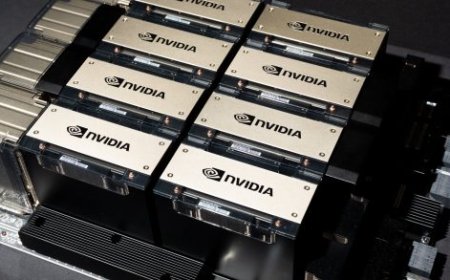
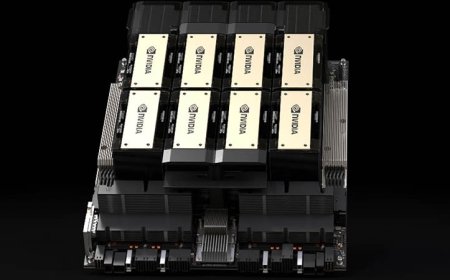
For all its scale, the announcement leaves the most technical questions unanswered. SpaceX has not disclosed which accelerators will power either campus, what network architecture it will use, or when either facility would be commissioned. Reporting has linked SpaceX to a roughly $40 billion lease financing for Nvidia chips, and to Kessel, a custom 72-GPU Nvidia Rubin rack designed for ground and orbital use — but the company has confirmed neither in connection with these campuses.
The two campuses are also separate from Terafab, the chip plant SpaceX has proposed in Grimes County, Texas.
Why it matters
The $74 billion pledge shows how quickly the AI infrastructure race is pulling in companies that were not data center operators a few years ago. SpaceX went public in June 2026, and its AI business now brings in more than half its revenue. If the campuses are built, they would rank among the largest computing projects in the United States — and among the most power-hungry.
But the money is promised, not permitted. Both campuses face public votes on December 9, the Texas gas plant still needs its state air registration, and the Arizona power deal still has to clear the state regulator. Until those decisions land, the $74 billion figure is a plan, not a project.
Related reading: China's $3.2 Billion Nvidia-Powered AI Projects at Risk After Huang Exit
Sources
- Tech Times — SpaceX Plans $74B Data Centers; Starbase Gas Plant Nitrogen Oxide Cap 1.14 Tons Under Federal Line
- Reuters via Duke FM — SpaceX plans over $74 billion investment in Texas, Arizona AI campuses
- Converge Digest — SpaceX Unveils $74B Data Center Push in Texas and Arizona
- MLQ — SpaceX plans more than $74 billion of AI supercomputing campuses in Texas and Arizona
- Seoul Economic Daily — SpaceX to Build $74 Billion AI Data Centers in Texas, Arizona
- TechGenYZ — SpaceX AI Data Centers: $74B Plan Faces Power, Water, and Permit Tests
- Construction Review Online — $74 Billion SpaceX Data Center Projects to Transform AI Infrastructure in Arizona and Texas
What's Your Reaction?
 Like
0
 Dislike
0
 Love
0
 Funny
0
 Angry
0
 Sad
0
 Wow
0