






























































Amazon Plans "World Product Graph" to Catalogue Every Product on Earth and Counter AI Shopping Agents
An internal Amazon document reviewed by Reuters outlines World Product Graph, a plan to gather data on nearly every product sold worldwide — including items Amazon does not stock — with an aspirational launch of October 1, 2027, as the company moves to keep shoppers from drifting to Google and AI shopping agents. Amazon says the draft memo does not necessarily reflect its current plans.
Amazon Plans "World Product Graph" to Catalogue Every Product on Earth and Counter AI Shopping Agents
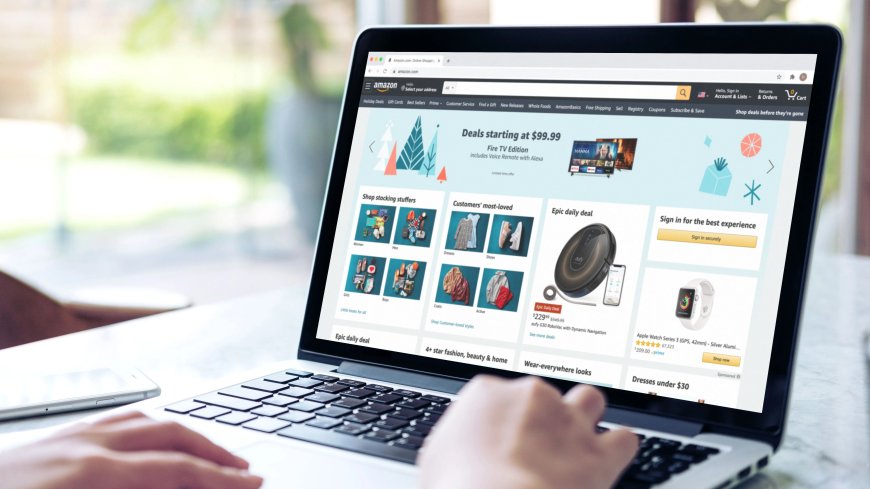
Amazon has drawn up a plan to hold data on virtually every product sold on Earth, including the ones it does not stock, according to an internal document reviewed by Reuters. The project, called World Product Graph, is the company's most ambitious attempt yet to make sure shoppers never need to leave its site — and to keep the fast-rising AI shopping agents from doing the shopping for them.
Reuters reported the exclusive from San Francisco on November 13, 2026, citing the internal document and people familiar with the matter. The memo sets an aspirational launch date of October 1, 2027, though Reuters said it could not determine whether the plan will actually be implemented, or whether that date is a realistic deadline for making it public.
What World Product Graph would do
The initiative aims to collect deep data on almost every item for sale anywhere in the world, whether or not Amazon carries it. If it works as described, a shopper could compare models, colours, prices and alternatives on Amazon without opening Google, a brand's website or a review site — the exact habit Amazon wants to break.
The memo is blunt about the problem. "Amazon cannot be the go-destination for every shopping mission if customers must leave to research product relationships on Google, brand websites, and review sites," it says, according to Reuters.
The data would arrive from two directions. Some brands and retailers would feed product information to Amazon continuously, while Amazon would independently crawl other retailers' websites. The document says the effort "depends on discovering how brands organize their products on their own websites." Reuters could not determine how Amazon planned to carry out the crawling, or whether it would need to seek permission from the sites in every case.
Work on the project is already under way, according to the document. Coca-Cola and Bayer have agreed to contribute product data, and Amazon held a CEO-level summit with Procter & Gamble to set up a trial. The three companies did not respond to Reuters' questions. The initiative sits inside Amazon's Selection & Catalog Systems unit and is being organised under vice president Robert Tekiela. Amazon is also shuffling staff internally to get the project off the ground, one person familiar with the matter told Reuters.
Fixing Rufus, and fending off the agents
The project would also tackle a problem Amazon itself admits it has with Rufus, its AI-powered shopping assistant, which the company began calling "Alexa for Shopping" in May. The memo puts Rufus at about 83 million searches a week — and concedes that "many Rufus answers are factually wrong or incomplete, but customers lack expertise to detect these errors." A richer catalogue of product data is meant to make those answers more reliable.
There is a second target: AI shopping agents, the software that compares prices and buys on a shopper's behalf. Meta's Muse agent has already proved popular with customers, and JPMorgan, cited by Reuters, has said Muse "has the potential to become the most widely used consumer AI application since ChatGPT." Amazon blocked Meta's Muse agent from its retail site in September, and it remains in court with Perplexity over the same kind of access.
By building the world's most extensive storehouse of product data, Amazon could ensure that AI agents working on behalf of shoppers are compelled to seek products out on Amazon.com rather than on rival sites — a point that matters beyond the AI race. A full catalogue would also cut into Google's dominance in online search and help Amazon fend off Walmart's growing e-commerce business, according to Reuters. The idea builds on Shop Direct and Buy for Me, Amazon features that already list products from other sites with Amazon acting as the middleman.
Amazon pushes back
Amazon pushed back on the reporting. "Draft, outdated documents often paint an incomplete picture and the existence of a brainstorming document such as this one doesn't necessarily reflect our current plans," the company said in a statement to Reuters.
That caution matters. The document laying out the plan is what Amazon calls a PR/FAQ — a press release and frequently asked questions memo, typically a six-page narrative laying out the rationale and business case for a new product or service. It is a pitch for an idea, not an announcement, and the October 2027 date is described as aspirational rather than committed. Until Amazon says more, World Product Graph is a window into how the company is thinking about the fight for the future of shopping — a fight in which the catalogue itself may be the prize.
The agent wave is already reshaping how people buy online. OpenAI's ChatGPT Wallet now lets AI agents shop and check out for users, while some companies are pushing the other way — United Airlines has barred AI agents from booking its flights. Amazon's plan suggests the biggest retailer of all intends to meet the agents on its own terms. Read more about the wallet launch in our report on ChatGPT Wallet.
Sources
- Reuters — "Amazon drafts 'World Product Graph' to crawl every retailer's catalog ahead of AI shopping agents" (exclusive, November 13, 2026), via syndicated copies and the AI Weekly summary
- AI Weekly — "Amazon drafts 'World Product Graph' to counter AI shopping agents" (November 14, 2026)
- The Economic Times — "Amazon's plan to own the world's product data and fight AI shopping agents" (November 13, 2026)
What's Your Reaction?
 Like
0
 Dislike
0
 Love
0
 Funny
0
 Angry
0
 Sad
0
 Wow
0