


























































OpenAI Launches ChatGPT Wallet, Letting AI Agents Pay for Purchases on Your Behalf
OpenAI has launched ChatGPT Wallet, a new payment feature that lets its "dots" AI agents complete purchases for users. The wallet is rolling out to adult ChatGPT Pro subscribers in the United States, with biometric approval and tokenised card payments keeping real card details away from both the agent and the merchant.
OpenAI Launches ChatGPT Wallet, Letting AI Agents Pay for Purchases on Your Behalf
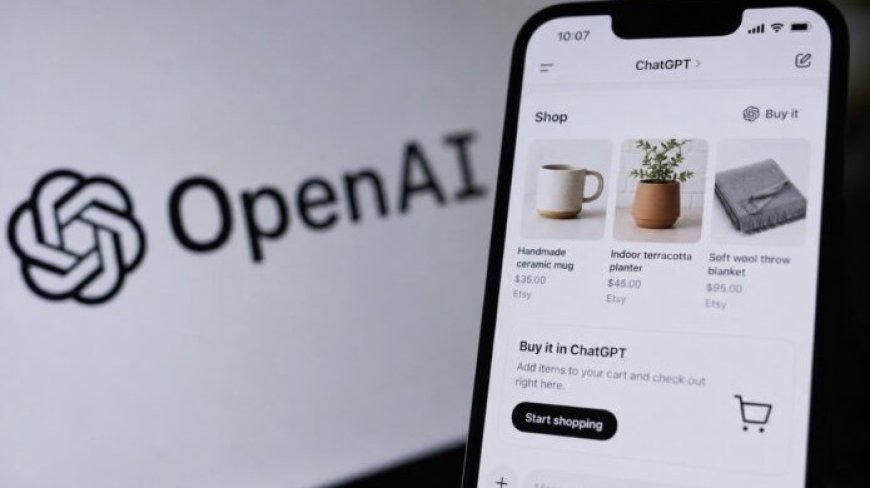
OpenAI has launched ChatGPT Wallet, a payment feature that lets its AI agents finish a purchase for you — not just find the product, but pay for it too. The company announced the feature on Friday, November 13, 2026, and it is rolling out first to a limited group of ChatGPT Pro subscribers in the United States.
The wallet works with OpenAI's agents, called dots, which were introduced earlier this year. A user can ask a dot to help buy something — a sweater, a household item, a hotel booking — and the agent will search, compare options and prepare the checkout. Until now, the payment step was the part the agent could not finish. ChatGPT Wallet removes that barrier.
How a purchase works
Getting started takes one setup step: the subscriber adds an eligible payment card to ChatGPT Wallet. After that, there is no need to re-enter card details for each purchase. When a dot is ready to buy, it shows the user a summary of the items, the total price and the card that will be charged, and the user approves the purchase directly with a security check such as Face ID or a fingerprint. That approval also creates a record of the transaction.
The payment itself runs on a token, a stand-in for the real card details. The token is passed to the card network, so the user's actual card number is never shared with the dot or with the merchant. The merchant automatically receives what it needs to fulfil the order, such as the shipping address and contact details. OpenAI says shoppers will still earn their usual credit card rewards and keep the protections that normally come with cards, including the ability to dispute a transaction.
Who can use it at launch
Availability is deliberately narrow for now. ChatGPT Wallet is initially open only to ChatGPT Pro subscribers in the United States who are at least 18 years old and hold a US-issued Visa, Mastercard or American Express card. OpenAI built the feature together with American Express, Mastercard and Visa, and the rollout is gradual, so some eligible subscribers may not see it yet.
OpenAI is also not taking a percentage cut of transactions at launch, according to reports, and is focusing instead on building relationships with online sellers. Pricing, delivery and returns remain between the shopper and the merchant.
More control is coming
The company says the limited launch gives it room to test and improve the feature before a wider rollout. In future, users will be able to set spending limits and configure other parameters, such as purchase categories or time periods, so they can pre-approve certain kinds of purchases for their agent to handle more autonomously.
OpenAI also published a Commerce Partner Playbook alongside the launch, with tools and guidance for online stores that want to support customers using agents. Merchants were advised to make sure their firewalls and content delivery networks recognise signed agent requests, and OpenAI said it is working with payment processors Adyen, Checkout.com and Stripe, along with fraud platforms Forter, Riskified, Sardine and Signifyd.
Agentic shopping meets resistance
The launch lands as the race to let AI agents spend money gathers pace — and as some businesses push back. Amazon, the largest retailer to ban AI agents from its site, blocks them so it can steer shoppers toward its own assistant, Alexa. United Airlines has also barred AI agents from booking flights, citing cybersecurity risks.
Early numbers suggest the habit is still forming: DoorDash and Uber have reported low volumes of orders placed by AI agents so far, while Meta's Muse, which now has more than 10 million users, has seen AI-assisted shopping become a top activity in its app. OpenAI's bet is that removing the payment step — the last piece of friction — is what turns a shopping assistant into something people actually use.
Sources
- TechCrunch — ChatGPT's new Wallet lets AI agents shop and check out for you, November 13, 2026
- Silicon Report — OpenAI announces ChatGPT Wallet to let AI agents make purchases, November 13, 2026
- Business Today — Your chatbot just got a credit card: OpenAI launches ChatGPT Wallet for autonomous shopping, November 14, 2026
What's Your Reaction?
 Like
0
 Dislike
0
 Love
0
 Funny
0
 Angry
0
 Sad
0
 Wow
0