























































Malaysia Checks Whether Nvidia AI Chips Imported by Speedmatrix Were Re-Exported
Malaysia's trade ministry said on 13 November it is working with customs to check whether AI chips imported by Speedmatrix, the local arm of Singapore-based Megaspeed, were re-exported — and stressed it never cleared either company. A day later, Malaysia's home minister confirmed police have been investigating alleged chip diversion through the country since April 2025.
Malaysia Checks Whether Nvidia AI Chips Imported by Speedmatrix Were Re-Exported
Malaysia has opened checks with its customs department into whether artificial intelligence chips brought into the country by Speedmatrix, the Malaysian arm of Singapore-based cloud company Megaspeed, were later re-exported — and whether any such shipments followed the law.
The Ministry of Investment, Trade and Industry (MITI) set out the position in a statement on Friday, 13 November, in the latest turn of the widening scandal around Nvidia, Megaspeed and the alleged diversion of advanced AI chips to China in breach of United States export controls.
The ministry was blunt on one point: it has never cleared Megaspeed or Speedmatrix. Verification visits by officials to data centres where Speedmatrix operates as a tenant were routine monitoring of the fast-growing data centre sector, MITI said, and should not be taken as approval or regulatory clearance of either company.
What the ministry is checking
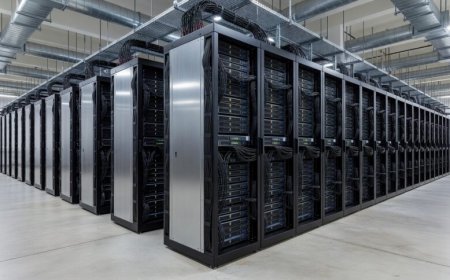
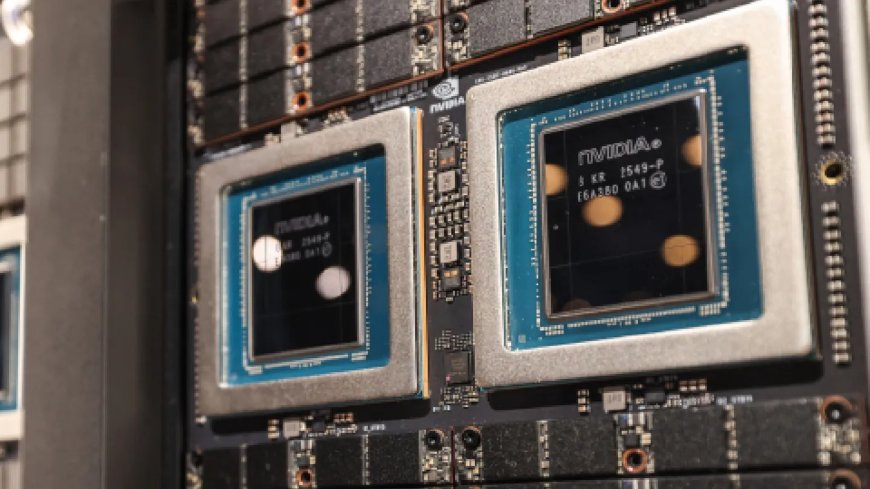
Speedmatrix brings its own servers and AI chips into Malaysia for its operations at data centres where it rents space. Importing AI chips into Malaysia currently needs no permit or licence, the ministry said — but what happens to the hardware afterwards is tightly regulated.
Since July 2025, any company wanting to export, re-export, transship or transit high-performance US AI chips from or through Malaysia must first obtain a permit from MITI under the Strategic Trade Act 2010. Providing false information to the Royal Malaysian Customs Department about such goods is a serious offence under the Customs Act 1967.
"MITI is therefore working with the Royal Malaysian Customs Department to determine whether any of the chips brought into Malaysia have since been re-exported to other countries, and whether such re-exports were carried out in accordance with the law," the ministry said in its statement.
The ministry added that it is working with authorities in Singapore and the United States to strengthen oversight of cross-border AI chip movements, and is considering additional safeguards. It has not said that any chips were re-exported, and it has announced no finding that a diversion took place.
A shift from three days earlier
The statement marked a change in tone from earlier in the week. On 10 November, Investment, Trade and Industry Minister Johari Abdul Ghani said Speedmatrix was not under investigation, because there was no credible evidence of a breach of Malaysian law and no formal request from a foreign authority.
Prime Minister Anwar Ibrahim, speaking on 13 November, said there was still no indication that chips linked to the Megaspeed case had been exported from Malaysia. "There has not been any indication of that," he told reporters, adding that Malaysia had received no formal request from Singapore or the United States on the matter but would collaborate if asked.
Police probe has run since April 2025
A day later, Home Minister Saifuddin Nasution Ismail confirmed that police have been investigating allegations of illegal diversion of Nvidia AI chips through Malaysia since April 2025, following claims by the United States that the country may have been used as a transit hub for illicit procurement.
The investigation is being conducted under the Strategic Trade Act 2010 and involves several agencies, including Bank Negara Malaysia, MITI and the Malaysian Communications and Multimedia Commission. A task force called the Strategic Trade Action Committee, led by MITI, is coordinating the work. Saifuddin said findings from the police investigation had been passed to MITI, but he disclosed no finding that diversion had occurred.
Why Malaysia matters in the chip-diversion story
Megaspeed, a Singapore-based Nvidia cloud partner, is at the centre of inquiries in Singapore, Malaysia and Washington over whether advanced Nvidia chips reached Chinese buyers despite US export restrictions designed to slow Beijing's AI development. The New York Times has reported that Megaspeed bought more than $4.8 billion worth of Nvidia chips since June 2024, and that Speedmatrix received more than 200 shipments of restricted Nvidia technology between June 2024 and June 2025. A separate report put the value of Nvidia semiconductors imported through Speedmatrix at $4.6 billion.
One route under scrutiny is not physical shipment at all: servers fitted with powerful GPUs can sit in data centres in third countries while customers in China rent the computing capacity and access it remotely. MITI's statement draws a clear line between that practice and physical re-export. Hardware kept in Malaysian data centres and rented out remotely is lawful under current rules; sending the chips onward to another country without a permit would not be.
Megaspeed denies wrongdoing. On 9 November the company said inspections by US and Malaysian authorities had found no violations, and on 12 November its chief executive, James Tan Yong Pong, said it had hired a US law firm to carry out a comprehensive inventory of its Nvidia graphics processors and independently assess its export-control compliance. The company did not say how many GPUs it holds.
The case also runs alongside a separate prosecution in Singapore. On 13 November, a Singapore court handed Shi Bingzhe, a 34-year-old Chinese national and director of Superphi, 41 charges over the alleged purchase of 917 servers from Aperia International in 41 transactions between May 2024 and February 2025. He is the fifth person charged in that case. Neither government has linked those charges to the espionage allegations around Alice Huang, a former Megaspeed executive whose relationship with former Nvidia chief executive Jensen Huang was at the centre of his resignation on 12 November.
For Malaysia, the stakes go beyond one company. The country has become one of Southeast Asia's busiest data centre markets, and the government is now weighing tighter rules — including requiring proposed data centres to disclose their operators, locations and planned GPU imports — to make sure it is not used as a route around international export controls.
Sources
- The Straits Times — Malaysia working with Singapore and US against chip smuggling
- The Korea Times — Malaysia probes Megaspeed subsidiary over possible AI chip diversion
- Business Today Malaysia — MITI denies clearing Megaspeed, Speedmatrix amid scrutiny over US AI chip exports
- Malay Mail — No indication AI chips were exported from Malaysia in Nvidia-Megaspeed case, says Anwar
- The Vibes — Police probe into alleged Nvidia chip diversion launched in April 2025
- CJ.my — Nvidia chips in Malaysia face Customs checks, MITI says
- Reuters, via syndicated reports — Malaysia probes Megaspeed AI chip re-exports
Related Innopark IT coverage: Banned Nvidia AI chips found at Shanghai facility | Singapore charges fifth person in AI server fraud case | DOJ probes Alice Huang over Super Micro AI servers | Jensen Huang misled Nvidia leaders over Alice Huang affair
What's Your Reaction?
 Like
0
 Dislike
0
 Love
0
 Funny
0
 Angry
0
 Sad
0
 Wow
0