

















































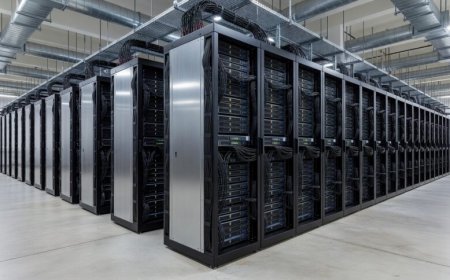

AI Data Centres Are Built on Metal — Gallium and Germanium Lead the Demand Surge
A Reuters analysis of the AI infrastructure boom finds data centres consume 60 to 75 tonnes of metal per megawatt — but the metals that matter most are not the obvious ones. Gallium and germanium, not copper, carry the biggest demand shock, while grid delays and political backlash could slow the build-out.
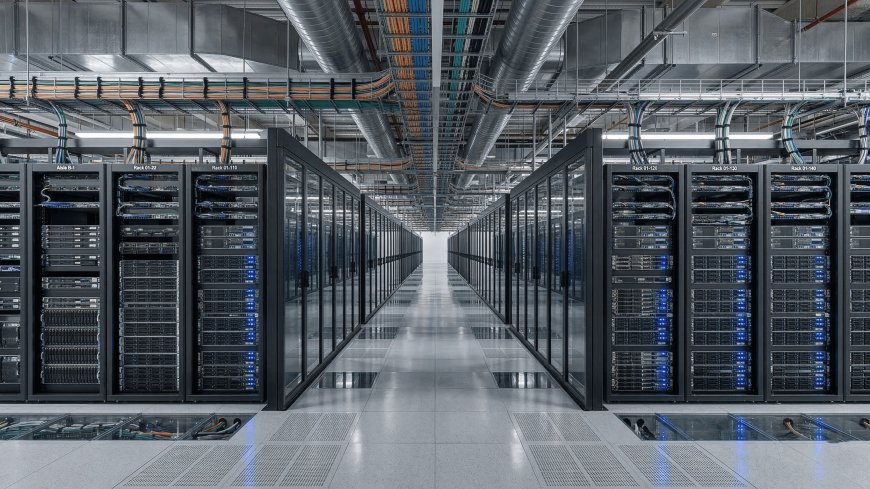
AI Data Centres Are Built on Metal — Gallium and Germanium Lead the Demand Surge
Artificial intelligence may live in the cloud, but it is built out of metal. Every data centre that trains and runs today's AI models is a physical structure of steel frames, copper wiring, aluminium racks and rare earth magnets — and the AI facilities now going up around the world are far more metal-hungry than the data centres that came before them. A Reuters analysis published on November 14 asks a question investors have been circling all year: is AI demand for metals a genuine game-changer, or hyperscaled hype?
The honest answer, according to columnist Andy Home, is a bit of both.
Sixty tonnes of metal per megawatt
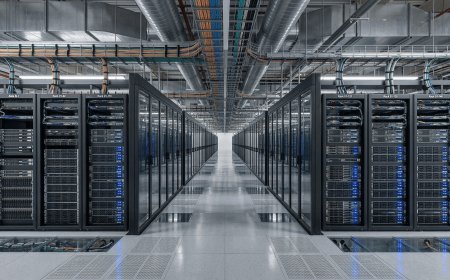
Data centres consume between 60 and 75 metric tons of metals for every megawatt of capacity, according to a World Economic Forum white paper cited in the column. The scale matters because AI facilities are far bigger than ordinary ones. A standard data centre draws 5 to 10 megawatts, the International Energy Agency says, while an AI hyperscaler campus can exceed 100 megawatts.
Almost every metal has a role somewhere in the building. Aluminium, copper and steel are everywhere in the structure itself. Gold, silver, cobalt and rare earths are concentrated in the computing hardware at the core. Backup power is its own battleground, with lithium, lead and nickel-zinc batteries competing for market share.
The three metals that actually move
Yet when the WEF's figures are ranked by market impact, the leaders are not the metals most people would name. By 2035, data centre demand is projected to account for 6.0 percent of global annual gallium use, 2.4 percent of germanium and 1.2 percent of tin. Copper, the metal most associated with the AI trade, comes in a distant fourth, at less than 0.9 percent of global usage.
Gallium and germanium are tiny markets, used in minute quantities, but they have an outsized effect on semiconductor performance. Gallium compounds sit inside power electronics and high-frequency chips; germanium is used in fibre-optic systems and fast transistors. Both are dominated by a single producer — China — which has restricted exports of both metals, leaving the rest of the world scrambling for alternative sources of two materials that are, in effect, powering the global AI race.
Tin is less exotic and still a small market by base-metal standards, with annual consumption of just over 400,000 tons. But since lead was phased out of solder, tin has become the dominant material for binding circuit boards together — and the more complex a data centre's architecture, the more tin it needs.
Copper's complicated story
Copper bulls should not despair, the column argues — but the metal's AI story is more complicated than the headlines suggest. Consultancy Wood Mackenzie expects copper and aluminium usage inside data centres to peak in the early 2030s and then decline over the rest of the decade, as structural designs improve and operating processes become more efficient. AI itself may end up being the lead engineer in that technical evolution.
The bigger copper story, according to Wood Mackenzie senior research analyst Shashank Sriram, lies outside the facility itself. The WEF's estimates stop at the door of the building and exclude the metals needed to deliver power to it. Transmission lines, substations and co-located power plants need large volumes of copper, aluminium and zinc for galvanising steel towers and poles. Include power connectivity, and actual demand for copper and aluminium is three or four times the projections based on the physical facilities alone.
Wood Mackenzie projects power-capacity additions for data centres to rise from 15 to 20 gigawatts a year today to 30 to 33 gigawatts in the early 2030s. If data centres draw that power from solar and wind, the demand impact grows further, because renewable generation is itself highly metal-intensive. This is where the AI investment story merges with the electrification-of-everything theme — two self-reinforcing narratives that are hard to separate into component parts.
The hype check: "bragawatts" and four-year grid queues
Everything depends on how many AI data centres actually get built in the next few years, and that is where some of the hype creeps in. Announced capacity is measured in eye-watering trillions of dollars, but much of it can more accurately be described as "bragawatts", according to a study by the Oxford Smith School and commodities broker Marex Group. The study's verdict is that the real outcome is likely to be "a roll-out that is delayed, lumpy, and constrained by physical realities".
The single biggest bottleneck is grid connectivity. A data centre can be built in 18 to 24 months, but the average US waiting time for a grid connection was four years between 2018 and 2023. The same physical constraints that shape Norway's decision to rein in its data centre industry over power-grid pressure are playing out in market after market.
Politics is pushing back
Compounding the physical hurdles is a growing political backlash. The Democratic sweep in the US midterm elections on November 3 included gubernatorial wins in Texas and Georgia, where candidates campaigned in part on a moratorium on new data centres. The incoming Democrats are planning a wave of legislation targeting AI systems and data centre development when they take control of the US Congress in January.
It is not only the United States. Protesters broke into the construction site of a Microsoft data centre in Amsterdam last week, part of coordinated protests across 16 countries under the "Stop Dirty Data Centres" banner. Anthropic's warning in its IPO prospectus that AI could pose "catastrophic or existential risks to humanity" has not helped the industry's cause.
Government policy is likely to be as important as grid connection times in setting the pace of construction. The column draws an analogy with electric vehicles, where changeable subsidy schemes made the road to a fossil-fuel-free future a bumpy one. In the US, President Donald Trump rolled back his predecessor Joe Biden's subsidies for battery vehicles, and sales in the first ten months of this year were down 21 percent from the same period of 2025, according to consultancy Benchmark Mineral Intelligence. Yet global sales were still up 5 percent year-on-year over the same period. Governments can restrain a new technology, the column notes, but they cannot stop broader adoption — and the AI metals story could turn out to be just as much of a stop-start affair.
Here come the robots
There is one more chapter to the metals story, and it goes beyond the server hall. Building AI's digital infrastructure is only the first part: embodied AI — machines that can sense, decide and act in the physical world — is moving from the laboratory into real-world pilots for logistics, sorting and inspections, according to Frank Nikolic, research principal for base and precious metals at consultancy CRU. For commodity markets, he argues, the crucial point is that AI is moving from experimentation toward large-scale deployment, and that needs metals and materials.
The robots are also built with metal — and the metal at the centre of the most futuristic work is gallium again. Researchers are already working on soft robots built around room-temperature liquid metals, which can handle delicate items such as eggs and change shape to navigate narrow spaces, according to researchers at China's Shenzhen University. Designers at Carnegie Mellon University unveiled a proof-of-concept nano liquid-metal robot in 2023 that melted through the bars of an enclosed cage. The metal they used was gallium.
It looks, the column concludes, like we have a clear metals winner in the age of AI.
Sources
What's Your Reaction?
 Like
0
 Dislike
0
 Love
0
 Funny
0
 Angry
0
 Sad
0
 Wow
0