




























































Drogue Raises $20 Million to Power Floating AI Data Centers With Ocean Heat
Washington startup Drogue has raised $20 million to build floating AI data centers powered by ocean thermal energy. Its first multi-megawatt prototype will go to sea aboard a conventional ship in early 2028, using warm surface water and cold deep water to generate electricity.
Drogue Raises $20 Million to Power Floating AI Data Centers With Ocean Heat
A six-month-old startup in Washington, D.C., has raised $20 million to build data centers that float on the ocean and run on its heat. Drogue, which had kept a low profile until this week, plans to put its first multi-megawatt prototype to sea aboard a conventional oceangoing ship in early 2028.
The company disclosed the funding exclusively to TechCrunch on November 13. Investors in the round include XYZ Venture Capital, Toyota Ventures, Tamarack Global, Dream, FDVC, Garuda Ventures, Flexcap, Boost VC and Slow Ventures. Drogue has not published an announcement of its own, and no valuation was disclosed.
A heat pump run in reverse
Drogue's system is built on ocean thermal energy conversion, or OTEC, an idea first developed in the 1950s and tested in the 1980s before being set aside. The principle is simple: warm surface water heated by the sun and cold water from the deep ocean sit far enough apart in temperature to run a heat engine.
In Drogue's design, warm surface water is drawn in first to cool the data center's servers. The now-warmer water is then used to boil ammonia, a chemical that turns to gas at minus 28 degrees Fahrenheit. That gas drives a turbine to generate electricity, then passes through a condenser, where cold water drawn from about 1,000 metres down absorbs the heat and turns the ammonia back into liquid. The ammonia circulates in a sealed loop, and the warmed water is released back into the sea.
Deep ocean water averages about 39 degrees Fahrenheit, or 4 degrees Celsius. As co-founder and chief executive Sam Sipe put it, there is effectively no amount of heat the company could pull from the ocean that would collapse that temperature difference. The oceans absorb an additional 5.8 million terawatt-hours of energy every year as the planet warms, against about 180,000 terawatt-hours used by all of human civilisation annually.
Why the ocean, and why now
Sipe, a former U.S. Navy pilot who flew E-2D Hawkeye aircraft from aircraft carriers, said the ocean was the obvious place to look. Where most people see hard waves, storms, corrosion and biofouling, he said, he sees "this majestic place and resource that we just ignore."
The timing is driven by the mismatch between AI demand and the speed at which data centers can be built on land. Sipe said AI demand has increased tenfold in just the last three years, while data center developers work on eight- to ten-year timelines that include negotiating with utilities and regional grid operators. A ship, by contrast, can sail to where the power is.
Data centers are also an unusually good fit for a floating power plant. Sending electricity ashore would need long, expensive undersea cables, and manufacturing goods on board would mean shipping materials in and finished products out. Servers are compact by comparison, and moving data off a platform is cheap. Each vessel would stay at sea for about a decade, Sipe said.
Later versions of the system would move beyond converted ships to floating structures that more closely resemble offshore oil platforms.
An old idea, revisited
OTEC was tested in the 1980s and then abandoned, but Sipe argues that the technology itself was never the problem. He sought out people who worked on those early efforts to learn what went wrong and what went right. The conclusion, he said, was that the concept works — the challenge was raising enough capital to build at a large enough scale, because the economics have a sweet spot. Manufacturing techniques for the pipes and heat exchangers have also improved considerably since the 1980s.
Drogue already has "approval in principle" from the American Bureau of Shipping, a preliminary sign-off from the organisation that sets and checks safety standards for ships. The company is now in the process of buying its first ship to begin building the prototype.
No data center customers have been named yet, and the company has shared no pricing or per-vessel power target beyond "multi-megawatt." The prototype is still more than a year from the water, so the concept remains unproven at sea — but for investors already backing the idea, the pitch is that the ocean holds far more energy than the AI industry could ever use, and the ships to reach it already exist.
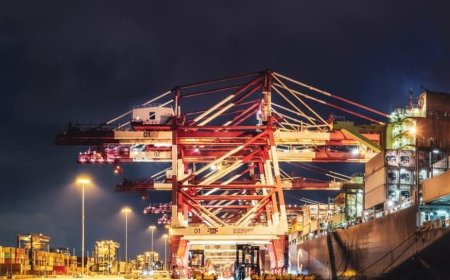
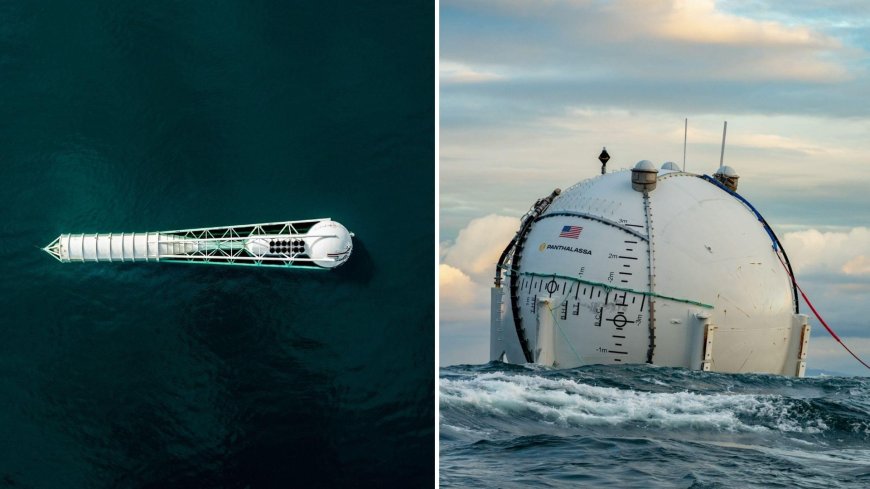
Image: a floating offshore platform at sea. Drogue's prototype vessel has not yet been built, so the photo shows a comparable floating platform rather than Drogue's ship.
Related reading
AI infrastructure is drawing record investment across the industry. SpaceX is planning $74 billion of AI supercomputing campuses in Texas and Arizona, while Google has unveiled new TPU variants aimed at the same surge in cloud AI demand. Read more: SpaceX plans $74 billion AI supercomputing campuses in Texas and Arizona and Google unveils TPU 8tx and 8i Max AI chip variants.
Sources
What's Your Reaction?
 Like
0
 Dislike
0
 Love
0
 Funny
0
 Angry
0
 Sad
0
 Wow
0