



























































X-energy Wins US Approval to Build Four Small Nuclear Reactors at Dow's Texas Plant
The US Nuclear Regulatory Commission has approved a construction permit for four X-energy Xe-100 small modular reactors at Dow's Seadrift chemical plant in Texas — the first advanced nuclear reactor approval at an industrial site in the United States, with first power targeted for the early 2030s.
X-energy Wins US Approval to Build Four Small Nuclear Reactors at Dow's Texas Plant
Nuclear startup X-energy has won federal approval to build its first four commercial reactors, clearing the biggest regulatory hurdle yet for small modular reactors in the United States. The US Nuclear Regulatory Commission (NRC) approved the construction permit application for four of the company's Xe-100 reactors at a Dow chemical plant in Texas, the companies announced on Monday, November 9, 2026.
Each reactor is designed to generate 80 megawatts of electricity and 200 megawatts of heat. X-energy says the approval is the first for an advanced nuclear reactor at an industrial site in the United States — and the first construction permit for a high-temperature gas-cooled reactor in more than 50 years.
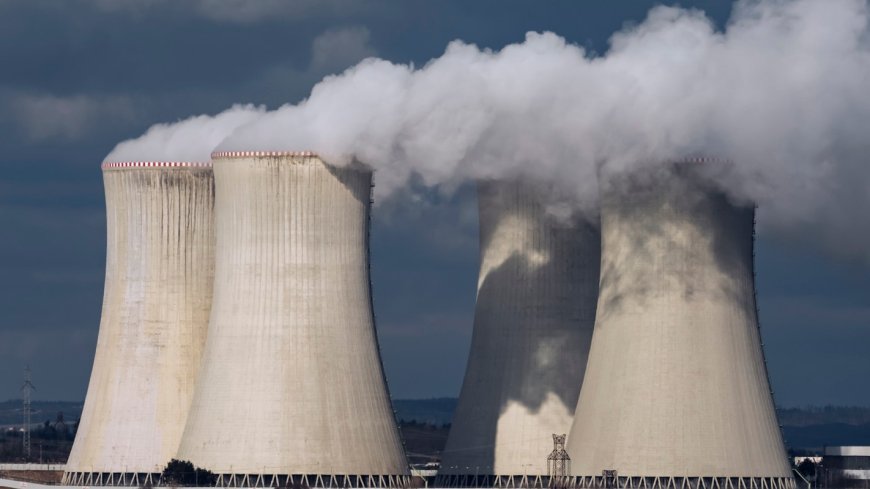
The Xe-100 units have not been built yet. The photo above shows cooling towers at an operating nuclear power plant.
What the approval covers
The four reactors will be built at Dow's UCC Seadrift Operations facility in Calhoun County, Texas, by Dow subsidiary Long Mott Energy. The plant, known as the Long Mott Generating Station, will supply the chemical site with electricity and industrial steam for 60 years.
The project is being developed under the US Department of Energy's Advanced Reactor Demonstration Program. The NRC completed its environmental assessment of the Seadrift site in May 2026, and the permit completes the regulator's safety and environmental reviews for construction — though it does not authorise the reactors to operate, and it does not commit Dow to build them.
The Xe-100 is a high-temperature gas-cooled reactor that flows helium gas over uranium-containing fuel pellets, using advanced TRISO-X coated particle fuel. X-energy claims the design is inherently safer than many existing reactors because the fuel is designed to contain radioactive material even at very high temperatures.
Why the Seadrift project matters
The US nuclear industry has pinned its hopes on small modular reactors, or SMRs, like those X-energy is developing. By shrinking the reactor and building units in factories rather than entirely on site, supporters say SMRs should be faster and cheaper to build than today's large plants — although those advantages have yet to be proven in practice. No SMR is currently in operation in the United States.
The industry has also drawn strong interest from hyperscalers and data centre developers hunting for large, steady supplies of electricity. Amazon's Climate Pledge Fund led X-energy's $500 million Series C-1 funding round, and the tech giant has committed to buying 5 gigawatts of capacity from the startup. Clean, firm power for AI infrastructure is a growing theme across the energy sector — geothermal developer Fervo recently signed an $11.9 billion deal with Google for power from its Utah project.
X-energy rode that wave of enthusiasm earlier this year, when its April initial public offering raised $1 billion. Since then, investor optimism has cooled: the company's shares are trading at less than half their initial offering price. The permit approval gave the stock a small lift, enough to recover the previous week's losses, according to TechCrunch.
Safety questions remain
Not everyone is convinced the approval came at the right pace. The Union of Concerned Scientists questioned both X-energy's safety claims and the speed with which the permit was granted.
"The NRC only accomplished this feat by pushing consideration of critical safety questions to a later date — issues the NRC should've fully resolved before green lighting construction," Edwin Lyman, the organisation's director of nuclear power safety, said in a statement.
X-energy and Dow say the NRC's evaluation confirmed the Xe-100 design can be safely sited and built inside an operating industrial environment. The permit lets the companies move into construction and long-lead procurement, but the reactors will still need a separate operating licence before they can run.
The road to the early 2030s
Dow is expected to consider a preliminary investment decision in 2027. Full-scale construction would follow a final investment decision, and X-energy says the first reactors will not be operational until the early 2030s.
If the Seadrift plant is completed, it would become the first commercial nuclear reactor in the United States built specifically to power an industrial plant — a test case for whether small reactors can finally move from promise to power.
Sources
What's Your Reaction?
 Like
0
 Dislike
0
 Love
0
 Funny
0
 Angry
0
 Sad
0
 Wow
0