
















































Humanoid Robots Explained: How They Work and What Comes Next
Humanoid robots are moving beyond laboratory demonstrations as advances in artificial intelligence, robotics hardware and physical AI open new possibilities in factories, warehouses and other workplaces. But high costs, limited dexterity, battery life and safety challenges remain major obstacles. Here is how humanoid robots work, which companies are developing them, where they are being used and what the future of the industry could look like.

Humanoid Robots Explained: How They Work and What Comes Next
Humanoid robots are designed to do something that has challenged robotics engineers for decades: move and interact with the physical world in ways that resemble human behavior. With two arms, a torso, sensors and, in many designs, two legs, these machines are being developed to work in environments originally built for people.
The idea is not new. What has changed is the technology behind it. Advances in artificial intelligence, computer vision, motion control and powerful onboard computing are helping robots recognize objects, respond to instructions and perform tasks that previously required carefully programmed movements.
Companies are now exploring whether humanoid robots can move beyond controlled demonstrations and become useful workers in factories, warehouses and other commercial settings. Some systems have reached pilot deployments, while many others remain in research, development or testing.
That distinction matters. A robot performing an impressive demonstration is not necessarily ready to work an entire shift, handle unexpected problems or operate safely around people. The industry's next challenge is turning technical progress into reliable, affordable and genuinely useful machines.
What Are Humanoid Robots?
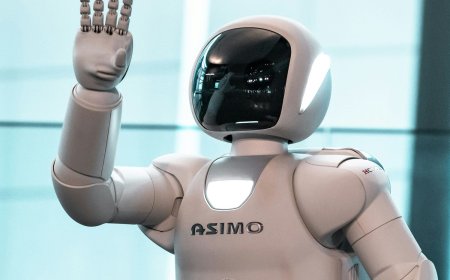
A humanoid robot is a machine whose body structure or movement capabilities are designed to resemble aspects of the human body. Depending on the design, it may have a head, torso, arms, hands and legs, although not every humanoid robot walks on two legs.
Some models use wheels for mobility, while others rely on bipedal locomotion. Their capabilities also vary considerably. One robot may be designed to carry containers around a warehouse, while another may focus on manipulating objects, conducting research or interacting with people.
The central idea is adaptability. A conventional industrial robot is often built for a specific task, such as welding a vehicle body or moving products along a production line. A humanoid robot aims to handle a wider range of activities by combining mobility, object manipulation and AI-driven decision-making.
Human-like proportions can be useful because workplaces already contain stairs, door handles, shelves, tools and workstations designed around human bodies. A robot with suitable arms and mobility could potentially use some of that existing infrastructure without requiring every environment to be redesigned.
However, a human-shaped body does not automatically make a robot intelligent or versatile. Its actual usefulness depends on the quality of its hardware, software, training data and ability to respond to unfamiliar situations.
How Do Humanoid Robots Work?
A modern humanoid robot combines several complex technologies. Each part must work with the others to translate a command into safe, coordinated physical action.
Artificial intelligence and physical AI
Artificial intelligence helps a robot interpret instructions, recognize objects and decide how to approach a task. A user might ask a robot to pick up a box and place it on a table. The system must identify the box, determine where to grasp it, calculate a suitable movement and verify whether the action succeeds.
Physical AI refers broadly to AI systems that interact with and act on the physical world rather than only generating digital outputs. In robotics, this involves connecting perception, planning, learned behaviors and motor control.
Newer approaches seek to help robots generalize across tasks instead of relying exclusively on individually programmed movements. Even so, reliable performance in an unfamiliar environment remains difficult, and a robot may need extensive training and testing before it can perform a task independently.
Sensors, cameras and environmental awareness
Humanoid robots use cameras and other sensors to understand their surroundings. Depending on the model, these may include depth sensors, inertial measurement units, force sensors, joint-position sensors and tactile sensors in the hands.
The information helps the robot estimate distances, locate objects, maintain balance and adjust its movements. For example, a robot carrying an object may need to compensate when the object shifts or when the floor surface changes.
Vision alone is not enough for every task. Humans rely heavily on touch when handling fragile, slippery or irregular objects. Giving robots comparable control over gripping force and contact remains a major engineering challenge.
Motors, joints and balance
Electric motors and actuators drive the robot's joints. Their control systems coordinate movement in the shoulders, elbows, hips, knees and other articulated parts.
Walking on two legs is particularly demanding. The robot must continuously manage balance, predict how its body will move and respond to disturbances. A small error can cause it to stumble or drop what it is carrying.
Robotic hands present another challenge. Human hands can perform delicate, coordinated movements with remarkable flexibility. Many robotic hands still have fewer independently controlled movements or struggle with the subtle adjustments needed to manipulate small objects.
These limitations explain why a robot may walk convincingly but still struggle with an everyday task such as sorting mixed objects or folding clothing.
Where Are Humanoid Robots Being Used?
The most practical early applications are generally found in environments where tasks are repetitive, work areas are relatively predictable and the economic value of automation can be measured.
Manufacturing and automotive factories
Factories are among the most closely watched markets for humanoid robots. These facilities already use industrial automation, but some jobs still require workers to move materials, transfer components and perform tasks across different workstations.
A humanoid robot could potentially handle selected activities without requiring a factory to replace all its existing equipment. Automotive manufacturers and robotics developers have therefore explored pilot projects involving material movement and production support.
BMW's collaboration with Figure AI and Mercedes-Benz's work with Apptronik illustrate the industry's interest in testing humanoid systems in automotive environments. The scope of individual projects varies, and a pilot should not be confused with widespread, fully autonomous deployment.
Warehouses and logistics
Warehouses involve moving containers, organizing materials and transporting items between locations. These activities can be physically demanding, making logistics an attractive area for robotic automation.
Agility Robotics' Digit is designed for material-handling tasks, including moving totes in logistics environments. Its bipedal design allows it to navigate spaces intended for people, although its actual capabilities depend on the specific deployment and workflow.
For businesses, the important question is not simply whether a robot can carry a container. It is whether the system can do so consistently, safely and at a competitive cost compared with existing automation or human-operated processes.
Hazardous and difficult environments
Humanoid robots may also prove useful in locations where human access is difficult or carries additional risks. Examples include certain industrial inspection tasks, disaster-response assessments and work around potentially dangerous machinery.
A robot could inspect a location or handle selected operations while keeping a person farther away from the immediate hazard. However, these applications require reliable sensing, communication, control and safety procedures.
In some environments, specialized inspection robots, remotely operated machines or conventional industrial systems may remain more suitable than a humanoid design.
Homes, healthcare and everyday assistance
Household assistance is one of the industry's most ambitious goals. A sufficiently capable robot might eventually help move objects, retrieve supplies, carry out basic chores or assist with selected daily activities.
Healthcare and eldercare also offer potential applications, particularly for material transport and routine support tasks. More complex forms of personal assistance require much greater reliability, careful interaction with people and appropriate privacy protections.
For now, general-purpose household robots remain a substantially harder problem than robots working in controlled industrial settings. Homes are unpredictable: objects move, floors become cluttered, people change routines and tasks often require delicate handling.
A machine that performs a chore successfully in a staged demonstration may still struggle to complete it reliably in an ordinary home.
The Companies Competing to Build Humanoid Robots
The industry includes established robotics specialists, automotive companies and startups developing new combinations of hardware and AI.
Figure AI is developing humanoid robots intended for real-world work, with manufacturing among its areas of interest. Its collaboration with BMW has helped bring attention to the potential role of humanoids in industrial production.
Tesla is developing Optimus, a humanoid robot project connected to the company's broader ambitions in AI and manufacturing. The long-term vision includes performing repetitive physical tasks, but commercial readiness and the extent of practical deployment must be judged by demonstrated capabilities rather than promotional expectations.
Boston Dynamics has a long history of advanced robotic mobility. Its Atlas humanoid platform demonstrates sophisticated movement and engineering, although advanced physical performance alone does not establish that a robot is ready for economical, general-purpose commercial work.
Agility Robotics focuses on Digit, a robot designed around practical material-handling applications. Its approach highlights how a humanoid form can be evaluated according to a specific business problem rather than an all-purpose vision.
Unitree Robotics, based in China, develops robotic platforms that have attracted attention for their mobility, engineering and comparatively accessible entry points into parts of the robotics market. Capabilities, pricing and intended use differ across its models.
These companies are pursuing different strategies. Some emphasize advanced mobility, others focus on industrial tasks, and some are building broader AI systems intended to support more flexible behavior. There is no guarantee that one design or business model will ultimately dominate.
Why Is the Humanoid Robot Industry Growing?
Several developments have brought humanoid robotics closer to commercial use, even though major obstacles remain.
First, AI systems are becoming better at processing visual information, interpreting instructions and learning complex behaviors. This creates opportunities to build robots that can respond to situations that were not explicitly programmed in advance.
Second, improvements in sensors, actuators, batteries and computing hardware are expanding what robotic platforms can do. Engineers can combine more capable components with software that coordinates movement and decision-making.
Third, businesses are looking for ways to improve productivity, automate repetitive work and address difficult staffing requirements in certain sectors. A robot that can move between existing workstations could be attractive if it offers a clear advantage over alternative automation.
Finally, investment has increased as companies compete to establish themselves in what could become a significant technology market. But investment and technical demonstrations are not proof of sustainable demand. Commercial adoption will depend on whether customers receive enough value to justify the purchase, operation and maintenance costs.
How Big Is the Humanoid Robot Market?
Industry estimates differ because researchers do not always count the same products or deployments. Some include robots used for research, demonstrations and education, while others focus on machines sold for industrial and professional service applications.
A September 2026 Reuters report citing the International Federation of Robotics said approximately 7,000 humanoid robots were sold globally in 2025 for industrial and professional service applications. The report noted that many units were acquired for research and AI development rather than everyday commercial work.
Other market researchers have reported higher shipment or production figures under broader definitions. Those numbers should not be treated as directly interchangeable: production, shipments, sales and robots performing productive work are different measures.
The broader picture is clear even without relying on one market forecast. The industry is expanding, but the number of humanoid robots performing useful work at scale remains small compared with conventional industrial automation.
Forecasts for the coming years are optimistic, but they depend on assumptions about hardware costs, AI performance, manufacturing capacity and customer demand. Actual adoption may be faster in some industries and considerably slower in others.
The Biggest Challenges Facing Humanoid Robots
High costs and uncertain returns
A humanoid robot requires sophisticated mechanical components, sensors, computing hardware, software and ongoing technical support. Its purchase price is only one part of the total cost of ownership.
Companies must also consider maintenance, downtime, charging, integration, safety systems and the cost of adapting workflows. If a conventional robotic arm can complete a task more cheaply and reliably, a humanoid robot may offer little economic advantage.
Manufacturers therefore need to demonstrate not just that their robots work, but that they provide measurable value under real operating conditions.
Limited dexterity and reliability
Many everyday activities require careful coordination between vision, touch and movement. Picking up an unfamiliar object, opening a tightly fitted container or handling flexible material can be difficult even when a robot has advanced AI software.
Reliability is equally important. A machine that succeeds in nine out of ten attempts may still be unsuitable for a task where failures cause production delays or safety concerns.
Improvement requires better hardware, high-quality training data, realistic testing and systems that can recognize when they are uncertain or unable to complete an action safely.
Battery life and operating time
Walking, balancing and manipulating objects consume energy. A humanoid robot must carry its own power source, and its useful operating time depends on the battery, workload, movement pattern and environment.
Frequent charging or battery replacement can reduce productivity. Manufacturers must balance operating time against weight, cost and the energy required to support more powerful actuators.
Workplace safety and accountability
Robots working near people must respond appropriately when someone enters their path, an object falls or equipment behaves unexpectedly. Safety cannot depend solely on an AI model making the right decision every time.
Businesses also need clear procedures for supervision, emergency stops, maintenance, software updates and responsibility when something goes wrong. Standards and regulatory expectations will influence how quickly humanoids can enter different workplaces.
The challenge of collecting real-world data
A robot needs experience with physical tasks, but gathering useful training data is more difficult than collecting text or images from the internet.
Robotics developers may use simulation, human demonstrations, teleoperation and real-world testing to teach systems how to act. Each method has limitations: simulated environments do not perfectly reproduce reality, while collecting physical data can be expensive and time-consuming.
This is one reason the industry's progress depends on more than increasingly powerful AI models. The connection between software, physical hardware and real-world experience is fundamental.
Humanoid Robots vs. Traditional Industrial Robots
Humanoid robots are not automatically better than established automation. Their value depends on the job they are expected to perform.
Traditional industrial robots often excel at repetitive, precisely defined tasks. They can operate quickly and consistently in structured environments, and businesses have decades of experience integrating them into production lines.
Humanoid robots offer a different possibility: working across spaces and equipment designed for people. Their arms, mobility and body proportions may make them suitable for selected tasks that are difficult to automate with a single fixed machine.
However, that flexibility comes with additional complexity. A humanoid robot must manage balance, navigation, manipulation and safety, sometimes simultaneously. A wheeled robot with an arm, or a purpose-built machine, may be simpler and more economical for many jobs.
The strongest business case will emerge where a humanoid robot's ability to perform several useful tasks outweighs the added cost and complexity of its human-like design.
What Comes Next for the Humanoid Robot Industry?
The next stage of development is likely to be defined less by spectacular demonstrations and more by performance in real working environments. Businesses will want evidence that robots can complete tasks repeatedly, recover from ordinary errors and operate safely with limited supervision.
Manufacturing and logistics are well positioned to remain important testing grounds because their workflows can often be measured and divided into manageable tasks. These environments can provide developers with valuable information about reliability, maintenance and operating costs.
Over time, improvements in AI, manipulation, sensing and hardware manufacturing could expand the range of tasks humanoids can perform. Lower component costs and better software may also make some applications more economically attractive.
Yet there is no reliable basis for assuming that humanoid robots will soon replace human workers across entire industries. Adoption will vary by occupation, task complexity, workplace conditions and the relative cost of other technologies.
For workers, the more immediate changes may involve selected tasks being automated, new responsibilities for supervising robotic systems and increased demand for people who can install, maintain and manage automation. The scale and distribution of these effects remain uncertain.
For consumers, widespread household use is a more distant and difficult goal than many promotional demonstrations suggest. Affordability, safety, reliability and the ability to handle the unpredictable nature of everyday life will determine whether home humanoids become practical products rather than expensive novelties.
The Bottom Line
Humanoid robots are moving from research projects toward early commercial applications, supported by advances in AI, sensors, motors and robotic control. Their human-like form could help them work in environments already designed for people, especially where a single machine needs to perform several kinds of physical tasks.
But the industry's future will not be decided by how closely a robot resembles a person or how impressive it looks in a video. The decisive questions are whether it can do useful work reliably, whether businesses can afford to operate it and whether it can do so safely.
The next few years should provide a clearer picture of which applications justify the technology. Humanoid robots have genuine potential, but turning that potential into widespread, practical adoption will require steady engineering progress rather than promises alone.
Sources
- Reuters — Humanoid robot sales tally hit 7,000 globally last year
- McKinsey & Company — Humanoid robots: Crossing the chasm from concept to commercial reality
- UK Government Office for Science — Rapid Technology Assessment: Humanoids
- International Data Corporation (IDC) — Humanoid Robotics Commercialization Trends 2026
- Deloitte — AI for industrial robotics, humanoid robots, and drones
- Financial Times — Inside the 'robot gyms' training machines for the real world
What's Your Reaction?
 Like
0
Like
0
 Dislike
0
Dislike
0
 Love
0
Love
0
 Funny
0
Funny
0
 Angry
0
Angry
0
 Sad
0
Sad
0
 Wow
0
Wow
0