










































SpaceX Eyes $40 Billion Financing for Nvidia AI Chips as Elon Musk Pushes Deeper Into AI
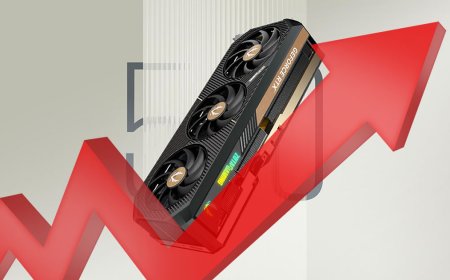
SpaceX is reportedly in talks to raise around $40 billion to purchase Nvidia AI chips, in what could become one of the largest financing deals tied to AI infrastructure. The proposed package could include $10 billion in bank loans and $30 billion in investment-grade debt, highlighting the enormous cost of building the computing infrastructure behind the next generation of AI.
SpaceX Is Reportedly Preparing a $40 Billion AI Computing Bet
SpaceX is no longer being defined only by rockets, satellites and Starlink. Elon Musk's company is rapidly moving into another capital-hungry business: artificial intelligence computing. The latest indication of how serious that expansion has become is a reported plan to raise around $40 billion to purchase Nvidia AI chips.
According to people familiar with the discussions cited by Reuters and the Financial Times, SpaceX is talking with banks and large asset managers about financing the massive chip purchase. The proposed package would reportedly involve about $10 billion in bank loans and another $30 billion in investment-grade debt. Apollo Global Management is expected to play a leading role in arranging the financing, while PIMCO is among the firms that has been involved in discussions. The talks are private and are not yet a completed transaction, meaning the final size and structure could still change.
The scale of the proposed financing is what makes the story significant. SpaceX would effectively be borrowing tens of billions of dollars not to build another rocket factory or expand a satellite network, but to secure the computing hardware needed for the AI business it is building around Musk's wider technology empire.
Why SpaceX Needs So Many Nvidia Chips
Modern AI systems require enormous amounts of computing power. Training and operating increasingly sophisticated models means assembling huge clusters of GPUs, connecting them with high-speed networking, and supporting them with equally demanding power, cooling and data-center infrastructure.
Nvidia has become the central supplier of that computing ecosystem. Its high-end accelerator platforms are used throughout the AI industry, and companies developing large AI models are competing for access to the latest hardware. SpaceX has reportedly decided to rely exclusively on Nvidia hardware for its planned data centers, making the chipmaker a particularly important part of its AI expansion strategy.
Musk has also been talking up much larger computing ambitions. He recently said the Colossus 2 facility associated with his xAI operation could more than double its Nvidia chip count by the end of the year. That expansion alone illustrates why the demand for capital is escalating so quickly across Musk's AI businesses.
The Financing Could Be Split Between Loans and Bonds
The reported $40 billion financing is expected to have two major components. Around $10 billion could come from bank loans, while approximately $30 billion could be raised through investment-grade debt, according to reporting cited by Reuters.
That structure would allow SpaceX to obtain a huge amount of capital without relying entirely on equity financing. Debt, however, also creates long-term financial obligations. The economics of the strategy will ultimately depend on whether the computing infrastructure generates enough revenue and cash flow to justify the cost of the hardware and financing.
The reported deal could close in 2027 if negotiations successfully move forward. But it is important to emphasize that SpaceX has not publicly confirmed that the $40 billion transaction has been finalized. Reuters reported that SpaceX and Nvidia had not immediately responded to requests for comment, while Apollo and PIMCO declined to comment.
SpaceX Is Becoming an AI Infrastructure Company
For years, SpaceX's biggest technological identity was obvious: reusable rockets and Starlink satellites. That picture is changing.
The company is increasingly becoming part of a much larger AI infrastructure strategy connected to Musk's businesses. Computing capacity can be sold or leased to AI companies, turning expensive GPU clusters into a source of recurring revenue rather than simply an internal research expense.
That model helps explain the extraordinary amount of money now being discussed. A company does not need to develop its own frontier AI model to benefit from the AI boom. Owning or operating the infrastructure that supplies computing power can itself become a major business.
The reported financing therefore represents more than a simple purchase order for Nvidia GPUs. It points toward SpaceX trying to establish itself as a major provider of AI computing capacity while simultaneously supporting the computational needs of Musk's own AI operations.
Nvidia Is at the Center of the AI Financing Boom
The SpaceX deal is also part of a much wider change taking place across the technology industry.
AI infrastructure has become so expensive that even companies with substantial resources are increasingly turning to financial markets to fund data centers, processors and related infrastructure. Reuters reported that Morgan Stanley estimates AI infrastructure could require $1.5 trillion in external financing by 2028.
Nvidia itself has been helping build this financing ecosystem. In August, the chipmaker partnered with Apollo, BlackRock, Blackstone, Brookfield, Goldman Sachs and KKR on financing platforms intended to mobilize more than $500 billion for AI infrastructure projects.
That is a remarkable shift from the early years of the generative-AI boom, when companies could often finance new GPU clusters from existing cash reserves. The size of today's AI deployments is pushing the industry toward a model where Wall Street financing becomes an important part of building the computing infrastructure.
A $40 Billion Bet Comes With Real Financial Risk
There is another side to the story that is easy to overlook.
Nvidia GPUs are extraordinarily valuable, but they are also expensive assets that can become technologically outdated as newer generations arrive. A company taking on tens of billions of dollars in debt to purchase AI hardware therefore needs confidence that the machines will generate enough revenue before the economics of the infrastructure change.
For SpaceX, the calculation is particularly interesting because the company is simultaneously operating in several capital-intensive areas. Rockets, satellites, Starlink infrastructure and AI data centers all require substantial investment.
The potential financing suggests that Musk and SpaceX believe the opportunity in AI computing is large enough to justify that level of spending. Whether that confidence proves correct will depend on demand for computing capacity, hardware utilization, energy costs and the revenue generated by SpaceX's AI-related business.
What It Means for the AI Industry
If the reported financing moves forward, it would be another sign that the AI race is shifting from simply developing better models to securing the physical infrastructure required to run them.
The competitive advantage increasingly depends on access to GPUs, electricity, data centers, networking equipment and large-scale capital. Companies that can secure those resources early may be able to build computing capacity faster than competitors.
For Nvidia, deals of this size reinforce the extraordinary demand for its AI processors. For SpaceX, they demonstrate how far the company is willing to go to build a new computing business alongside its traditional space and satellite operations.
For the wider technology industry, the story carries a bigger message: the next phase of the AI boom may be financed as much by debt and institutional capital as by venture funding and corporate cash.
The $40 Billion Deal Is Not Yet Final
Despite the eye-catching figure, the reported financing should not be treated as a completed $40 billion transaction. Discussions are still taking place, the final structure remains uncertain and the companies involved have not publicly confirmed all of the reported details.
What is already clear, however, is the direction of travel. SpaceX is investing heavily in computing, Nvidia remains at the center of the AI hardware market, and the cost of building large-scale AI infrastructure is reaching a level where traditional corporate spending is increasingly being supplemented by enormous financial-market transactions.
A potential $40 billion SpaceX financing for Nvidia AI chips would therefore be more than another massive corporate deal. It would be another indication that the AI race has entered a phase where computing power, capital and infrastructure are becoming just as important as the AI models themselves.
Sources
- Reuters — SpaceX seeks $40 billion financing to buy Nvidia chips
- Financial Times — SpaceX looks to raise $40bn to buy Nvidia chips
- The Information — SpaceX seeks to raise $40 billion from Apollo to buy Nvidia chips
- Wall Street Journal — Oracle, Broadcom and SpaceX seek blockbuster debt deals for AI chips
What's Your Reaction?
 Like
0
Like
0
 Dislike
0
Dislike
0
 Love
0
Love
0
 Funny
0
Funny
0
 Angry
0
Angry
0
 Sad
0
Sad
0
 Wow
0
Wow
0