









































Wall Street Pulls Back From Records as Treasury Yields and Inflation Fears Return
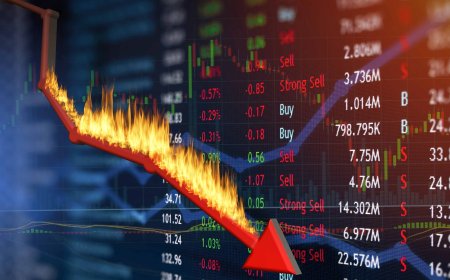
U.S. stocks retreated from record levels in the latest trading session as rising Treasury yields, persistent inflation concerns and higher oil prices pressured investors. The Nasdaq Composite fell 0.22% to 27,538.69, while the S&P 500 declined 0.22% and the Dow Jones Industrial Average dropped 0.66%. Here is the latest look at Wall Street, the Nasdaq, technology stocks, Treasury yields and the issues investors are watching next.
U.S. Stock Market Today: Nasdaq Slips as Wall Street Steps Back From Record Highs
Wall Street lost some of its recent momentum in the latest trading session as investors took a more cautious stance after the S&P 500 and Nasdaq Composite had reached record closing highs a day earlier. Rising long-term Treasury yields, renewed inflation concerns and higher oil prices combined to put pressure on stocks, particularly areas of the market that had been driving the rally.
At Wednesday's close, October 7, the Nasdaq Composite fell 61.19 points, or 0.22%, to 27,538.69. The S&P 500 declined 17.18 points, or 0.22%, to 7,801.75, while the Dow Jones Industrial Average dropped 341.11 points, or 0.66%, to 51,180.17. The smaller-cap Russell 2000 performed considerably worse, falling about 1.3%.
Nasdaq Loses Ground After Six-Session Winning Run
The Nasdaq's decline was relatively modest, but the move was significant because it ended a five-session winning streak. The index had been benefiting heavily from enthusiasm around artificial intelligence, semiconductor demand and expectations for another strong corporate earnings season.
That optimism has not disappeared. Instead, Wednesday's trading showed how quickly sentiment can change when borrowing costs rise. Investors have been willing to pay high valuations for companies expected to benefit from AI spending, but higher Treasury yields can make those valuations harder to justify because safer fixed-income investments become more attractive.
The Nasdaq therefore remains near historically strong levels despite the pullback. According to AP, the index was still up around 1.3% for the week and approximately 18.5% year to date after Wednesday's session.
Treasury Yields Become Wall Street's Biggest Concern
The bond market was at the center of Wednesday's weakness.
Long-term U.S. Treasury yields continued moving higher, with the 30-year Treasury yield reaching a 24-year high during the session. The rise matters for stocks because government bond yields influence borrowing costs throughout the economy, from corporate financing to mortgages.
The 10-year Treasury yield also remained around historically elevated levels. Higher yields can create a difficult environment for growth-oriented technology companies because investors often value their future earnings using interest-rate assumptions. As those rates rise, the present value assigned to future profits can fall.
That relationship does not mean technology stocks must automatically decline whenever yields rise. But after a powerful technology-led rally, even relatively small changes in interest-rate expectations can trigger profit-taking.
Inflation and Oil Prices Add Another Layer of Pressure
Oil has become another important variable for investors. Brent crude moved above $100 per barrel, adding to concerns that energy costs could keep inflation elevated for longer.
Higher oil prices can feed into transportation, manufacturing and consumer costs. If inflation proves harder to control, the Federal Reserve may have less flexibility to reduce interest rates—or could keep rates higher for longer.
That is particularly important for a market that has been trading near record levels. Investors are effectively balancing two very different stories: strong corporate and AI-related growth on one side, and the possibility of persistently high inflation and borrowing costs on the other.
AI Stocks Remain the Market's Biggest Engine
Despite Wednesday's broad pullback, artificial intelligence remains one of the strongest forces behind the U.S. equity market.
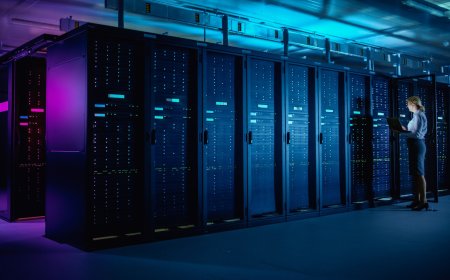
Chip companies have enjoyed an extraordinary year as investors continue to anticipate enormous demand for processors, memory, networking equipment and data-center infrastructure. Reuters reported that semiconductor stocks had gained more than 80% so far this year before Wednesday's decline. The Philadelphia semiconductor index subsequently fell more than 2% during the session.
Nvidia and AMD have been among the most closely watched names in this rally. Just one day earlier, both stocks had benefited from renewed optimism surrounding AI infrastructure demand, helping the Nasdaq and S&P 500 reach new records.
The market's dependence on a relatively small group of major technology companies, however, is becoming increasingly noticeable. A strong Nasdaq can sometimes hide weakness underneath the surface when gains are concentrated in a handful of large companies.
Why Wednesday's Drop Matters
The latest decline is not, by itself, a sign that the U.S. bull market has ended. The S&P 500 and Nasdaq had just established fresh records, and both remain substantially higher for the year.
What has changed is the balance of risks.
Investors now have to consider elevated Treasury yields, expensive energy, inflation uncertainty and questions about how much further AI-related stocks can run after their enormous gains. At the same time, the upcoming earnings season could provide a fresh reason for investors to remain optimistic if major companies deliver strong results and demonstrate that enormous AI investments are translating into real revenue and profit growth.
Reuters reported that analysts were expecting aggregate S&P 500 earnings growth of about 30.6% year over year for the July–September quarter, according to LSEG estimates. That makes the coming earnings season particularly important for determining whether current stock valuations can be supported by actual business performance.
Federal Reserve Minutes Keep Investors Guessing
The Federal Reserve remains another major focus.
Minutes from the Fed's September meeting showed disagreement among policymakers over the future path of interest rates. That uncertainty means investors cannot simply assume that the central bank will quickly move toward easier monetary policy.
Markets are particularly sensitive to this issue because lower interest rates generally provide support for equities, while higher rates can pressure valuations. The situation becomes even more complicated when inflation and energy prices are moving higher at the same time.
For Wall Street, the question is no longer simply whether the economy is growing. Investors want to know whether growth can remain strong while inflation falls enough to give the Federal Reserve room to ease financial conditions.
Dow Falls More Than Nasdaq
The Dow's 0.66% decline was considerably larger than the Nasdaq's 0.22% drop, highlighting the different behavior of the major U.S. indexes.
The Dow is less concentrated in the large technology companies that have powered much of the recent market rally. Industrial and economically sensitive companies can therefore react differently when investors become concerned about inflation, interest rates and energy costs.
The S&P 500 landed between the two, declining 0.22%. Healthcare stocks were among the stronger areas of the index, while industrials suffered the steepest sector decline during Wednesday's session.
What Investors Are Watching Next
The next phase of the market will likely be shaped by three major questions.
First, can corporate earnings justify the elevated valuations created by the AI boom? Second, will Treasury yields remain near multi-decade highs, or begin to retreat? And third, can oil prices stabilize enough to prevent another wave of inflation fears?
Those questions are more important than a single day's movement in the Nasdaq.
The latest decline looks more like a pause after a record-setting rally than a definitive change in direction. But the market is entering a period where good economic news and bad economic news can both produce complicated reactions. Strong growth can support corporate profits, while at the same time making it harder for the Federal Reserve to cut rates. Higher oil prices can boost energy companies but hurt consumers and businesses elsewhere.
For technology investors, the message from Wednesday's session is particularly clear: AI enthusiasm remains powerful, but interest rates and inflation have not disappeared as market risks.
Wall Street enters the next sessions with the Nasdaq still near record territory and the broader U.S. market firmly higher for the year. The question now is whether earnings and AI-driven growth can continue to outweigh the pressure coming from expensive money, elevated bond yields and renewed inflation concerns.
Sources
What's Your Reaction?
 Like
0
Like
0
 Dislike
0
Dislike
0
 Love
0
Love
0
 Funny
0
Funny
0
 Angry
0
Angry
0
 Sad
0
Sad
0
 Wow
0
Wow
0