

















AI’s Hidden Energy Bill: US Data Centers Could Burn More Gas Than Germany and Japan Combined by 2035
The artificial intelligence boom is creating an enormous demand for electricity, and a new BloombergNEF forecast suggests much of that power could come from natural gas. By 2035, U.S. data centers could consume around 18 billion cubic feet of natural gas per day, potentially exceeding the combined consumption of Germany and Japan.

The AI Boom Has an Energy Problem
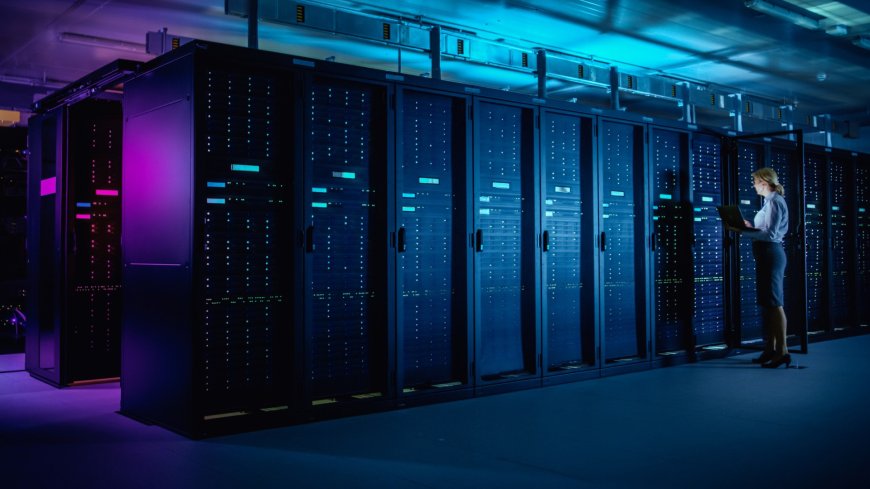
The artificial intelligence revolution is often described in terms of chips, models and billions of dollars in investment. But behind every AI model is something much less glamorous: electricity. And as the world's biggest technology companies race to build enormous data centers, the energy required to keep those machines running is becoming one of the biggest challenges facing the industry.
A new forecast from BloombergNEF suggests the scale could be much larger than previously expected. U.S. data centers could consume roughly 18 billion cubic feet of natural gas every day by 2035, according to the forecast. That would put the sector among the world's biggest consumers of natural gas and could push its daily consumption beyond the combined levels of Germany and Japan. The latest estimate is also almost twice BloombergNEF's forecast from just nine months earlier.
Why Are Data Centers Suddenly Using So Much Energy?
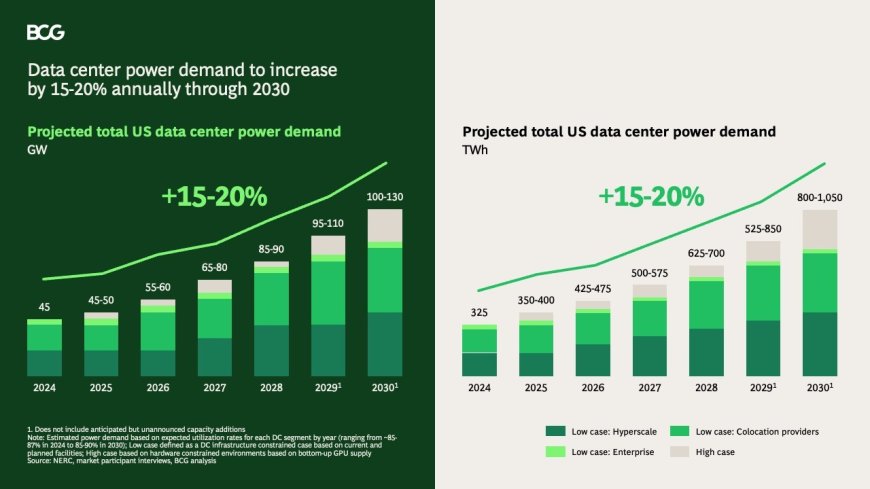
The answer is largely AI. Traditional cloud computing already required enormous data centers, but modern AI workloads are taking the energy requirement to another level. Training large models and, increasingly, serving millions of AI requests require huge numbers of powerful processors running continuously. Companies building AI infrastructure therefore need something that cannot be supplied by software alone: reliable power.
That is where natural gas becomes particularly important. Renewable energy is expanding, but solar and wind generation are variable, while AI data centers generally need electricity around the clock. Natural-gas power plants can provide steady generation and can often be deployed faster than some large-scale alternatives. The International Energy Agency expects natural gas and coal together to supply more than 40% of the additional electricity demand from data centers through 2030.
The Numbers Get Even Bigger When the Power Grid Is Included
The BloombergNEF forecast is not simply about gas turbines sitting next to data centers. The broader electricity system could see an even larger increase in gas demand because data centers connected to the power grid will also require additional generation.
BloombergNEF estimates that grid-connected data centers could drive around 15 billion cubic feet per day of additional natural-gas consumption by the power sector through 2035. According to the report, that would represent roughly five times more demand growth than all other grid-connected sectors combined.
That is an extraordinary shift. The AI boom is therefore becoming an energy story as much as a technology story. Building a new AI data center is no longer simply a question of finding land, servers and cooling systems. Developers also have to answer a much harder question: Where will all the electricity come from?
AI Could End Up Affecting Your Electricity Bill
There is another side to this story that has little to do with Silicon Valley. If data centers dramatically increase demand for natural gas and electricity, energy prices could come under pressure.
Analysts cited by TechCrunch have warned that the combination of rapidly growing data-center demand and rising U.S. liquefied natural gas exports could push natural-gas prices higher. Technology companies may have the financial resources to absorb some of those costs, but ordinary households and businesses connected to the same energy system could feel the effects through higher electricity prices.
The pressure is already visible in broader U.S. electricity forecasts. The U.S. Energy Information Administration expects American electricity consumption to reach record levels in both 2026 and 2027, with AI-intensive data centers identified as a major driver of the increase.
The Climate Question Is Becoming Harder to Ignore
There is also an environmental cost. Natural gas generally produces fewer carbon emissions than coal when burned for electricity, but it is still a fossil fuel. If the AI boom results in significantly more gas-fired generation, the industry's carbon footprint could grow even as technology companies announce ambitious clean-energy goals.
TechCrunch's analysis of the BloombergNEF forecast estimates that the additional gas demand associated with the data-center expansion could correspond to roughly 1 million metric tons of additional greenhouse-gas emissions per day, using an emissions estimate that includes the wider gas supply chain.
That creates an uncomfortable contradiction for the technology industry. AI is being promoted as a tool that could help improve efficiency, scientific research and climate modeling, while the infrastructure required to run AI at enormous scale may simultaneously increase demand for fossil-fuel energy.
There May Not Be One Simple Solution
Natural gas is not the only answer being considered. Nuclear power, renewable energy, batteries and improved electricity grids are all becoming part of the conversation around AI infrastructure. The International Energy Agency expects the energy mix supporting data centers to evolve further after 2030, including a growing role for small modular reactors.
But the immediate problem is timing. AI companies want data centers now, while major power projects and new transmission infrastructure can take years to build. That is one reason some developers are turning toward existing gas infrastructure and on-site generation to get facilities operating sooner.
The result is a race within a race: technology companies are competing to build the most powerful AI systems, while energy companies and governments are racing to build enough infrastructure to keep those systems running.
The AI Revolution Is No Longer Just About AI
For years, the biggest question surrounding artificial intelligence was what the technology would eventually be capable of doing. Now another question is becoming impossible to ignore: How much energy will it take to get there?
If BloombergNEF's forecast is even close to reality, America's data centers could become an energy consumer on a scale normally associated with entire major countries. That means the future of AI will not be determined only by better chips and smarter models. It will also depend on power plants, gas pipelines, nuclear reactors, renewable projects and electricity grids.
The AI race may have started inside computer laboratories, but its next chapter is increasingly being written in the energy industry.
What's Your Reaction?
 Like
0
Like
0
 Dislike
0
Dislike
0
 Love
0
Love
0
 Funny
0
Funny
0
 Angry
0
Angry
0
 Sad
0
Sad
0
 Wow
0
Wow
0