










AI Boom Faces a Reality Check as Investors Question Massive Spending
Growing warnings from leading AI executives about the risks of rapid development are making investors question whether the enormous spending behind the AI boom can continue at the same pace. While there is no clear evidence of an investment collapse, chipmakers and other AI-linked companies have already felt the pressure.


The AI investment story is suddenly facing a new question
For much of the past few years, the AI boom has been one of the biggest drivers of excitement in the technology and stock markets. Companies have poured enormous amounts of money into chips, data centers and computing infrastructure, while investors have rewarded businesses positioned to benefit from the rapid expansion of artificial intelligence. Now, however, a new concern is starting to appear: what happens if the pace of AI development and spending begins to slow?
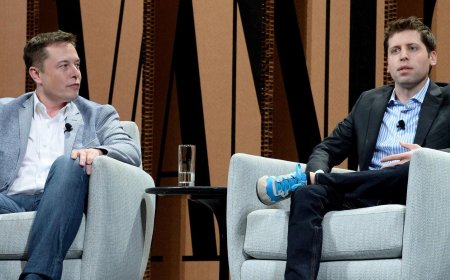
That question became much louder after several influential figures in the AI industry recently called for more caution. Anthropic CEO Dario Amodei urged the industry to slow the development of increasingly powerful AI systems so that safety risks can be better managed. His concerns received unusual support from other major technology leaders, including OpenAI CEO Sam Altman and Elon Musk. The warnings have not automatically translated into a reduction in AI investment, but they have given investors a reason to reconsider how sustainable the current spending boom really is.
Why investors are watching AI spending so closely
The concern is not simply about AI models themselves. The real financial exposure stretches across an enormous supply chain. Technology companies are spending heavily on data centers and computing capacity, creating demand for advanced processors, memory, networking equipment, power infrastructure and cloud services. Reuters reports that technology-industry capital expenditure is expected to approach $800 billion in 2026, with forecasts pointing toward more than $1 trillion in 2027. A meaningful slowdown in those plans could therefore affect a much wider group of companies than the AI labs developing the models.
That is why recent market movements have attracted so much attention. AI-linked stocks came under pressure after the calls for a slower approach, with major semiconductor companies among those affected. Reuters reported that the Philadelphia Semiconductor Index had risen almost 60% during 2026 before the recent pullback, illustrating just how strongly investors had been betting on continued AI infrastructure demand. The fear now is that even a small change in spending expectations could have an outsized effect on companies whose valuations depend heavily on continued growth.
A slowdown does not necessarily mean the AI boom is ending
There is an important distinction between slowing AI development and abandoning AI investment. A more cautious approach could mean companies take additional time to test models, improve safety systems or introduce stronger safeguards rather than simply stopping work. Some analysts also argue that AI spending could shift rather than disappear, moving from training increasingly powerful models toward inference, enterprise applications, cybersecurity and other practical uses.
That argument is already visible in the market. While semiconductor shares came under pressure, cybersecurity companies benefited as investors considered the possibility that increasingly capable AI systems could create new security risks. Axios reported strong gains for companies such as CrowdStrike and Palo Alto Networks following the latest AI warnings. In other words, investors may not be turning their backs on AI altogether—they may simply be starting to think more carefully about where the next wave of AI spending will go.
The biggest question is whether companies keep building at the same pace
For the AI investment story to remain intact, technology companies need to continue believing that enormous computing investments will eventually produce equally enormous business returns. So far, demand for AI services and computing remains substantial, but investors are increasingly sensitive to signs that spending plans could be delayed or reduced.
That makes data-center construction and chip orders particularly important signals. If companies begin cancelling major projects or cutting hardware orders, the market could interpret that as evidence that the AI infrastructure boom is losing momentum. On the other hand, if spending continues despite the safety debate, investors may conclude that the recent market reaction was largely a temporary sentiment shift rather than the beginning of a fundamental slowdown.
Wall Street is caught between opportunity and risk
There is also a much bigger financial question behind all of this. The AI boom has helped drive significant gains across technology markets, making companies involved in chips, cloud computing and data-center infrastructure extremely valuable. A sudden change in expectations could therefore have consequences far beyond the AI industry itself.
At the same time, some analysts believe the recent decline could eventually prove to be more of a market reset than a collapse. AI demand remains strong, and the technology industry still expects massive computing requirements as AI becomes embedded in software, business operations and consumer products. The debate is increasingly about whether that growth will continue at the extraordinary speed investors have become accustomed to.
AI enters a more complicated phase
The latest market reaction may ultimately mark an important transition for the AI industry. For years, the dominant question was how quickly can AI become more powerful? Investors now appear to be asking a second question: how much should companies spend to get there, and what risks come with moving too quickly?
There is still no clear evidence that the global AI investment machine is about to stop. But the combination of safety warnings, enormous infrastructure costs, high valuations and growing questions about returns means investors are becoming less willing to assume that AI spending can rise indefinitely. The next phase of the AI race may therefore be less about spending money as fast as possible and more about proving that those billions of dollars can produce sustainable businesses.
For the technology industry, that could be a healthy change. AI is unlikely to disappear—but the era of unquestioned AI spending may be coming under its first serious test.
What's Your Reaction?
 Like
0
Like
0
 Dislike
0
Dislike
0
 Love
0
Love
0
 Funny
0
Funny
0
 Angry
0
Angry
0
 Sad
0
Sad
0
 Wow
0
Wow
0