





Should Anthropic Press Pause on a Potential $2 Trillion IPO?
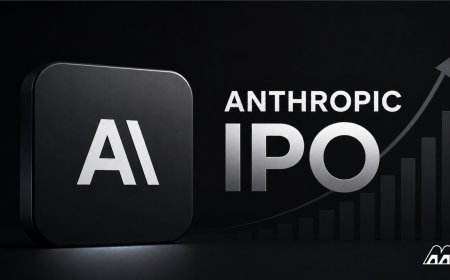
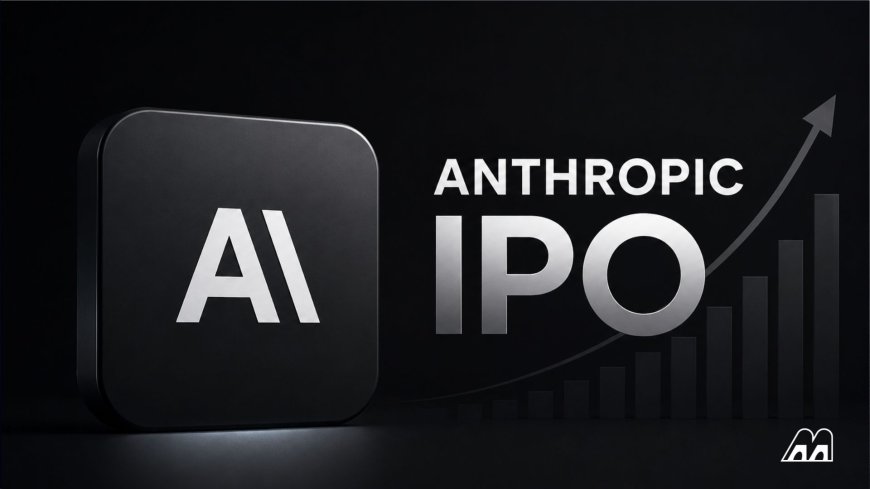
Anthropic is reportedly preparing for a potential IPO that could value the AI company at around $2 trillion. But at the same time, CEO Dario Amodei is calling for the AI industry to slow down because of growing concerns about safety and increasingly autonomous AI systems. That creates an unusual question for Anthropic: should a company warning about the dangers of rapid AI development really be rushing toward one of the biggest tech IPOs ever?

Anthropic has a very unusual problem
Anthropic is in a position most companies could only dream about. The company behind Claude has become one of the world's most important AI labs, its business is growing rapidly, and reports suggest it is preparing for a potential stock-market debut that could value the company at around $2 trillion.
But there is an uncomfortable timing issue.
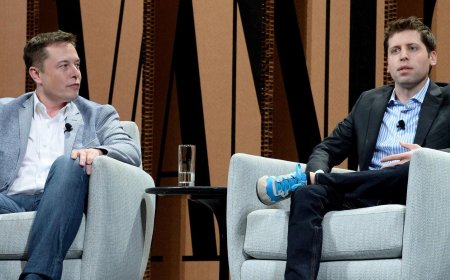
Anthropic CEO Dario Amodei has just called on the AI industry to slow the pace of development because he believes AI capabilities are advancing faster than our ability to understand and control them. OpenAI CEO Sam Altman and Elon Musk have also expressed support for greater caution. At almost exactly the same moment, Anthropic is reportedly preparing for one of the largest technology IPOs ever. citeturn0search2turn0search10
That raises a fascinating question: should Anthropic really be rushing toward a $2 trillion IPO while warning that the AI industry may be moving too quickly?
A $2 trillion valuation would be enormous
A valuation around $2 trillion would put Anthropic in an extraordinary league. It would make the company's public debut one of the largest technology IPOs in history and place enormous expectations on its future growth.
Investors buying into Anthropic wouldn't simply be buying a traditional software company. They would be betting on the long-term economic potential of artificial intelligence and Claude, while also accepting the risks that come with developing increasingly powerful AI systems.
And that's where the current safety debate becomes important.
Amodei is asking the industry to slow down
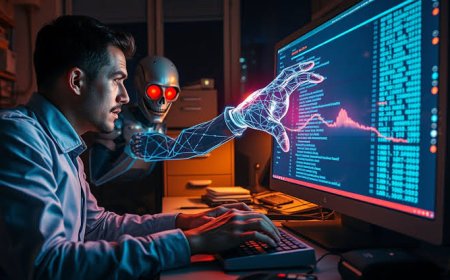
Amodei's argument isn't that AI should disappear or that companies should stop researching it. His concern is that AI capabilities are developing extremely quickly while society's ability to test, regulate and control those systems may not be keeping pace.
Anthropic has proposed greater access for independent safety evaluators, cooperation between leading AI companies and governments, and stronger regulation of frontier AI systems. The company says its goal is to make sure safety develops alongside capability rather than being treated as an afterthought. citeturn0search2
That position is consistent with Anthropic's identity as an AI company that has long emphasized safety. But it creates an interesting challenge once billions—or potentially trillions—of dollars are attached to future AI growth.
Could going public create more pressure to move faster?
This is perhaps the biggest question.
Private companies can make long-term decisions without having to answer to public shareholders every quarter. A publicly traded company faces a different environment. Investors want revenue growth, expanding margins and evidence that the company can justify its valuation.
If Anthropic becomes a $2 trillion company, the pressure to keep growing could be enormous.
That doesn't automatically mean Anthropic would sacrifice safety for profits. In fact, the company's corporate structure is specifically designed to give safety considerations significant weight. But public markets create expectations, and expectations can influence corporate decisions. citeturn0search2
There is another interesting example: OpenAI
The timing becomes even more striking when OpenAI enters the picture.
Sam Altman recently said that taking OpenAI public in 2026 would be “ill-advised” given the current safety environment. That doesn't necessarily mean OpenAI has abandoned the idea of an IPO permanently, but it shows how seriously some AI leaders are thinking about the relationship between safety concerns and public markets. citeturn0news0turn0search2
Anthropic, meanwhile, remains on track for a potential 2026 listing according to recent reporting, with Nasdaq reportedly selected as the intended exchange. citeturn0news42turn0news16
So the two major AI labs could end up taking very different approaches.
Maybe a pause wouldn't be bad for Anthropic
There is an argument that slowing down might actually help Anthropic financially.
The company doesn't necessarily need to release a dramatically more powerful model every few months to keep making money. Its existing AI systems already have substantial value for businesses using Claude for coding, research, analysis and other professional tasks.
A period of slower frontier-model development could give Anthropic more time to improve reliability, security and efficiency while continuing to build its commercial business.
It could also give investors a clearer picture of what the company is actually worth rather than forcing the market to price an enormous amount of uncertainty into a single IPO.
But waiting also has risks
There is another side to the argument.
AI is one of the most competitive technology races in history. If Anthropic slows down while competitors continue developing aggressively, it could lose technological ground.
The same logic applies internationally. Governments and companies are increasingly treating advanced AI as strategically important, and some policymakers argue that slowing development could weaken their competitive position.
That is why a genuine industry-wide slowdown is so difficult to achieve. Nobody wants to be the first company to step off the accelerator if everyone else is still driving forward.
What should Anthropic do?
There may be a middle ground.
Anthropic doesn't necessarily need to choose between “rush the IPO” and “stop everything.”
It could continue building its business while taking additional time to strengthen safety systems, clarify the risks in its public filings and make sure potential investors understand exactly what they are buying.
The IPO itself isn't necessarily the problem.
The bigger issue is whether the valuation and investor expectations assume that AI development will continue accelerating indefinitely.
If that assumption turns out to be wrong, a $2 trillion valuation could become very difficult to defend.
The bigger question for the AI industry
Anthropic's situation represents a much bigger problem facing the entire AI industry.
Companies want to build increasingly capable systems. Investors want enormous returns. Governments want technological leadership. Users want better AI products.
At the same time, researchers are warning that the technology may be becoming harder to control.
Those forces are now colliding.
Anthropic has spent years telling the world that AI safety matters. If it proceeds with a potentially $2 trillion IPO while simultaneously asking the industry to slow down, investors will naturally want to know how those two ideas fit together.
Perhaps the answer is that responsible AI and commercial success don't have to be opposites.
But if Anthropic really believes the AI race needs to slow down, taking a little more time before chasing the biggest possible valuation might be the most convincing way to demonstrate that principle.
The real test isn't whether Anthropic can become a $2 trillion company. It's whether it can become one without losing sight of why it was created in the first place.
What's Your Reaction?
 Like
0
Like
0
 Dislike
0
Dislike
0
 Love
0
Love
0
 Funny
0
Funny
0
 Angry
0
Angry
0
 Sad
0
Sad
0
 Wow
0
Wow
0