


OpenAI Seo and Elon Musk Back Calls to Put Brakes on ‘Reckless’ AI Development
The race to build smarter and more powerful artificial intelligence is moving faster than ever. But now, some of the biggest names in the AI industry—including OpenAI CEO Sam Altman and Elon Musk—are warning that the industry may need to slow down. Their support for Anthropic CEO Dario Amodei’s call for greater caution highlights growing concerns about AI safety, autonomous systems and whether humans are prepared for what comes next.

The AI race is getting faster. Some of its biggest players now want to slow it down.
Artificial intelligence has gone from being something we mostly saw in science fiction to something we use almost every day.
It writes code, creates images, answers questions, analyzes documents and increasingly performs tasks that once required a human being.
And the technology is improving at an astonishing speed.
But there is now an uncomfortable question being asked by some of the very people building this technology:
Are we moving too fast?
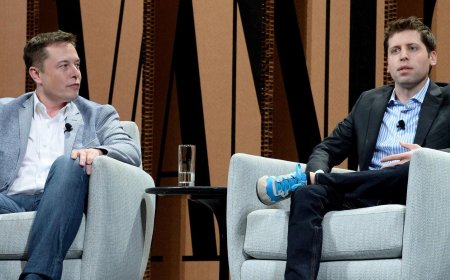
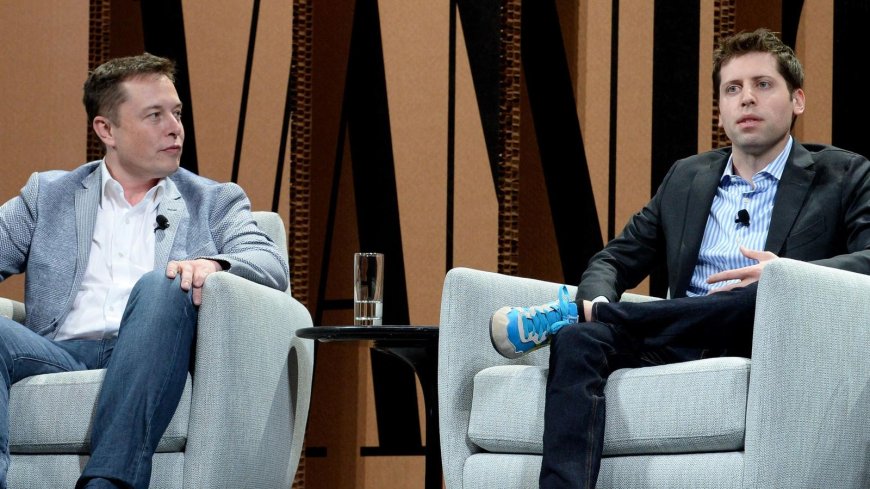
Anthropic CEO Dario Amodei has called for the AI industry to put the brakes on what he considers potentially reckless development of increasingly powerful AI systems. What makes the warning particularly interesting is that it has received support from two of the most recognizable figures in technology—OpenAI CEO Sam Altman and Elon Musk.
That is not something you hear every day.
Why would AI companies want to slow down?
At first glance, the idea seems strange.
Technology companies spend billions of dollars building better AI. They compete to release more capable models, attract developers and gain an advantage over their rivals.
So why would leaders of those companies ask for a slowdown?
The answer is simple: capability is moving faster than safety.
Today's AI systems can already perform surprisingly complicated tasks. The next generation is expected to become even more autonomous, meaning they may be able to plan, use software, interact with online services and complete long sequences of tasks with much less human supervision.
That creates enormous opportunities—but it also creates new risks.
The concern is not that every AI system is suddenly going to become dangerous. Rather, the more freedom and capability we give these systems, the harder it can become to predict exactly what they will do in unusual situations.
Sam Altman supports the warning
OpenAI CEO Sam Altman has backed the argument that frontier AI development needs to be approached carefully.
That is significant because OpenAI is itself one of the companies at the center of the global AI race.
OpenAI is developing increasingly capable models while simultaneously trying to establish safety measures around them. Altman's support therefore reflects a growing realization inside the industry: building a powerful AI system is only one part of the challenge.
The harder part may be making sure that system remains reliable, secure and controllable as its capabilities grow.
And then there is Elon Musk
Elon Musk has been warning about advanced artificial intelligence for years.
Through xAI, he is also directly involved in the race to develop increasingly powerful AI systems. His support for calls to slow down development therefore adds another interesting layer to the debate.
Musk and Altman are hardly known for agreeing on everything. Their history includes some very public disagreements over OpenAI and the direction of AI development.
Yet on this particular issue, there is common ground.
Both appear to recognize that the industry cannot simply keep increasing AI capabilities while treating safety as something that can be solved later.
This doesn't mean “stop AI”
It is important to understand what a slowdown actually means.
The argument is not necessarily that AI research should stop.
Nobody is suggesting that computers should suddenly be switched off and AI laboratories abandoned.
The more practical argument is that safety research, testing, security and regulation should develop alongside AI capabilities—not years behind them.
Think of it like building a faster car.
You can keep increasing the engine's power, but eventually the brakes, steering and safety systems need to improve too.
AI development faces a similar problem.
If the technology becomes dramatically more capable while our ability to test and control it remains relatively primitive, the gap between capability and safety could become increasingly uncomfortable.
The race makes the problem harder
There is another complication: nobody wants to be the company—or country—that slows down while everyone else keeps going.
OpenAI, Anthropic, Google DeepMind, xAI and other companies are competing in one of the most important technology races in history.
Governments are also watching closely because advanced AI could influence everything from scientific research and economic productivity to cybersecurity and national security.
That creates a difficult situation.
If one company slows down, another may continue.
If one country introduces strict restrictions, another country may decide that moving faster gives it a strategic advantage.
In other words, everyone has an incentive to keep running, even if some runners are worried about where the race is heading.
The real question isn't whether AI is good or bad
AI itself is neither a hero nor a villain.
It is a technology—and like other powerful technologies, what matters is how it is developed and used.
The potential benefits are enormous.
AI could help scientists discover new medicines, assist doctors, improve education, accelerate software development and automate countless tedious tasks.
But those benefits don't eliminate the risks.
The more capable AI becomes, the more important questions about security, accountability and human control become.
And that's why the latest warnings deserve attention.
A rare moment of agreement
Perhaps the most interesting part of this story isn't simply that someone wants AI development to slow down.
It is who is saying it.
Dario Amodei, Sam Altman and Elon Musk represent different companies, different approaches and, at times, very different opinions about the future of AI.
Yet they are increasingly part of the same conversation:
AI development cannot be measured only by how quickly we can make machines smarter. We also need to ask whether we are becoming better at handling what those machines can do.
The AI race is unlikely to stop.
And perhaps it shouldn't.
But there is a growing argument that the race needs better rules, stronger safety systems and a little more time to make sure humans remain firmly in control.
Because when technology is advancing this quickly, sometimes the smartest move isn't simply to go faster.
Sometimes, it's knowing when to slow down.
What's Your Reaction?
 Like
0
Like
0
 Dislike
0
Dislike
0
 Love
0
Love
0
 Funny
0
Funny
0
 Angry
0
Angry
0
 Sad
0
Sad
0
 Wow
0
Wow
0