





























Microsoft Surface Laptop Ultra Price, Specs and Release Date
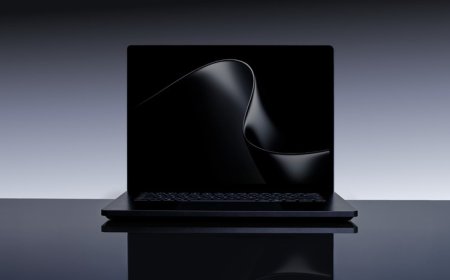
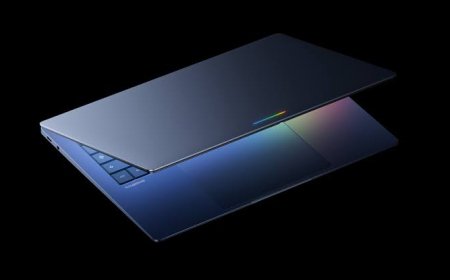
Microsoft has opened pre-orders for the Surface Laptop Ultra, a premium AI-focused laptop powered by NVIDIA’s RTX Spark Superchip. With up to 128GB of unified memory, a 15-inch high-brightness touchscreen and support for running large AI models locally, the new Surface targets developers, creators and professionals. Here are its price, specifications, release date and key features.
Microsoft Surface Laptop Ultra: Price, Specs and Release Date
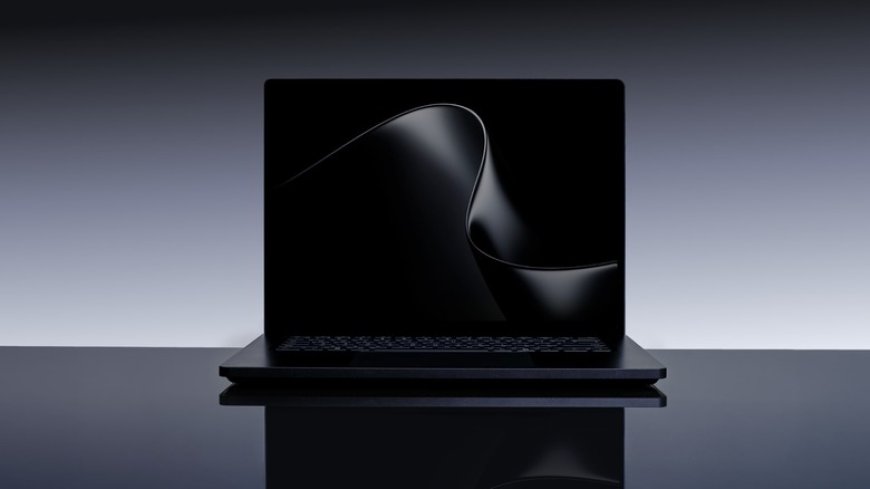
Microsoft has officially opened pre-orders for the Surface Laptop Ultra, a high-performance Windows laptop designed to handle demanding creative projects, software development and artificial intelligence workloads. Starting at $2,599, the new device represents a significant shift for the Surface lineup, combining Microsoft's laptop design with NVIDIA's powerful RTX Spark computing platform.
The Surface Laptop Ultra is not aimed at people who simply need a laptop for browsing, office documents or online classes. Microsoft is targeting developers working with AI models, creators editing demanding projects and professionals who need substantial computing power without moving to a desktop workstation. Its biggest selling points include up to 128GB of unified memory, an NVIDIA Blackwell GPU and the ability to run large AI models directly on the device.
Microsoft announced the laptop's pricing and availability on October 7, 2026. Pre-orders are now open, with general availability scheduled to begin on October 16, 2026.
Microsoft Surface Laptop Ultra Price and Availability
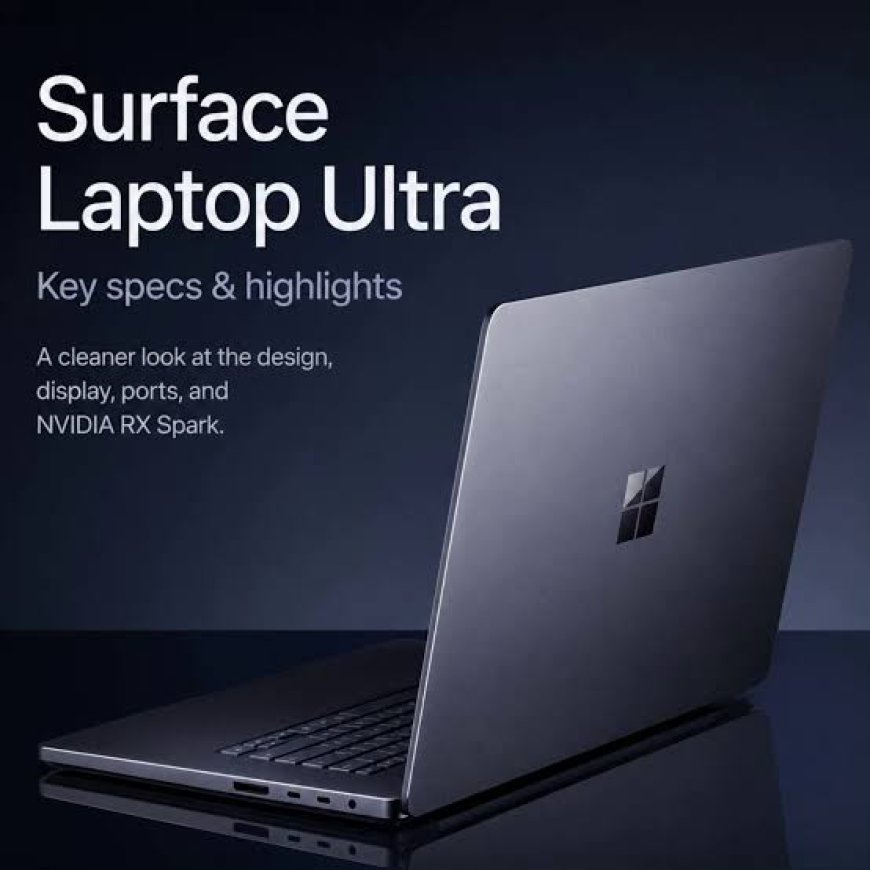
The Surface Laptop Ultra starts at $2,599.99 in the United States, placing it firmly in the premium laptop market. The price reflects its specialized hardware, particularly the NVIDIA RTX Spark platform and large unified-memory configurations.
Microsoft has positioned the device as a machine for people whose workloads go beyond conventional laptop tasks. Developers who run local AI models, video professionals working with demanding timelines and engineers building complex applications are among the audiences most likely to benefit from its hardware.
Pre-orders are available through Microsoft's official online store, with select retailers also expected to offer the laptop. Microsoft lists two finishes: Platinum and Nightfall. Configuration options, prices and availability may vary by retailer and region.
For buyers in Bangladesh, the US starting price should not be treated as a confirmed local retail price. Import costs, taxes, warranty coverage and local availability can affect the final amount, and buyers should check with authorized sellers before making a purchase.
Surface Laptop Ultra Specifications
The Surface Laptop Ultra combines a 15-inch touchscreen with NVIDIA's RTX Spark Superchip, which integrates an Arm-based Grace CPU and a Blackwell RTX GPU. Its most unusual feature is the unified-memory architecture, allowing system memory to be shared dynamically between CPU and GPU workloads.
| Feature | Microsoft Surface Laptop Ultra |
|---|---|
| Display | 15-inch PixelSense Ultra touchscreen |
| Display technology | Mini-LED |
| Peak HDR brightness | Up to 2,000 nits |
| Processor | NVIDIA Grace CPU, up to 20 cores |
| Graphics | NVIDIA Blackwell RTX GPU |
| Unified memory | Up to 128GB |
| AI performance | Up to 1 petaflop theoretical FP4 performance |
| AI model capability | Models exceeding 120 billion parameters, under supported conditions |
| Storage | User-removable SSD; capacity varies by configuration |
| Ports | USB-C, USB-A, HDMI, SD card reader, 3.5mm headphone jack |
| Charging | Magnetic USB-C charging connection |
| Thickness | Under 18mm |
| Weight | Under 4.5 pounds |
| Colours | Platinum, Nightfall |
| Starting price | $2,599.99 |
| Availability | October 16, 2026 |
Specifications can vary by configuration. Microsoft's theoretical AI-performance figure also depends on the workload and use of supported sparsity features, so it should not be interpreted as a universal real-world performance measurement.
NVIDIA RTX Spark Brings Desktop-Class AI Ambitions to a Laptop
The processor is the defining feature of the Surface Laptop Ultra. Rather than relying on a conventional laptop CPU paired with a separate mobile graphics chip, Microsoft has built the machine around NVIDIA's RTX Spark Superchip.
The platform combines an NVIDIA Grace CPU with a Blackwell RTX GPU featuring up to 6,144 GPU cores. The system supports CUDA, NVIDIA's widely used computing platform for GPU-accelerated applications, which is particularly important for developers working with AI, simulation and graphics software.
The laptop can be configured with up to 128GB of unified memory. Unlike a conventional design in which CPU memory and dedicated graphics memory are separate pools, unified memory allows the system to allocate resources across the processor and GPU according to workload demands.
That arrangement matters when working with large AI models, where memory capacity can determine whether a model runs locally at all. Microsoft says the laptop can support models exceeding 120 billion parameters under suitable conditions. Actual performance will depend on the model architecture, quantization, context length, software and memory available to the workload.
A Laptop Designed to Run AI Locally
Many AI tools rely on cloud servers to process requests. The Surface Laptop Ultra is designed to handle more demanding workloads directly on the computer, potentially giving developers greater control over their working environment.
Local processing can be useful when experimenting with models, evaluating code, prototyping AI agents or working with sensitive project data. It can also reduce the need to send every task to a remote service, although cloud computing will remain important for workloads that exceed the laptop's capabilities.
Microsoft is positioning the device around this combination of local and cloud intelligence. Developers can use local computing resources for suitable tasks and turn to cloud infrastructure when they need more capacity.
However, having powerful hardware does not automatically mean every AI model or application will run smoothly. Software compatibility, memory requirements, model optimization and thermal limits all affect the experience. Buyers should check that their preferred development frameworks and AI tools support the platform before investing in such an expensive machine.
15-Inch Mini-LED Display With 2,000-Nit HDR Brightness
The Surface Laptop Ultra features a 15-inch PixelSense Ultra touchscreen using Mini-LED technology. Microsoft lists peak HDR brightness of up to 2,000 nits, making the display one of the device's headline features.
High peak brightness can improve the presentation of supported HDR content, while Mini-LED backlighting can provide more precise control over bright and dark areas than conventional LCD backlighting. These capabilities should appeal to creators who work with visual content, although actual image quality also depends on colour accuracy, contrast behaviour and the display settings used.
The screen supports touch input, but Microsoft says it is not designed for Surface Pen or similar pen input. That distinction is worth considering for designers who prefer drawing directly on their laptop screen.
Microsoft has also increased the size of the haptic touchpad compared with its previous Surface Laptop generation. The company says the new touchpad is 30% larger than the one on the Surface Laptop 8th Edition, offering more space for precise cursor control and gestures.
Ports, Charging and Repairability
Premium laptops sometimes sacrifice useful connections to achieve a thinner design. Microsoft has taken a different approach with the Surface Laptop Ultra, including three USB-C ports alongside USB-A, HDMI, an SD card reader and a 3.5mm headphone jack.
The laptop also introduces what Microsoft calls Magnetic Connect, a magnetic charging connection built into a USB-C port. The included cable attaches magnetically and can release easily, while the port remains usable for other compatible USB-C functions.
For photographers and video professionals, the integrated SD card reader could reduce the need for adapters. HDMI and USB-C connections also make it easier to connect external displays and other equipment.
Microsoft says the laptop can drive up to three external 4K displays with compatible hardware. The SSD is user-removable as well, offering more flexibility for replacement, service or storage upgrades, although repair procedures and component availability vary by market.
Cooling and Performance Under Heavy Workloads
Powerful processors and graphics hardware can generate substantial heat, particularly during long AI computations, rendering sessions or software builds. Microsoft says the Surface Laptop Ultra uses its largest thermal system to date for a Surface Laptop, with up to 2.5 times the thermal capacity of the Surface Laptop 15-inch 8th Edition.
The cooling design is intended to sustain demanding workloads while managing fan noise and temperatures. That matters because short bursts of high performance are not enough for users who regularly run lengthy rendering jobs or local AI tasks.
The laptop is less than 18mm thick and weighs under 4.5 pounds, according to Microsoft. Those dimensions make it portable for a machine with this level of computing ambition, but it remains a substantial premium laptop rather than an ultraportable device.
Real-world performance and battery endurance will need to be assessed through independent testing. Workload, screen brightness, power settings and the use of the GPU can all affect battery life, so Microsoft's general claims should not be taken as a guarantee of identical results for every user.
Surface Laptop Ultra vs MacBook Pro
Microsoft is entering a part of the laptop market where Apple's MacBook Pro has a strong position among creative professionals and developers. The Surface Laptop Ultra's pricing and focus on demanding workloads make the comparison unavoidable.
The main distinction is Microsoft's emphasis on NVIDIA's CUDA ecosystem and local AI development. CUDA support is valuable for applications built around NVIDIA's GPU-computing platform, while the large unified-memory configuration could be attractive for certain local model workloads.
The MacBook Pro, meanwhile, offers Apple's own hardware and software ecosystem, and its suitability depends on the applications, workflows and operating systems a buyer needs. There is no single winner for every task: performance comparisons should use the same applications, model configurations and power conditions.
The Surface Laptop Ultra's high starting price means buyers should look beyond headline specifications. Compatibility with existing software, sustained performance, battery life, support and repair options are all important when choosing a professional computer.
Is the Microsoft Surface Laptop Ultra Worth Buying?
The Surface Laptop Ultra is most compelling for users who can make practical use of its specialized hardware. Developers running supported AI models locally, creators working with GPU-intensive applications and professionals who need large amounts of unified memory may find its configuration difficult to match in a conventional thin-and-light laptop.
For ordinary productivity, web browsing, video streaming and routine office work, however, the device is likely to be more powerful—and more expensive—than necessary. A standard Surface Laptop or another premium notebook could provide a better balance of price, portability and everyday performance.
Before ordering, prospective buyers should compare memory and storage configurations, verify compatibility with their preferred software, and confirm warranty and service availability in their region. The $2,599.99 starting price is only the entry point, and higher configurations can cost considerably more.
Final Verdict
Microsoft's Surface Laptop Ultra brings together NVIDIA graphics, a high-capacity unified-memory architecture and a bright 15-inch Mini-LED touchscreen in a premium Windows laptop. Its ability to run demanding AI workloads locally is the central reason to consider it, while its broad port selection and removable SSD add practical advantages for professional users.
The high price limits its appeal to buyers who genuinely need this level of computing power. For those users, the Surface Laptop Ultra could become an interesting option for AI development, creative production and GPU-accelerated work. For everyone else, a less expensive laptop may be the smarter purchase.
Sources
What's Your Reaction?
 Like
0
Like
0
 Dislike
0
Dislike
0
 Love
0
Love
0
 Funny
0
Funny
0
 Angry
0
Angry
0
 Sad
0
Sad
0
 Wow
0
Wow
0