




































































Hackers Breach FBI's National Crime Database as Bureau Investigates Second Intrusion in Months
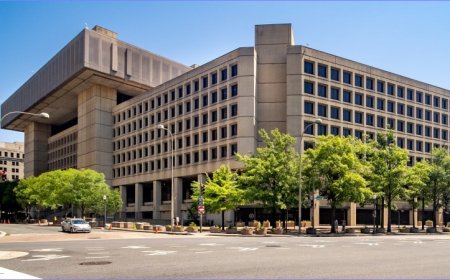
The FBI is investigating an apparent hack of its National Crime Information Center database, the nationwide system police use to check warrants and run background checks. It is the second reported intrusion into an FBI system in recent months, and officials have not yet said what, if anything, was taken.

Hackers Breach FBI's National Crime Database as Bureau Investigates Second Intrusion in Months
The FBI is investigating an apparent cyberattack on its National Crime Information Center, the nationwide database that police officers across the United States rely on every day to check warrants, track fugitives and run background checks. The intrusion, first reported by CNN on Friday, November 20, is the second reported breach of an FBI system in recent months — and investigators have not yet said how the hackers got in or what information they may have reached.
According to two people briefed on the investigation, apparent hackers accessed the NCIC database. The FBI learned of the intrusion earlier in the week, and the bureau has not commented publicly on the incident. Three sources familiar with the matter separately confirmed the breach to Fox News, adding that it remains unclear what information, if any, was compromised.
What the NCIC is — and why a breach matters
The National Crime Information Center is one of the most widely used tools in American law enforcement. Run by the FBI, it links federal, state and local agencies, letting officers share information on criminal warrants, missing persons, stolen property, registered sex offenders and gun background checks. Patrol officers query it from their cars during traffic stops; investigators use it to identify wanted fugitives.
That reach is what makes an intrusion into the system so sensitive. A former FBI official told CNN that officers rely on NCIC every day to identify wanted fugitives and check outstanding warrants, and warned that hackers "could compromise the accuracy of the information that officers rely on."
Retired FBI supervisory special agent Jason Pack told Fox News that the bureau's incident response team must quickly determine whether any records inside the database were altered, because the system feeds criminal records to patrol cars nationwide. There is no indication so far that records were changed, and no sign of an outage in the system. But Pack warned that tampered records could endanger officers during traffic stops.
While the database does not hold classified intelligence or sensitive FBI investigative case files, it does store personally identifiable information, including names, dates of birth and Social Security numbers. Investigators will examine IP logs and metadata to work out whether the attackers exploited a compromised password among the system's more than 100,000 users, breached a state terminal or got in through a third-party vendor.
Trump: "It's not good"
President Donald Trump was asked about the breach in an interview with Fox News Channel's Kayleigh McEnany on Saturday, November 21. He said he had "just heard" about the hack.
"I will say that it's not good. I don't like that," Trump said.
Neither the FBI nor the NCIC responded to requests for comment from the outlets reporting the story.
The second FBI breach in months
The NCIC intrusion follows a September cyberattack in which the extortion group ShinyHunters breached an FBI jobs portal and stole sensitive personal information belonging to FBI employees. The group claimed it had taken data on almost every FBI agent, including names, home addresses, Social Security numbers, assignments and, in some cases, the names of family members. Reporting at the time put the number of affected employees at around 38,000, with the stolen material including psychiatric and medical data and details of sensitive work against Chinese spies, Russian intelligence and drug cartels.
The FBI has since struck back at the group. Canadian cybersecurity executive Edward Dubrovsky was arrested on October 8 and faces federal extortion conspiracy charges in connection with the investigation into ShinyHunters. FBI Director Kash Patel announced the arrest the following day, saying the bureau would keep working to dismantle what was left of the group.
Patel appeared on Fox News on Thursday, November 19 — the same day the NCIC intrusion came to light — to discuss the bureau's cybersecurity efforts.
A week of outages and breaches
The suspected NCIC breach landed in the middle of a turbulent week for American technology and government systems. Major outages in recent weeks disrupted travel, communications and e-commerce, including a Microsoft Outlook outage and Federal Aviation Administration problems, and even affected a top-secret network at the National Security Agency.
Separately on Friday, NBC News reported that hackers had targeted a US Department of Agriculture system used to facilitate payments to farmers. Former USDA officials told NBC the attackers may have used the payments system as a back door to reach more sensitive material. There is no indication the incidents are connected, and officials have said the various outages were not linked to criminal activity.
The White House fired its cybersecurity chief, Sean Cairncross, this week as criticism mounted over the string of disruptions. Trump has sought to calm the public, urging people to "relax" about the outages.
It is not the first time FBI systems have been targeted. In 2023, hackers infiltrated a computer network at the FBI's New York field office used in child sexual exploitation cases — a system that also stored images tied to the Jeffrey Epstein investigation, CNN previously reported.
What happens next
For now, the key questions are unanswered: how the intruders got in, whether they copied or altered anything, and who is responsible. The FBI has not said whether the NCIC intrusion is linked to ShinyHunters or to any other group, and no attribution has been made public.
Until the investigation produces answers, the incident stands as a reminder of how much American policing depends on a single shared database — and how quickly confidence in it can be shaken. The FBI has warned about the growing use of AI-driven hacking tools against US networks in recent weeks, as reported by Innopark IT, and the NCIC case will test whether the bureau's own defences are keeping pace.
Sources
- CNN — FBI investigating apparent hack of National Crime Information Center database, November 20, 2026 (first report; consulted via syndicated copies)
- Fox News — FBI probes second cyberattack in months as hackers breach key crime database, November 21, 2026
- Reuters, via Arab News — FBI's criminal information database hacked, CNN reports, November 21, 2026
- USA Today — Trump says news of another FBI cyberattack "not good", November 21, 2026
- The Times of India — FBI hacked again: Cyberattack targets national crime database used by US police, November 21, 2026
- The Jerusalem Post — FBI's National Crime Information database hacked for second time, November 21, 2026
What's Your Reaction?
 Like
0
 Dislike
0
 Love
0
 Funny
0
 Angry
0
 Sad
0
 Wow
0